The Underground War: How Ukraine Built 1,170 km of Tunnels to Outsmart the Drone Age
Ukraine has built over 1,170 kilometres of anti-drone tunnels covering its roads — a civil engineering mobilisation on a scale not seen since the Second World War. The question is whether concrete can outrun cheap, adaptable FPV drones.
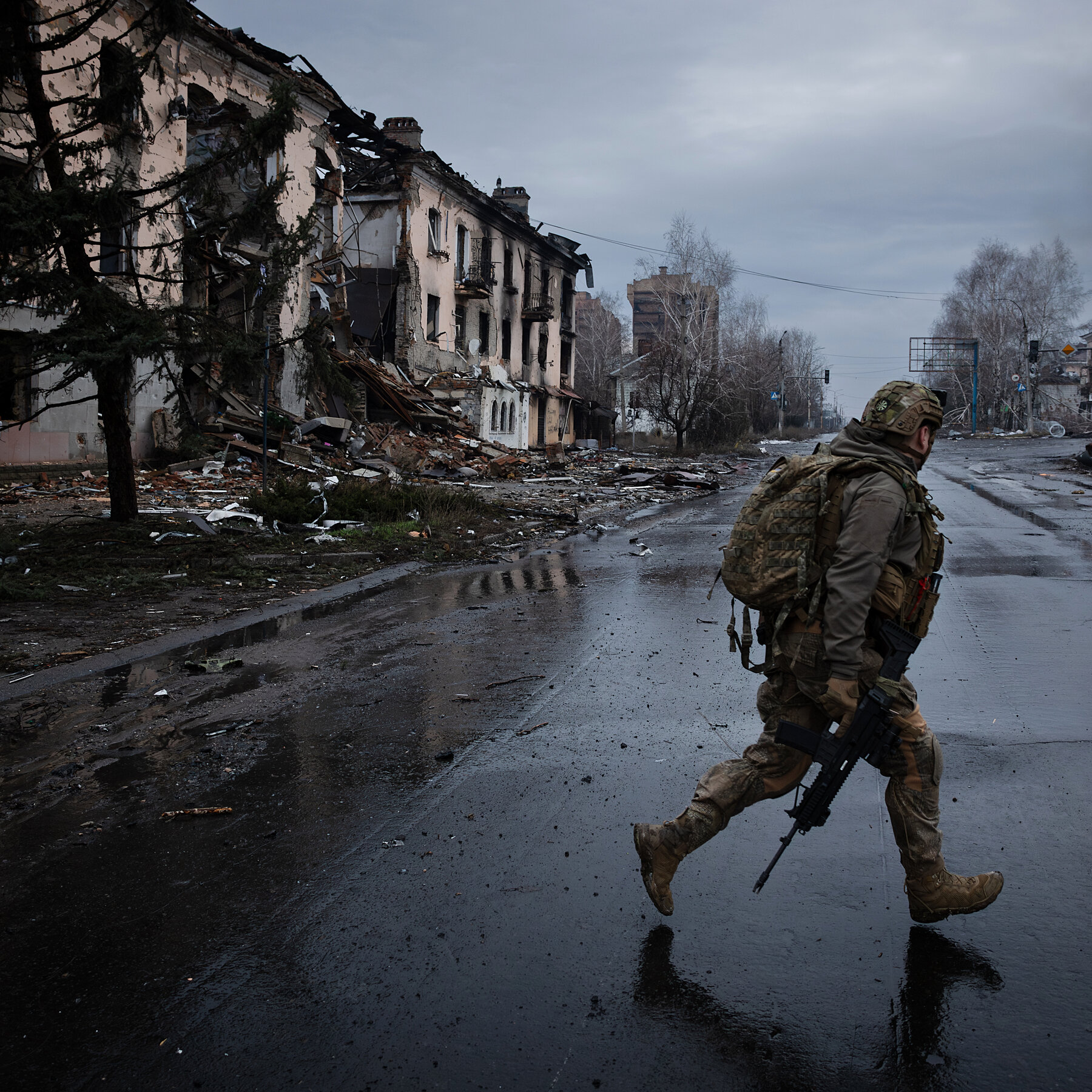
In the summer of 2022, a Ukrainian truck driver navigating the roads around Kharkiv had one primary fear: a Lancet loitering munition dropping onto the cab from above. By 2024, that same driver faced a more pervasive threat — cheap, fast, and nearly invisible FPV quadcopters that could be launched from a field and strike a vehicle before it reached the next junction. Ukraine's answer, still expanding as of May 2026, is an infrastructure mobilisation unlike anything the country has attempted since the post-war reconstruction era. According to figures published by Ukrainian sources, anti-drone tunnel systems now cover approximately 1,170 kilometres of roads. Tunnels made of reinforced concrete, steel armoured plating, and above-ground mesh canopies have become a permanent feature of the Ukrainian wartime landscape.
The scale of this undertaking raises a straightforward but underexamined question: can civil engineering keep pace with a drone threat that evolves in weeks, not years?
The FPV Revolution in Ground-Track Warfare
The full-scale Russian invasion introduced a range of precision-guided weapons to the Ukrainian battlefield — Iskander ballistic missiles, Kalibr cruise missiles, and Lancet loitering munitions — but none reshaped the ground-track logistics problem as fundamentally as the mass-deployed FPV quadcopter. Unlike expensive guided munitions that must be husbanded, first-person-view drones are cheap to produce, simple to operate, and capable of striking a target with a shaped charge from any angle. Ukrainian sources publishing footage of the tunnel systems acknowledge their vulnerability to precisely this category of weapon.
The tunnel approach reflects a specific theory of the problem: if drones see their targets through optical sensors, deprive them of the line of sight. Covered road corridors — whether underground passages, armoured above-ground housings, or mesh canopies strung between barriers — create visual blackout zones that deny FPV operators the targeting data they need to guide a drone onto a vehicle. The strategy has a certain logic, and the footage released by Ukrainian military sources documents a systematic, ongoing effort to extend it.
What the footage does not resolve is the question of how far the strategy can scale. 1,170 kilometres of tunnel represents a substantial commitment, but Ukraine's total road network extends to tens of thousands of kilometres. The tunnels that exist are concentrated on routes that Ukrainian military and logistics planners have identified as highest-priority corridors — the roads connecting rear-area staging points with forward positions in Donetsk, Zaporizhzhia, and Kharkiv oblasts. The effort is real; the coverage is partial.
Fixed Defences and the Adaptability Problem
The structural limitation of covered-road infrastructure is the one Ukrainian sources themselves have flagged: the tunnels are not impervious. An FPV drone that cannot see its target through a tunnel can simply wait at the entrance or follow the road until the vehicle emerges. Drone operators have been documented tracking vehicle movement from positions well outside the tunnel envelope, timing strikes to the seconds when a truck or armored personnel carrier exits the covered section. Fixed infrastructure is static; the threat is mobile and learning.
There is a deeper problem. Tunnels and canopies built quickly under wartime conditions are not equivalent to hardened military installations. The concrete sections are often cast without the full reinforcement schedule that civil engineers would specify in peacetime construction. Steel armoured plating, where it exists, protects against small-calibre fragments and shrapnel but not against a direct strike from a drone carrying a concentrated shaped charge. The tunnels that Ukrainian sources are documenting represent a genuine engineering response — they are not impenetrable.
The adaptability problem is not abstract. Drone warfare rewards rapid iteration. A quadcopter platform can be modified — its range extended, its payload increased, its sensor package upgraded — within weeks of a new design concept being proven effective. A tunnel system, once built, requires months of planning and construction to modify. Ukraine is investing in a fixed infrastructure estate that is by definition slower to evolve than the threat it is designed to counter.
The Scale of the Build
The 1,170 kilometre figure is striking for what it implies about resource allocation decisions at the military and governmental level. This is not emergency road repair. It is not the fortification of a single high-value corridor. It is a systematic infrastructure programme that has required coordinated decisions about material supply chains, construction labour, engineering specifications, and route prioritisation — all conducted under the compounding pressures of a grinding attritional conflict.
Construction of covered-road infrastructure on this scale demands concrete, steel reinforcement, heavy machinery, and — critically — engineering expertise. Ukrainian construction capacity has been strained since 2022 by the dual demands of rebuilding damaged civilian infrastructure and building the defensive fortifications that the frontline requires. The tunnel programme represents a further claim on those same depleted resources. Every cubic metre of concrete poured into a tunnel housing is a cubic metre unavailable for bridge repair, urban reconstruction, or forward fortification lines.
The civilian dimension of this infrastructure programme is also material. Major road corridors in eastern and southern Ukraine are not exclusively military arteries — they carry commercial traffic, civilian evacuation routes, and humanitarian supply chains. The installation of covered sections alters traffic flow patterns, imposes speed restrictions, and requires coordination between military logistics commanders and civilian road management authorities. The programme is military in origin, but its consequences ripple across the civilian economy in ways that are only beginning to be documented.
Forward Trajectory: An Arms Race Underground
The structural dynamic that the tunnel programme exposes is an arms race between fixed infrastructure investment and the accelerating sophistication of low-cost drone systems. Each tunnel section built prompts Russian drone operators to develop new tactics — longer-range FPV platforms, sensor upgrades that penetrate partial cover, swarming approaches that saturate defensive positions. Ukrainian engineers respond by deepening tunnels, adding ventilation and hardened chambers, extending the covered envelope along priority routes. The cycle is continuous, and it runs in real time.
The economic asymmetry embedded in this dynamic deserves closer attention than it typically receives. Tunnels are expensive and slow. A kilometre of covered road — designed to withstand drone attack, integrated into existing road infrastructure, maintained against weather and battlefield damage — costs orders of magnitude more than the FPV drone that threatens it. Russian FPV production has scaled substantially since 2022, driven by both state investment and a decentralised cottage industry of drone builders serving volunteer units and private military companies. Ukraine's tunnel programme is the most visible expression of a defensive infrastructure strategy that must, by definition, outspend a threat whose unit cost is measured in hundreds of dollars.
The broader structural implication is not unique to Ukraine. Military planners in Nato member states, in Taiwan, and in other states facing potential drone threats are watching this dynamic closely. The question that Ukraine's tunnel programme poses — whether fixed physical infrastructure can provide durable protection against mass-deployed, rapidly evolving drone systems — is a question that will define force design debates for a generation.
This article was prepared using content published via Telegram by Ukrainian sources on 18 May 2026. The primary source material comprises footage of tunnel construction and accompanying data statements from Ukrainian military-linked accounts. The 1,170 kilometre coverage figure is drawn directly from those posts. Monexus did not have access to Ukrainian Defence Ministry briefings or independent engineering assessments for this report; where those become available, they will inform follow-up coverage.
Wire provenance
This editorial synthesis draws on the following public wire/social posts:
- https://t.me/sprinterpress/2056471539663413248
- https://t.me/sprinterpress/2056466522088857601
- https://t.me/sprinterpress/2056465408387915776
- https://t.me/s/sprinterpress/2056386211208470528
- https://t.me/sprinterpress/2056279273837678592
- https://t.me/sprinterpress/2056386211208470528
- https://t.me/sprinterpress/2056279273837678592
- https://t.me/sprinterpress/2056471539663413248