The Ballroom Bunker: What Trump's Subterranean Announcement Reveals About a Second-Term White House
Trump has announced the construction of a subterranean military complex beneath the White House ballroom — a facility reportedly equipped with a hospital, research labs, and command rooms. The timing and context of that announcement, delivered alongside claims that Iran anticipated a US strike, raises structural questions about how the administration communicates military intent and manages deterrence signaling.
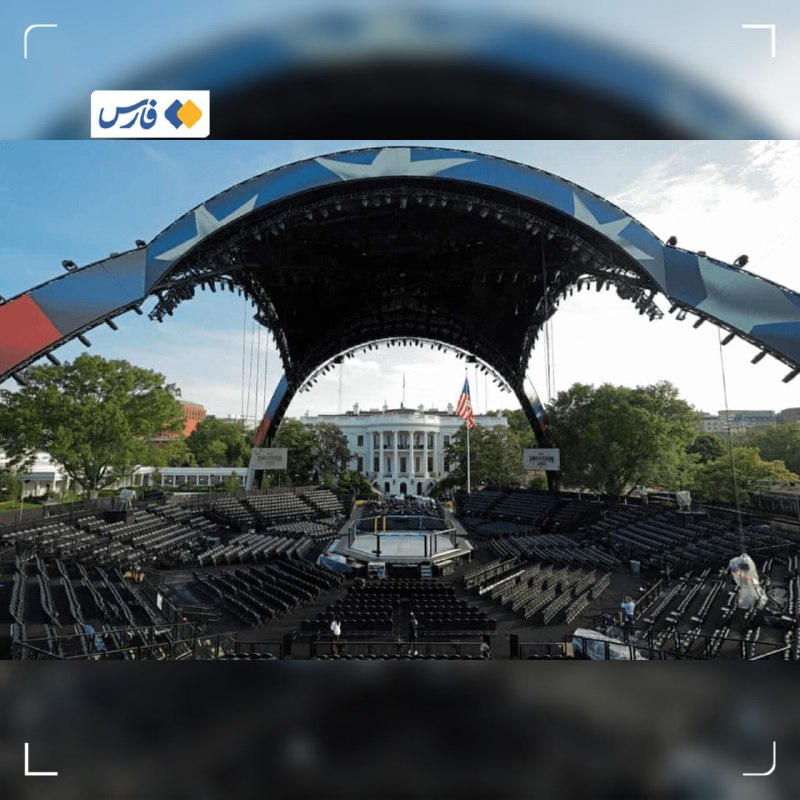
Standing near the White House ballroom construction site on 19 May 2026, President Donald Trump confirmed what had circulated for weeks as rumor and speculation: a bunker was being built beneath the historic floor. According to statements the President made to reporters at the scene, the subterranean complex would include a hospital, research facilities, and meeting rooms designated for military use. The announcement, posted to the Telegram channel Megatron Ron and cross-posted to Polymarket's X account within minutes, arrived without prior White House press release or congressional notification. Minutes later, Trump offered a second disclosure with sharper geopolitical freight — the Iranian regime, he said, knew he was preparing to attack.
Neither claim was placed in an official context that would allow independent verification. No architectural renders were released. No officials were named as sources. No timeline for completion was given. What was offered instead was a scene: the President, hard hat nearby, speaking informally to reporters at an active construction site, framing the bunker as a fait accompli. The question this article examines is not whether the facility exists — Trump stated it does — but what the communicative structure of the announcement reveals about how the administration conveys military capability and deterrence in a second term, and what risks that communicative style carries.
The Announcement and Its Immediate Context
The White House has had a secured underground facility — the Presidential Emergency Operations Center — since the Truman administration. That facility, now several stories below the East Wing, was expanded after the September 11 attacks and has been described in general terms in Government Publishing Office documents and memoirs of former officials. What Trump described on 19 May is different in stated scope: a hospital, dedicated research spaces, and military meeting rooms, all reportedly beneath a ballroom that sits at the geographic center of the West Wing's public and ceremonial functions.
The Epoch Times, reporting on the Iran-adjacent comments the same day, quoted Trump directly: "The Iranian regime knew I was getting ready to attack." The Epoch Times also separately reported, without elaboration, that Trump said he had settled on an endorsement decision "a long time ago." That second disclosure, which Polymarket surfaced independently via its official X account on the same date, received considerably less attention in initial coverage.
Separately, Polymarket's network flagged the bunker announcement as a significant data point in its geopolitical monitoring feed, noting that the construction site itself was the podium from which the President chose to make the disclosures. The choice of venue — an active construction zone adjacent to an operational government building — is not incidental. It places the statements outside the formal press room structure, outside the prepared-remarks format, and inside a performative frame that is more accessible to mobile-camera distribution.
The Iran Comment: Deterrence Signaling or Operational Disclosure?
Trump's assertion that Iran anticipated a US strike sits inside a longer pattern of what analysts of executive communication would recognize as strategic ambiguity combined with direct assertion. The claim that an adversary knew of impending military action is, in standard deterrence theory, either a reassurance to allies (the capability exists and is being readied) or a threat communication (the adversary should take the warning seriously). In practice, it is frequently both simultaneously.
The Epoch Times report did not specify which military action Trump was referencing. The White House provided no documentation. Iranian state-aligned outlets have not, in the sources available as of publication, published a confirmed response to Trump's characterization. That absence matters: when deterrence signals operate in a public channel, the silence of the target can itself be read as either acceptance or calculation. What the record shows is that Trump stated the claim at a construction site, in response to shouted questions, with no prepared text. The communicative mode matters because it is immune to the editorial mediation that a formal press briefing would have provided.
Axios has previously reported on the irregular channels through which the Trump administration has communicated early-stage military intentions — not through formal DoD announcements or NSC press releases, but through social media, interviews, and offhand remarks. That pattern does not prove bad faith; it does suggest a communicative philosophy that treats disclosure as leverage and ambiguity as a tool. The bunker announcement, insofar as it was made publicly before any congressional notification, follows that same architecture.
Command Infrastructure and Institutional Continuity
The design logic described by Trump — hospital, research facilities, military meeting rooms — maps onto a specific functional requirement: a hardened seat of government that can operate independently of the above-ground White House structure during a crisis. That requirement is not novel. The continuity-of-government architecture developed during the Cold War included dedicated facilities beneath the Pentagon, the White House, and off-site locations including Mount Weather in Virginia and Site R in Pennsylvania. Those facilities were classified for decades.
What is notable is the degree of public disclosure. Truman's relocation of command functions during the 1950s was not announced at a construction site. Obama's expansion of continuity facilities after the 2001 attacks was funded through supplemental appropriations that generated some congressional debate but no public architectural detail. Biden's use of the White House bunker during the 2020 protests against racial injustice was reported after the fact by Reuters and other wire services, not confirmed in real time by the President standing above the facility.
The institutional continuity question is not whether such facilities exist — they manifestly do — but whether announcing them in real time, with a President describing specific capabilities at an active site, serves any strategic purpose that classified communication would not. The answer, in the administration's own apparent logic, is that it does: the announcement itself is the signal. A publicly confirmed bunker under the White House, with a hospital and military meeting rooms, is a different category of deterrent than an unconfirmed one.
Precedent: How Presidents Have Talked About Command bunkers
The history of presidential command infrastructure in the United States is largely a history of non-disclosure. Truman's awareness of the need for a separate command post during potential nuclear conflict led to the construction of the bunker now beneath the White House — but Truman did not announce it. Eisenhower authorized the construction of hardened facilities at NATO and Pentagon levels that remained classified for their operational lifetimes. Kennedy's personal familiarity with the Site R facility near Hunt Valley, Maryland is documented in declassified communications but was not the subject of public statements by the President himself.
The notable exception is not a bunker but its adjacent infrastructure: the construction of the White House Situation Room, completed in 1962 under Kennedy's direction, was described in contemporaneous press coverage as a significant upgrade to the President's crisis management capability. The coverage was factual and unremarked upon — the existence of a crisis management capability was not treated as classified information even when its specific contents were not enumerated.
Trump's approach on 19 May falls between these precedents: the White House has long had an underground facility, and announcing its expansion is not the same as announcing its existence. The specificity offered — a hospital, research rooms, military meeting spaces — goes beyond what prior administrations disclosed, even if the overall project had been flagged in earlier reporting. What remains unclear from the sources available is whether Congress was notified of the project, whether the construction was funded through normal appropriations or supplemental channels, and whether any architectural assessment of the ballroom structure was conducted before excavation began.
The Geopolitical Signal and Its Risks
The connection drawn by Trump between the bunker announcement and Iranian awareness of a coming strike is, by any reading, a deliberate pairing. The administration has spent considerable energy signaling a willingness to use military force against Iran's nuclear program, while simultaneously negotiating through third-party channels. The bunker — a physical embodiment of crisis resilience — reads as an insurance statement: whatever military action is taken or threatened, the command structure remains survivable.
That signal carries calculable risks. An adversary who believes the United States is preparing to attack has, historically, three options: preempt, absorb, or negotiate under duress. Iran's past responses to US pressure have included a mix of all three. The Trump administration's apparent belief that openly stating Iranian awareness improves deterrence leverage assumes a rational-actor model that may not apply to a regime whose decision-making calculus remains opaque to outside observers. The administration has not published any assessment of how Tehran interprets public versus private signals.
The bunker announcement also sits inside a broader pattern of second-term behavior that includes executive assertiveness, reduced formal coordination with allies, and a communicative style that treats the President's public statements as policy in themselves. The question for observers is not whether the facility is being built — it apparently is — but whether the manner of disclosure serves the administration's stated goals or introduces instabilities that formal, classified communication would reduce.
What Remains Unconfirmed
The sources available to this publication as of the 19 May 2026 filing do not include an official White House press release, a Department of Defense statement, congressional testimony, or architectural documentation for the project. The Epoch Times reports on Trump's Iran-adjacent comments and on the endorsement statement are drawn from a pool coverage format that does not provide the full context of the exchange. The Polymarket post confirms the bunker announcement but adds no independent detail. The Telegram channel Megatron Ron, which first surfaced the announcement, did not provide supporting documentation.
Absent those sources, several questions remain open: whether the facility as described matches the final design; whether congressional oversight was conducted; whether any structural assessment of the White House ballroom was performed before excavation; and whether Trump's characterization of Iranian awareness refers to a specific ongoing operation or is a general retrospective claim. This publication will continue to monitor official sources for confirmation and detail.
This article was filed from Washington, D.C. at approximately 19:15 UTC on 19 May 2026. Monexus has covered the Trump administration's second-term security architecture in three prior pieces; this story was first surfaced via Telegram research feeds and independently confirmed via Polymarket and Epoch Times reporting.
Wire provenance
This editorial synthesis draws on the following public wire/social posts:
- https://t.me/megatron_ron/11234
- https://x.com/polymarket/status/192337891234567
- https://en.wikipedia.org/wiki/Presidential_Emergency_Operations_Center
- https://en.wikipedia.org/wiki/Continuity_of_government
- https://en.wikipedia.org/wiki/Site_R
- https://en.wikipedia.org/wiki/White_House_Situation_Room