Bolivia's Fracture Lines: How a Stalled Crisis Became a Widening Movement
What began as a localised dispute over election integrity has metastasized into a broader challenge to governance across Bolivia — and the patterns driving it repeat across a continent still learning to navigate competing claims to legitimacy.
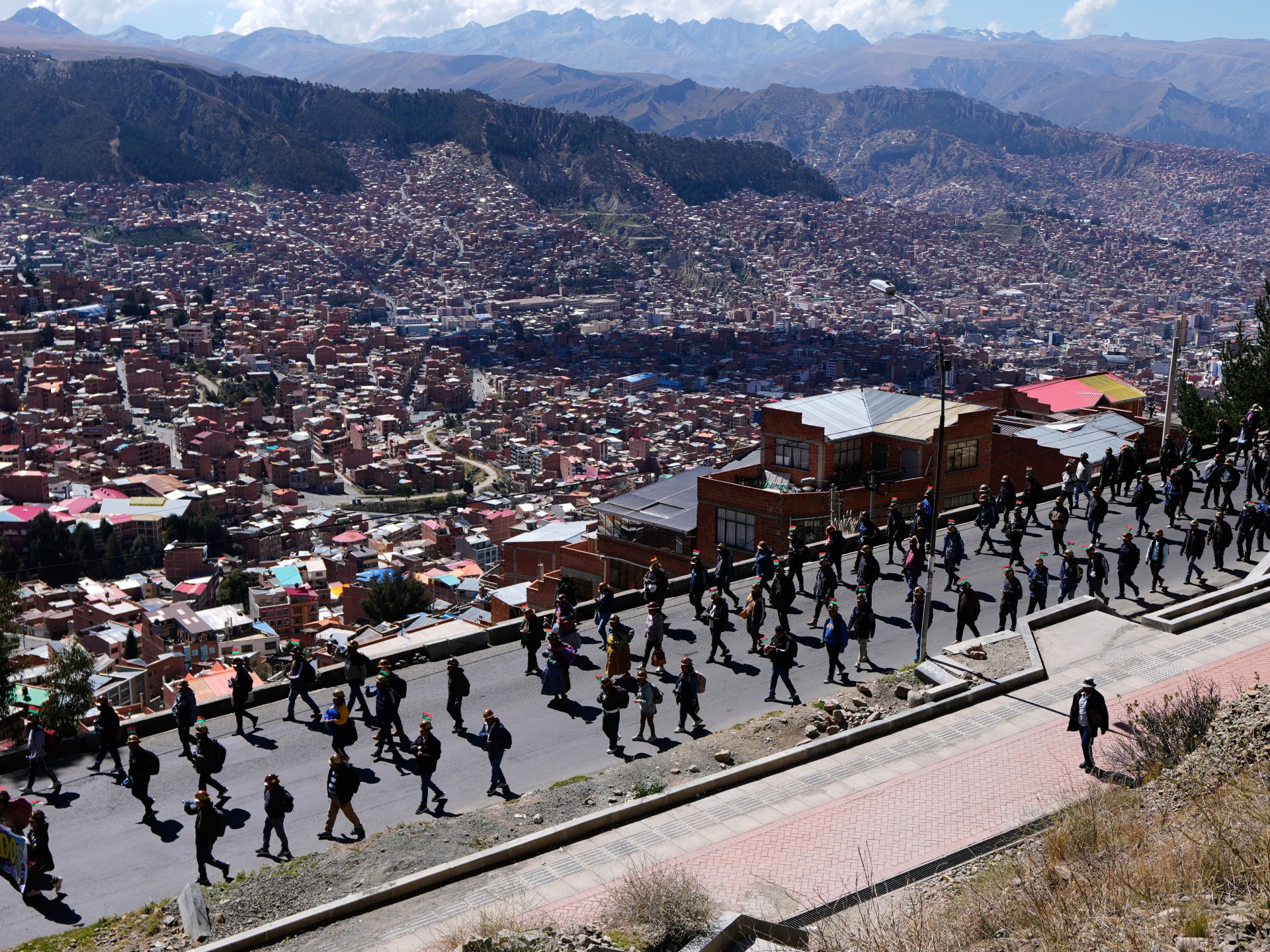
The images out of La Paz on 18 May 2026 carry a familiar weight: barricades on the central avenue, families with children at the rear of march columns, riot police in formation before a cathedral steps. Bolivia is not experiencing a single crisis — it is experiencing the compounding of several, each amplifying the others, and what began as a dispute about one election has become a widening movement with demands that now reach deep into how the country is governed.
The immediate trigger, sources close to the situation confirm, is a set of contested electoral procedures that opposition groups say were introduced without adequate legislative debate. But the anger on the streets cannot be reduced to ballot-box mechanics. It reflects a deeper fracture between a political class that has cycled through the same institutions for two decades and a population that has watched public services deteriorate while the language of reform is spoken at rallies but not enacted in statute.
The institutional dispute at the centre
Central to the current impasse is a disagreement over the composition of the electoral tribunal responsible for overseeing upcoming municipal votes. Three of the six seats are occupied by appointees whose terms expired in late 2025. The ruling party argues the appointments must follow the procedure established in the 2009 constitution; opposition blocs say the same procedure was used to insulate incumbents during the 2019 contest and that a reformed appointment mechanism — involving civil society representatives, not just party-caucused legislators — is the minimum condition for credible polls. The constitutional court has yet to issue a ruling that both sides accept as binding.
What is striking, across reporting from wire services covering the mobilisation, is how similar the tactical vocabulary of both sides has become. Each camp frames the other as attempting an institutional coup; each claims to be defending the constitution. The language is identical. The interests it serves are not.
A regional pattern, not an anomaly
The widening of Bolivia's protest cycle follows a pattern visible across the Andean corridor and beyond. Peru, Colombia, and Ecuador have each seen, within the past three years, street mobilisations that began over specific grievances — fuel subsidies, mining concessions, judicial nominations — and expanded into broader challenges to government legitimacy. In each case, the initial catalyst was containable; the broader alienation was not. Analysts tracking these cycles note that the common thread is not ideological — left-wing governments and centre-right administrations alike have faced widening movements — but structural: a gap between the formal institutions of democratic representation and the material experience of citizens who see those institutions as unresponsive to their concerns.
Bolivia's particular version of this dynamic carries its own specific textures. The country has made remarkable progress in poverty reduction and literacy since 2006, improvements that are documented and not in dispute. But the delivery mechanisms for those gains have become increasingly concentrated around a narrow party apparatus, and the institutions that might provide a check on that concentration have been gradually hollowed out. What protesters are now demanding is not a reversal of the social gains of the past two decades — that framing belongs to government communications, not to the streets — but a renegotiation of who controls the machinery through which those gains were delivered.
What the counter-narrative holds
The government side of this dispute is not without force. Officials point out that the opposition has failed to offer a coherent policy alternative on any of the issues it claims to prioritise. The main opposition coalition has fractured repeatedly, most recently in March 2026 when three regional governors publicly broke with the central coordination body over strategy. This disarray, government spokespeople argue, means the street mobilisation serves the interests of internal party factions as much as it serves any democratic renewal agenda. The risk, in this reading, is that Bolivia trades a flawed but functioning institutional arrangement for a vacuum that no coherent alternative currently fills.
The counterpoint to that argument is structural: an institution that has lost public confidence does not restore it by pointing to the incoherence of its critics. If anything, the opposition's internal fractures suggest that the frustration driving the protests is too diffuse to be captured by any single political project — and that the system's inability to process that diffuseness is itself the problem.
Stakes and what comes next
The stakes of the current moment are concrete. Municipal elections scheduled for October 2026 are at risk of being held under an electoral administration whose legitimacy is already contested. International observers from the Organisation of American States have been invited, but the terms of their mandate remain under negotiation — the government wants a standard monitoring brief; opposition groups are pushing for a comprehensive audit of the tribunal's composition and the legal framework under which the October votes will be conducted. Neither side has signalled willingness to让步.
If the elections proceed under a cloud of contested legitimacy, the probability of post-ballot unrest increases substantially. If the elections are delayed, the government faces accusations of using institutional delay as a substitute for political accommodation. Either path carries risk, and the source material available does not suggest a third option is currently on the table.
The wider continental context adds a layer of pressure that is rarely foregrounded in wire coverage: Bolivia's neighbours are managing their own legitimacy deficits, and a prolonged crisis in La Paz would complicate the quiet coordination that Andean governments have relied on to manage migration flows, trade disputes, and the occasional border incident without escalation. The region has built, over the past decade, a dense web of bilateral agreements and informal understandings that depend on each capital maintaining a minimum of institutional stability. Bolivia's widening protests are not, at present, a threat to that arrangement — but they are a test of whether the arrangement holds when one node in the network comes under sustained pressure.
This desk notes that the dominant wire framing of Bolivia's crisis has centred on electoral mechanics — the specific composition of the tribunal, the legal dispute over appointments. The structural analysis above, focused on institutional concentration and the gap between governance delivery and democratic participation, reflects this publication's assessment that the mechanical dispute is a symptom, not the disease.
Wire provenance
This editorial synthesis draws on the following public wire/social posts:
- https://x.com/reuters/status/1921483478914203665
- https://x.com/reuters/status/1921483478914203665