Britain's Hiring Freeze and Qatar's Warning: Two Flanks of the Iran Stalemate
As Doha signals talks need more time, UK employers are already pulling back on hiring — a preview of how a prolonged Iran conflict reshapes Western economies beyond the battlefield.
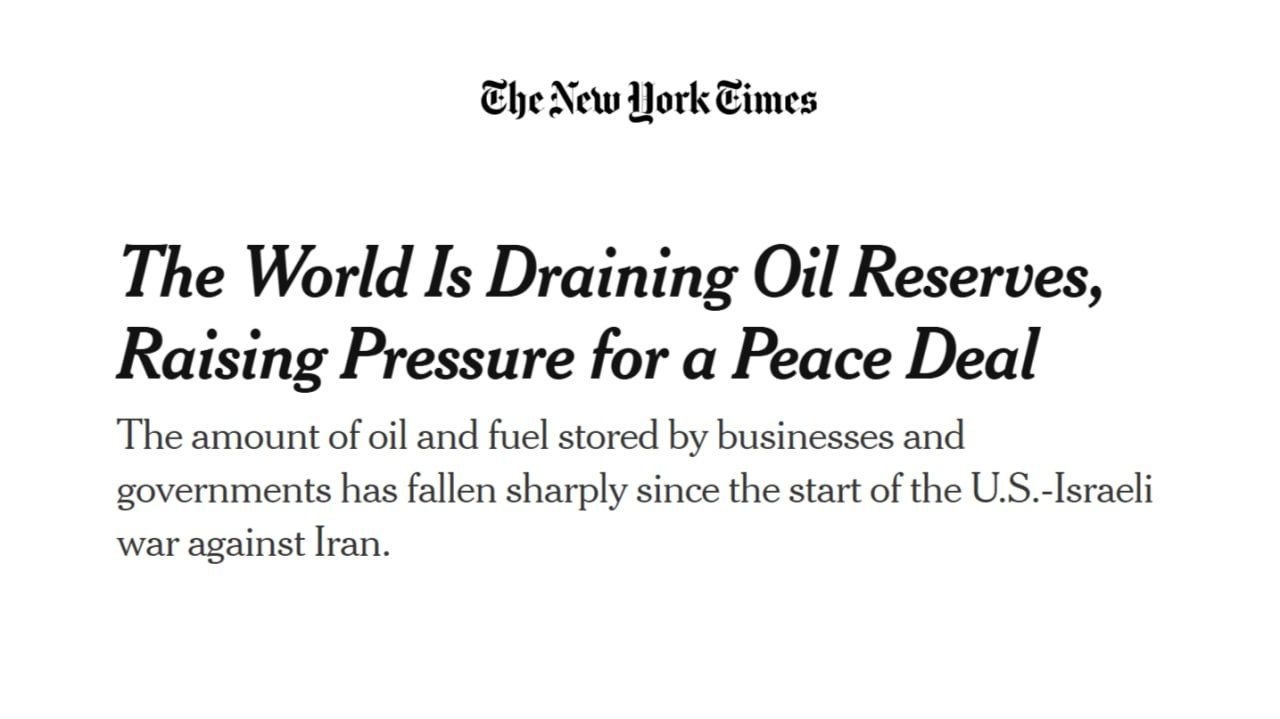
Qatar's foreign ministry said on 19 May 2026 that the latest round of US-Iran negotiations required "more time" — a diplomatic caution that arrived as British employers were already curtailing hiring activity, according to data published the same day. The convergence of a stalled diplomatic process and measurable economic friction in a third country offers a snapshot of how the conflict with Iran is stressing Western economies in ways that go beyond energy markets and defence budgets.
The negotiations, which Washington and Tehran have pursued through Qatari and Omani intermediaries since early 2026, appear to have hit a procedural wall. Qatar's statement on 19 May did not specify what issues remained unresolved, but the timing — coming hours before Reuters reported on UK labour market softness — suggested that pressure is building on multiple fronts simultaneously. The absence of a diplomatic breakthrough means the conflict's economic aftershocks will continue spreading.
Britain's employment data, released on 19 May, showed that employers had cut hiring and posted fewer job vacancies under what Reuters described as the "shadow of the Iran war." The phrasing captures something real: businesses in sectors ranging from logistics to professional services have cited geopolitical uncertainty as a factor in their workforce decisions. The war, which began with Iranian strikes on US regional assets in January and expanded following exchanges that drew in Gulf state logistics chains, has introduced a sustained uncertainty premium into corporate planning cycles.
This is not a recession signal — the data does not yet show mass lay-offs — but a recognisable pattern of optionality compression. Companies are leaving headcount flat rather than expanding, deferring permanent hires in favour of contractors, and delaying decisions that would have been routine six months ago. Economists who track business confidence indicators describe this as a "wait-and-see" equilibrium that becomes self-reinforcing: if enough firms defer hiring, consumer spending softens, and that softness creates its own rationale for further caution.
The Pentagon's Recalculation
The diplomatic slow-walk in Doha coincides with a significant shift in the military calculus. The New York Times reported on 19 May that the Pentagon had not wanted to resume air strikes against Iranian targets because Iranian air defences had grown more effective at tracking US operations. The report, cited by Unusual Whales, suggests Tehran has adapted its systems in ways that narrow the operational window for precision strikes — a development that shapes what options Washington can realistically present at the negotiating table.
An adversary that can track aircraft is an adversary that can impose costs. The calculus is straightforward: strike operations that were once considered low-risk now carry a non-trivial chance ofattrition. That changes the leverage dynamic. Tehran knows this; Washington knows that Tehran knows. The result is a military stalemate that the diplomatic channel is meant to manage, not resolve.
Qatar's call for "more time" is consistent with this dynamic. Doha has positioned itself as the channel through which both sides can communicate without direct contact. That role requires patience — and the ability to signal progress without delivering breakthroughs. The statement on 19 May was deliberately vague, which, in diplomatic practice, often means the parties are still mapping each other's red lines rather than negotiating substance.
Economic Aftershocks Spread Beyond the Region
The UK's hiring data is a leading indicator. Britain has no direct military involvement in the Iran conflict, but its economy is integrated enough with Gulf logistics networks — and sensitive enough to global risk sentiment — that the indirect effects are registering in the labour market. If the conflict persists into the second half of 2026, economists expect similar patterns to emerge in Germany, France, and the Netherlands, where manufacturing export orders tied to Middle Eastern infrastructure projects have already begun to soften.
The structural picture matters here. The global financial architecture that channels investment and trade is still dollar-denominated, and the Iran conflict has reintroduced a premium on geopolitical risk that had been partially priced out during the relative calm of 2024-2025. Companies with exposure to Gulf sovereign wealth flows, regional shipping routes, and energy-adjacent supply chains are reassessing those exposures in real time. Hiring deferrals are an early manifestation; capex pullbacks typically follow.
What Remains Uncertain
The sources do not specify what substantive issues divide the US and Iran in Doha, nor do they indicate whether the two governments have a shared understanding of what a sustainable arrangement would look like. The Pentagon's reported reluctance to resume strikes provides a structural reason for diplomatic pressure to intensify, but it does not tell us whether Iranian hardliners are using the military stalemate to extract concessions or genuinely exploring a negotiated settlement.
There is also no clarity on whether other regional actors — Saudi Arabia, the UAE, or Turkey — have been briefed on the negotiating parameters, or whether the absence of a Gulf-wide diplomatic consensus is itself creating friction. Regional rivals of Iran have watched the US-Iran channel with a mixture of interest and unease; a bilateral deal that settled security guarantees without addressing the broader regional balance would be unwelcome in Riyadh and Abu Dhabi.
Qatar's statement that more time is needed is, on its face, unremarkable. Diplomatic processes routinely require it. But in a conflict where the military option is constrained and the economic costs are compounding, "more time" is not neutral — it is a verdict on the urgency of the moment and a signal that neither side is yet ready to move first. The UK's hiring figures suggest the rest of the world is drawing its own conclusions while the talks continue.
This publication's coverage of the Iran conflict prioritises Western-allied and wire-service reporting. The Qatar mediation channel is treated as a significant development but with appropriate scepticism about what diplomatic optimism can deliver absent verifiable commitments from both Washington and Tehran.
Wire provenance
This editorial synthesis draws on the following public wire/social posts:
- http://reut.rs/4fvaYLe
- https://x.com/unusual_whales/status/1923498745218916352