Canada's Dead Citizen and the Accountability Gap on Lebanon's Southern Border
As a Canadian citizen falls victim to cross-border hostilities and Israel issues fresh evacuation orders to twelve Lebanese communities, the question of who bears responsibility for civilian deaths in the fog of war grows harder to avoid.
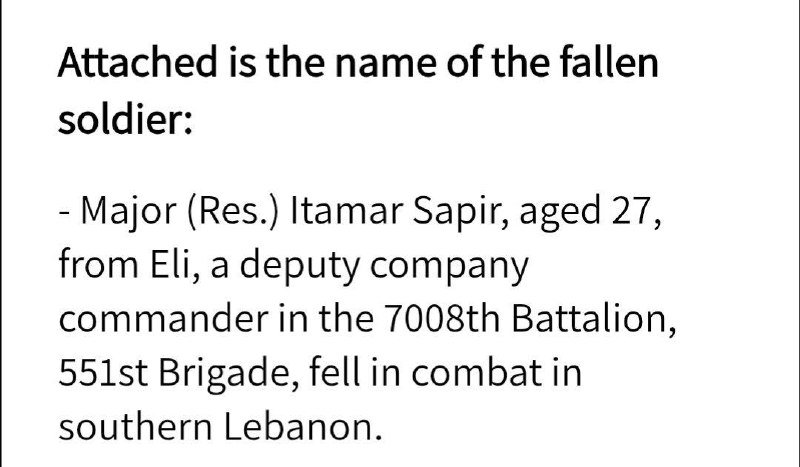
On the morning of 19 May 2026, an Israeli major became the latest casualty in what has become a grinding, low-grade war of attrition along Lebanon's southern border. The officer's death, reported by Israeli military sources and carried by regional wire services, follows a familiar rhythm: tit-for-tat strikes, tunnel discoveries, village evacuations, and the slow accumulation of grief on both sides of the fence. What is less familiar—what has begun to cut through the machinery of routine conflict—is the question of who answers for the civilians caught in between.
That question landed in Ottawa last month when a Canadian citizen was killed in an Israeli attack in southern Lebanon. The case has since metastasized into a political liability for the Trudeau government, which faces growing calls to pursue accountability through diplomatic and legal channels. The circumstances of the death remain under investigation, but the demand itself—that a state whose nationals are harmed abroad deserve answers, and that those responsible be held to account—has exposed a fault line in how the international system processes civilian harm in asymmetric conflicts.
The Geometry of Harm
Israeli military operations along the Lebanon border operate under a declared logic of self-defence. Since Hezbollah began trading fire with Israel in October 2023, following the outbreak of hostilities in Gaza, the IDF has framed its strikes as anticipatory and proportionate—responses to specific threats rather than campaigns of attrition. The death of the Israeli major on 19 May fits that template: a battlefield casualty in a zone of active combat, against an armed adversary with documented military infrastructure embedded in civilian areas.
But the template strains under the weight of accumulated evidence. Israeli military spokesperson Avichay Adraee issued renewed evacuation threats to residents of twelve towns and villages in southern Lebanon on 19 May, a practice the IDF has employed throughout the conflict to designate civilian zones for bombardment. The mechanism is straightforward: warn civilians to leave, then strike what remains. The international humanitarian law framework permits such warnings as a proportionality measure. What it does not resolve is the downstream problem—civilians who cannot leave, who have nowhere to go, who live in areas where the military actor on the other side has chosen to embed itself precisely because the population provides cover.
This is not a formula unique to the Israel-Lebanon theatre. It recurs wherever non-state armed groups operate in urban or peri-urban terrain, from Mosul to Gaza to Marawi. The legal architecture—distinction, proportionality, precaution—is designed to regulate the conduct of parties, not to resolve the structural condition of civilian exposure. The result is an accountability gap: harm is inflicted, warnings are issued, the legal record shows compliance with procedure, and the dead remain dead.
Ottawa's Uncomfortable Position
Canada's predicament is not unique among Western states whose nationals have been caught in Israel's southern Lebanon campaign. Several European governments have registered formal complaints following civilian deaths in IDF operations. What distinguishes Canada's moment is the domestic political visibility of the case and the specific identity of the victim—a Canadian citizen, not a dual national whose ties to Israel or Lebanon complicate the calculus.
The Canadian government faces calls to invoke diplomatic protection mechanisms, potentially including referral to the International Court of Justice or invocation of bilateral investment treaty provisions. Neither path is straightforward. Diplomatic protection requires exhaustion of local remedies—a process that can take years in Lebanese courts, assuming functional jurisdiction exists in a state with a caretaker government and a sovereign debt crisis. The ICJ route requires state-to-state proceedings, meaning Ottawa would need to formally attribute the killing to Israel as an internationally wrongful act, a step that carries significant diplomatic cost for a NATO ally.
What Ottawa appears to have done so far is request a clarification—asking Israel to explain the circumstances of the attack through diplomatic channels. Israel has not publicly responded in detail. This is, by the standards of how great powers typically handle such incidents against smaller states, unremarkable. It is also, for the family of the dead and for advocates of accountability, inadequate.
The Structural Frame
The uncomfortable truth that these episodes expose is that the accountability architecture governing armed conflict was designed for state-on-state wars and has never been convincingly adapted for the age of non-state actors embedded in civilian terrain. The ICC's jurisdiction over Israeli operations in Palestine remains contested, the subject of an active investigation that Tel Aviv treats as illegitimate and that Washington has actively sought to foreclose. UN special rapporteurs publish reports that Israel does not recognise. Human rights organisations document civilian harm in databases that accumulate without resolution.
What this produces, structurally, is a permission structure for civilian harm at the margins of the law—a grey zone where the procedural requirements are met but the substantive outcome—dead civilians, displaced populations, destroyed infrastructure—continues unabated. The system processes the paperwork. It does not prevent the deaths.
This is not an argument that no one bears responsibility for specific civilian deaths in Lebanon or Gaza. It is an observation that the mechanisms for establishing and enforcing that responsibility are structurally insufficient for the conflicts currently being waged. Until that gap is addressed—whether through ICC jurisdiction, through mandatory independent investigation, or through political pressure from states like Canada willing to absorb the diplomatic cost—the pattern will repeat. Another officer falls. Another warning is issued. Another civilian dies. Another government requests a clarification.
What Remains Uncertain
The precise circumstances of the Canadian citizen's death—including whether the individual was in a civilian area at the time of the strike, whether IDF warnings had been issued for that location, and whether the target was a confirmed Hezbollah operative or a civilian bystander—remain under investigation. The sources reviewed for this article do not establish these facts. What is established is the political demand for accountability and the structural limits of the mechanisms available to deliver it. That gap, not the casualty itself, is the story.
This publication's framing of Israel's security posture in southern Lebanon differs from the dominant wire-service narrative, which leads with IDF threat assessments and treats civilian harm primarily as a proportionality question rather than a structural one. Monexus has sought to foreground the accountability architecture's inadequacy alongside the legitimate security concerns that drive Israeli operations.
Wire provenance
This editorial synthesis draws on the following public wire/social posts:
- https://t.me/alalamarabic/124891