Congo's Ebola Outbreak and the Geography of Alarm
As Bundibugyo Ebola cases climb past 500 in eastern Congo, the international response raises uncomfortable questions about which humanitarian crises command attention—and which ones don't.
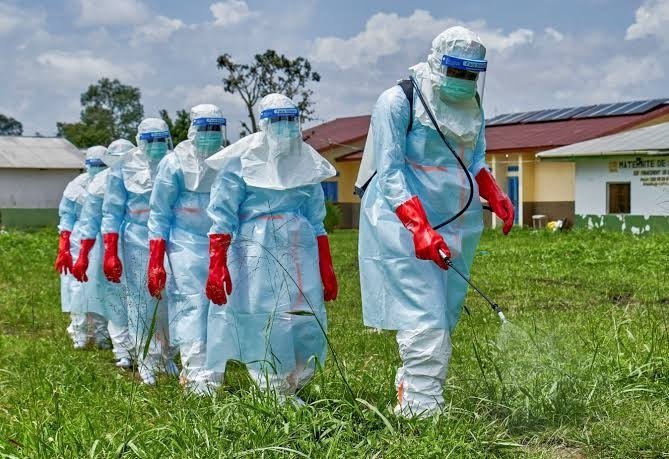
When the World Health Organization declared it was "deeply concerned" about an Ebola outbreak in eastern Congo on 19 May 2026, the statement was accurate. It was also, somehow, not enough.
The numbers tell their own story. As of 19 May 2026, the Bundibugyo species of Ebola had killed 131 people across a region already exhausted by years of conflict, displacement, and underfunded health infrastructure. The Congo government, responding to a caseload surpassing 500 suspected infections, announced it was restoring treatment centers that had apparently been scaled back or decommissioned—suggesting the infrastructure to contain this outbreak was never fully solidified between crises. The WHO's concern arrived late by the standards that governed previous outbreaks in West Africa or, for that matter, any comparable public health emergency in a G7 country.
This is not an argument that the WHO is malicious. It is an observation about which crises generate the institutional momentum, donor appetite, and media sustained attention necessary to mobilize a full response. Ebola in Congo—or Ebola anywhere in sub-Saharan Africa—routinely generates concern that is real but somehow incomplete. The announcements come. The figures are cited. And then, unless the death toll accelerates dramatically or a Western national contracts the disease, the crisis settles into a background hum that international audiences process as ongoing-but-somehow-managed.
The first section of this pattern is the framing itself. News wires covering the current Congo outbreak describe it in precise, clinical terms: Bundibugyo species, eastern Congo provinces, WHO concern, treatment center restoration. These are accurate descriptors. They are also the same category of language used to describe a slow news day in global health—a register that implies the system is functioning even when it demonstrably is not. Compare this to the coverage that surrounded Ebola's arrival in European or American hospitals, where language shifted to include phrases like "emergency response" and "full mobilization" with far smaller caseloads. The disease does not mutate based on geography. The response architecture does.
The second section concerns resource timelines. When Congo's health ministry announced treatment centers would be restored, the announcement carried an implicit admission: these facilities had been wound down, their staff reassigned, their supply chains diverted to other priorities. Building and maintaining Ebola treatment capacity requires continuous investment that donors find difficult to sustain between outbreaks. The incentive structure rewards emergency response—dramatic, televised, generating immediate goodwill—over the unglamorous work of maintaining readiness in a region the world's attention has moved past. The result is a cycle: outbreak, scramble, controlled, neglect. The cycle repeats with a consistency that suggests it is not accidental.
The third section addresses the structural question that sits beneath these patterns. Global health financing, pharmaceutical research, and institutional attention flow along channels shaped by the economic and political interests of the countries that fund them. This is not a conspiracy; it is a feature of how international institutions are designed. The WHO depends on assessed contributions from member states—contributions that have historically reflected the health priorities of wealthier nations. A disease that primarily affects subsistence farmers in conflict zones does not generate the market incentives that drive pharmaceutical R&D investment, nor the political salience that forces finance ministers to act. Bundibugyo Ebola, despite being a known threat with documented mortality, has received a fraction of the research funding directed at pathogens that threaten global travel corridors.
There are those who will argue this is simply how resources are distributed—based on capacity, feasibility, and likelihood of spread beyond initial outbreak zones. This reading has merit. Containing Ebola in eastern Congo involves real logistical challenges: active armed groups limit access to affected areas, infrastructure is degraded, and local communities have legitimate reasons to distrust outside health workers after years of extractive international interventions in the region. These are genuine constraints, not excuses. But they are constraints that a properly funded, politically prioritized response would be designed to overcome rather than cite as reasons for modest engagement.
The stakes of this pattern are concrete. Every week that treatment centers operate below capacity, more people die from a disease that is survivable with adequate supportive care. Every week of insufficient contact tracing, the chain of transmission extends further into populations already displaced and immunocompromised by malnutrition and trauma. Beyond the immediate human cost, each under-resourced outbreak creates conditions for the next one—communities that learn not to trust health workers, health systems that collapse under the weight of emergency without recovery support, regions that become reservoirs for pathogens with pandemic potential.
The uncomfortable truth is that the international health architecture treats African disease outbreaks as problems to be managed, not crises to be solved. The WHO's deep concern is real. The Congo government's decision to restore treatment centers is necessary and welcome. But the story of this outbreak—and of the pattern it represents—is one of a system that responds to suffering in proportion to its proximity to power, not to its magnitude. That is a choice, and choices can be made differently. The question is whether the political will exists to make them.
This publication's Africa desk monitors health emergencies on the continent alongside conflict and economic coverage. We aim to cover outbreaks with the same analytical intensity applied to geopolitical and financial stories, because the structural forces that produce unequal health outcomes are the same forces this desk examines elsewhere.
Wire provenance
This editorial synthesis draws on the following public wire/social posts:
- http://reut.rs/4ftlItx