The Flotilla Narrative and the Geometry of Outrage
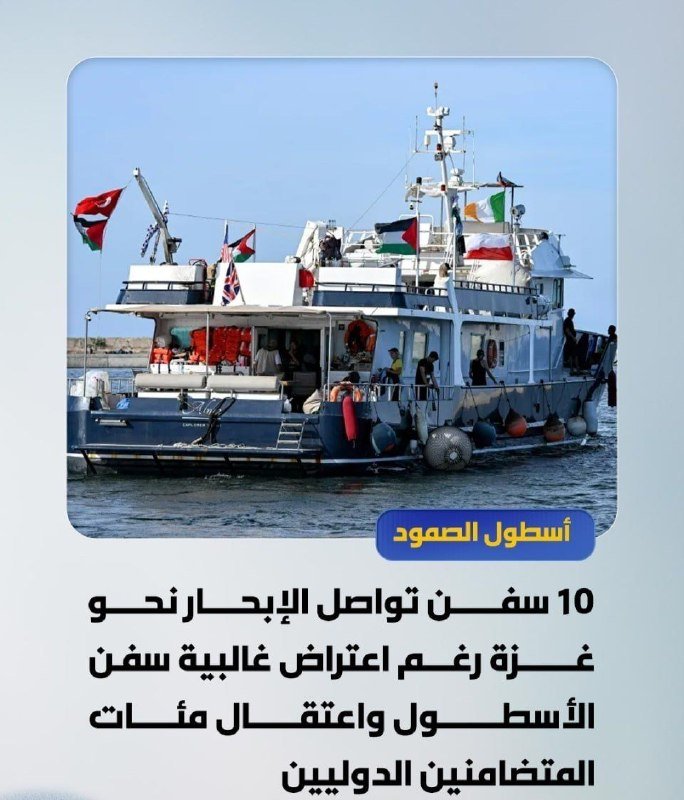
On the morning of 19 May 2026, Israeli naval vessels intercepted a convoy of civilian vessels in the Eastern Mediterranean. The Global Sumud Flotilla—carrying what organizers described as humanitarian supplies—was dispersed, its participants detained, and its cargo unavailable to Gaza's population for another day. Prime Minister Benjamin Netanyahu described the operation as a professional interception of a «political provocation.» Hundreds of Greeks gathered outside their foreign ministry the same afternoon to condemn what they called an act of «maritime violence.» Both characterizations cannot be fully right. Both contain an element of truth the other refuses.
The difficulty with covering maritime aid convoys to Gaza is not the scarcity of facts. The facts are relatively accessible: a convoy departed, it was intercepted in international waters, personnel were detained, supplies were diverted. The difficulty is that these facts arrive pre-loaded into interpretive frameworks that determine, before the first sentence is read, whether the event registers as heroism, brutality, or irrelevance. The framework in use shapes what information a reader encounters and how much weight it carries.
The Geometry of Selective Principle
The standard coverage framework treats Israeli naval interdiction of Gaza-bound vessels as a case of humanitarian access denied. That is one true thing. The parallel true thing—rarely given equivalent structural weight—is that maritime interdiction in contested waters is a routine instrument of sovereignty enforcement practiced by states across the globe. American warships intercept vessels carrying arms to Iranian proxies. Turkish coast guard vessels turn back boats approaching Cyprus. India, Pakistan, Australia, and dozens of coastal states conduct equivalent operations weekly. In none of those cases does the word «flotilla» carry the political charge it carries here, and the word itself is doing considerable analytical work.
The term elevates what might otherwise read as a customs enforcement action into something resembling a historical echo—the 2010 Mavi Marmara incident, with its dead activists and its diplomatic fallout. That invocation is intentional on both sides. Organizers of the current convoy were not unaware of the symbolism they were activating. Israel's framing apparatus, in turn, reaches immediately for the language of «political theater» and «Iranian-backed provocation.» Neither characterization is obviously false, but both are chosen for rhetorical rather than analytical effect.
The coverage this generates tends to fix attention on the moment of interception—the naval vessels, the shouted orders, the detained persons—while backgrounding the longer arc of Gaza's access restrictions. That backgrounding is not a conspiracy; it is a structural consequence of how news value is assigned. An event that is dramatic and visual—vessels at sea, navy personnel boarding—generates more immediate coverage than a chronic humanitarian condition that has persisted for over eighteen months. The chronic condition may be the more significant fact. It receives less attention precisely because it is chronic.
The Protest in Athens and Its Limits
The gathering outside Greece's foreign ministry on 19 May illustrates a different dimension of the framing problem. Hundreds of protesters framed the interception as an international law violation; Greek authorities, according to Middle East Eye's reporting, were still assessing the legal basis of the operation as of late Monday. The discrepancy between public moral certainty and legal ambiguity is itself worth examining.
The 1982 United Nations Convention on the Law of the Sea grants coastal states enforcement rights in contiguous zones for customs and fiscal violations, and in certain circumstances for security-related interdiction. Whether the interception occurred in Israeli territorial waters, the contiguous zone, or international waters determines which legal regime applies—and that determination is genuinely contested in this case. Activist groups argue that Gaza is an occupied territory and that aid access is protected under international humanitarian law. Israel's position is that Gaza is a hostile entity and that maritime access is governed by security prerogatives.
The protesters in Athens were not wrong to be concerned. They may have been reaching conclusions that the legal record does not fully support—but they were also participating in a form of accountability that governments sometimes prefer to outsource to civil society. The Greek foreign ministry's reluctance to issue a firm condemnation, even as protests gathered outside its doors, reflects a diplomatic calculation: Athens has defense and trade relationships with Israel that make public moralism costly.
What the Pattern Reveals
The Global Sumud Flotilla is not an isolated event. It is one node in a pattern that has repeated with sufficient regularity that both the organizers and the intercepting state understand its probable outcome before the vessels depart. Organizers receive global media attention. Participants receive detention and, occasionally, physical harm. Aid does not reach Gaza in meaningful quantities. The pattern repeats because it serves functions for multiple actors simultaneously.
For the organizers, the value is reputational and diplomatic: a visible act of solidarity that keeps Gaza's conditions on a specific category of international attention. For Israel, each interception provides an opportunity to demonstrate enforcement capacity and to test which governments will issue condemnations versus which will register quiet concern. For the broader international system, the repetition of the pattern produces a kind of desensitization—each successive flotilla slightly less surprising, slightly less urgently covered, slightly more absorbed into the category of «the usual tension.»
What is lost in this repetition is the specificity of the current moment. Gaza is not a geopolitical abstraction. It is a territory where food insecurity has been documented by UN agencies, where medical facilities have reported shortages of essential supplies, and where the humanitarian logistics infrastructure has been repeatedly disrupted. The flotilla was, by any reasonable measure, inadequate to address the scale of need. It was also a concrete attempt to move material goods toward people who lack them. Whether that attempt deserves the framing it receives—either the frame of heroic resistance or the frame of cynical provocation—depends on what one believes the maritime action was primarily designed to accomplish. The evidence supports neither pure characterization.
The deeper structural observation is that maritime aid convoys to Gaza exist in a specific political niche: they are large enough to generate media coverage, small enough not to alter conditions on the ground, and symbolic enough to sustain a narrative on all sides simultaneously. This is not an argument against the convoy. It is an observation about the ecology in which such gestures operate—and a suggestion that the moral geometry of the coverage may deserve more scrutiny than the interception itself receives.
The immediate fate of the supplies aboard the intercepted vessels remains unclear as of this writing. The broader question of whether the international system has the will or the mechanism to address Gaza's chronic supply gaps in ways that are both legally orderly and genuinely effective has no satisfying answer on offer. The protest in Athens, the statement from the Global Sumud Flotilla, and the praise from Netanyahu's office all represent genuine positions held by genuine constituencies. Treating them as equivalent data points in a single moral ledger is intellectually convenient and analytically misleading.
The vessels were intercepted. People are detained. Supplies did not reach their destination. These are the facts. The meaning assigned to them is a choice—and choices about meaning are, ultimately, editorial acts, whether they occur in a newsroom or outside a foreign ministry in Athens.
Wire provenance
This editorial synthesis draws on the following public wire/social posts:
- https://x.com/middleeasteye/status/1923412678989840643
- https://x.com/middleeasteye/status/1923406158031109444
- https://x.com/cgtnofficial/status/1923404535899533580
- https://x.com/cgtnofficial/status/1923404535899533580