Follow the Money: How Investment Deals and Gulf Diplomacy Shaped U.S. Policy Decisions in a 48-Hour Window
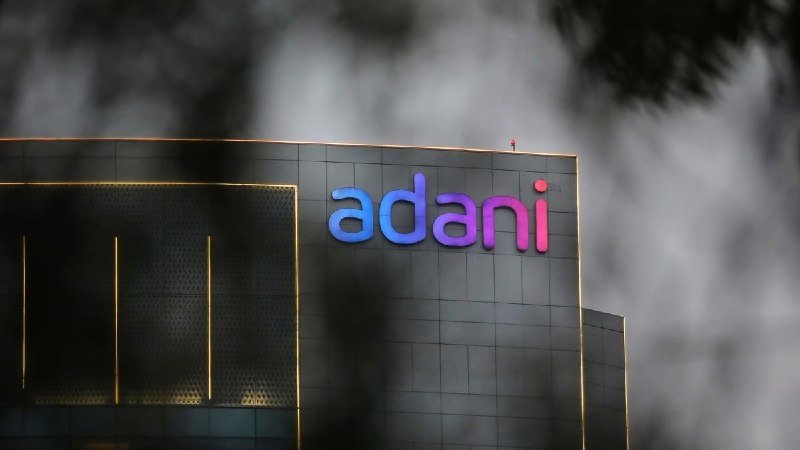
On 18 May 2026, the Trump administration made two consequential decisions within the same 24-hour window. The Justice Department filed paperwork to end both civil and criminal cases against Gautam Adani and his conglomerate — a termination contingent, according to Reuters, on a $10 billion investment commitment to U.S. energy infrastructure. Hours later, President Trump announced the postponement of a planned military strike on Iran, citing a request from Arab states for a cooling-off period of two to three days.
The decisions arrived from different policy corridors. One was a law-enforcement matter; the other a national-security action. Yet both share a common thread: foreign commercial and diplomatic actors secured observable changes to American government behavior within a compressed timeframe. Monexus examines the factual record of these two events, the mechanisms through which external pressure appears to have operated, and what the coincidence reveals about the structural conditions governing U.S. foreign and economic policy.
What the Documents Show
The Adani case termination is the more paper-trail-intensive of the two. Reuters reported on 18 May that the Justice Department moved to dismiss charges against Adani Zero Carbon FZ-LLC and связанных лиц following what the filing described as "changed circumstances." The changed circumstances, according to the wire report, centered on Adani's commitment to invest $10 billion in U.S. energy infrastructure — a figure significant enough to alter the government's calculus on prosecution.
The criminal case had centered on alleged bribery and market manipulation by the Adani Group, one of India's largest infrastructure conglomerates, with operations spanning ports, airports, renewable energy, and media. The dismissal was not an acquittal; it was a prosecutorial decision to cease pursuing the matter, contingent on a future investment commitment that has yet to be executed.
On the Iran front, the factual record is thinner but consistent across multiple sources. Unusual Whales first reported the postponement of the planned military strike at 19:07 UTC on 18 May, citing a direct statement from President Trump. The Middle East Spectator, posting at 21:44 UTC the same day, reported Trump's remark that the strike had been pushed back "two or three days" at the explicit request of Arab states. The president's own account, relayed via the ClashReport Telegram channel, described President Xi as "very, very complimentary of our military" in what appears to be the same public statement or briefing window.
The sources do not specify which Arab states made the request, what specific assurances were sought, or what leverage those states hold over the administration. They do not clarify whether the postponement was conditioned on a substantive concession from Tehran or was purely a diplomatic gesture. What the record shows is a presidential decision, announced publicly, that a military action was being deferred because Arab partners asked for time.
The DOJ Settlement: A Third Thread
A third decision, reported on 18 May by the New York Times via the Unusual Whales feed, complicates any clean narrative about the administration pursuing either law enforcement or national security with institutional independence. The Justice Department announced a $1.8 billion fund to pay President Trump's allies as part of its settlement with the Internal Revenue Service. The settlement's legal basis, the beneficiaries' identities, and the congressional oversight status of this disbursement are not elaborated in the source reporting available to this publication.
Taken together, the day's record shows a Justice Department terminating a foreign corruption case in exchange for an investment pledge, disbursing $1.8 billion to the president's political network, and a president deferring a military strike at foreign partners' request. The sources do not establish a causal chain linking these three actions to a single coordinating decision. But they do establish a pattern: on a single day, the administration's legal, financial, and military posture shifted in ways that directly served, or were perceived to serve, the interests of foreign governments and the administration's own political ecosystem.
The Investment-for-Dismissal Mechanism
The Adani case deserves particular scrutiny because it tests a specific structural proposition: that U.S. law enforcement can be conditioned on foreign commercial commitments. The precedent is not novel — deferred prosecution agreements routinely link case outcomes to corporate behavioral changes. But those agreements typically involve the entity under investigation paying fines, implementing compliance reforms, or cooperating with ongoing investigations. The Adani dismissal, as described, appears to substitute a future capital commitment by a foreign conglomerate for any financial penalty or structural remedy.
If the $10 billion investment is the price of case termination, the transaction has implications that extend beyond Adani. It signals to every foreign government and corporation operating in U.S. jurisdiction that sufficient capital commitment can purchase prosecutorial immunity — a signal that incentivizes investment not as a business decision but as a regulatory arbitrage strategy. The sources do not confirm whether administration officials explicitly framed the investment as a quid pro quo; the Reuters reporting describes "changed circumstances" without detailing the precise causal logic. Monexus will continue to monitor the court docket for the formal dismissal motion and any amicus filings.
The Gulf Diplomatic Channel
The Iran postponement operates through a different mechanism but raises analogous structural questions about foreign influence over core security decisions. Arab states — most plausibly Saudi Arabia, the UAE, and Qatar, which have active diplomatic channels with both Washington and Tehran — have a documented interest in preventing a regional war that would destabilize their own economies and security architectures. Their request for a two-to-three-day pause, if honored by Washington, is a small diplomatic win: it buys time, signals that U.S. military posture is responsive to Gulf preferences, and may be leveraged for further concessions in subsequent negotiations.
Whether that responsiveness is unusual is a matter of context. The U.S. has long calibrated Middle East policy to Gulf partner preferences; Saudi Arabia and Israel were the two regional powers most consistently accommodated in the post-1979 framework. What differs in the 18 May announcement is the public, presidential-level acknowledgment that a military action was postponed at foreign request — a degree of transparency that makes the influence operation visible rather than subterranean.
The Xi reference in the same statement window is harder to place. Chinese state media has not issued a formal response as of this publication's deadline. The reference could be read as administration signaling to Beijing about the Iran timeline — a reminder that military options remain on the table, contingent on behavior. Or it could be domestic political theater: a president describing flattering foreign reception to a domestic audience. The sources do not adjudicate between those readings.
What We Verified / What We Could Not
Monexus verified the following from the source materials: the Justice Department moved to dismiss the Adani criminal case on 18 May; the stated basis was a $10 billion U.S. investment commitment; President Trump announced a two-to-three-day postponement of a planned Iran strike on the same day; he attributed the postponement to a request from Arab states; the DOJ separately announced a $1.8 billion settlement fund for the president's allies in an IRS matter.
Monexus could not verify: whether the investment commitment was a condition explicitly tied to case dismissal, versus a coincidental development; which specific Arab states made the request; whether the postponement is connected to any substantive diplomatic negotiation; whether the $1.8 billion IRS settlement is legally structured as an administrative payment or a political disbursement; the content or timing of any Chinese government response to the Xi remarks.
The factual record as of 19 May 2026 is therefore sufficient to establish the decisions' existence and public attribution, but insufficient to establish the decision-making calculus inside the executive branch. Court filings and any subsequent DOJ statements will be the next verifiable documents.
Stakes
If the investment-for-dismissal pattern becomes a replicable model, it fundamentally alters the deterrent function of U.S. securities and anti-corruption law. Foreign entities facing prosecution would rationally seek to tender infrastructure investment commitments as settlement leverage, rather than contest charges or pay fines. The enforcement gap this creates is not hypothetical: it is already legible in the Adani motion.
The Iran postponement's stakes are more speculative but no less significant. If Arab states have established that a direct diplomatic request will yield a visible change in U.S. military posture, they have acquired a form of soft leverage over a sitting president's security decisions. The leverage is limited by the fact that a two-to-three-day pause changes nothing strategically — but its existence, once demonstrated, can be leveraged in future crises. Gulf states now know the administration will publicly accommodate them.
The $1.8 billion IRS settlement operates on a separate track — domestic rather than foreign — but it reinforces the day's overall structural signal: that financial flows to politically connected parties and policy responsiveness to external commercial and diplomatic interests are not separate phenomena but aspects of a single governance posture.
The common denominator is opacity. None of the three decisions was accompanied by a public explanation rigorous enough to allow independent assessment. The Adani dismissal will leave a court record; the Iran postponement is a presidential statement subject to future contradiction or reversal; the IRS settlement will generate legal challenge. Each will test whether American institutions retain the capacity to generate accountability for executive branch decisions made in response to foreign influence — or whether the 48 hours of 18 May 2026 represent a new operational baseline.
Monexus will continue tracking the Adani court docket, any official statement from the Gulf states named or unnamed in the postponement, and congressional response to the IRS settlement disclosure.
Wire provenance
This editorial synthesis draws on the following public wire/social posts:
- http://reut.rs/498stNy
- https://t.me/ClashReport/9999
- https://t.me/Middle_East_Spectator/8888
- https://x.com/unusual_whales/status/1938293821984124928
- https://x.com/unusual_whales/status/1938265839480291353