The FT Story Beijing Rejected Tells Us More About Western Media Than China
When the Financial Times published a report claiming Xi Jinping told Trump that Putin might regret invading Ukraine, the denial came swift and simultaneous from Beijing and Washington. That both sides rejected the story did not stop it from shaping coverage of Putin's Beijing summit — a revealing failure of editorial discipline.
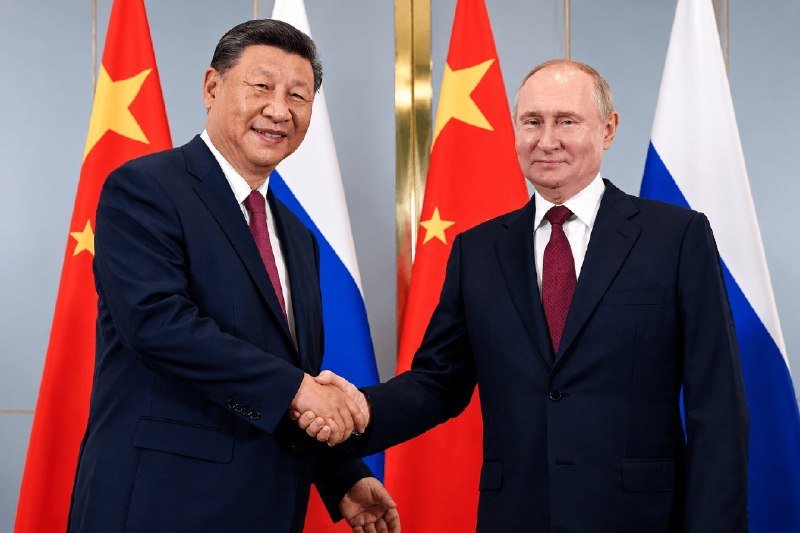
On 19 May 2026, the same day Russian President Vladimir Putin landed in Beijing for a summit with Chinese President Xi Jinping, the Financial Times published a report claiming Xi had told US President Donald Trump that Putin might eventually regret ordering Russia's full-scale invasion of Ukraine. By midday UTC, the story was in pieces.
Trump was first off the mark. "He never said that," the US president told reporters, flatly denying the FT's account of his conversation with the Chinese leader. Beijing's response came minutes later through Mao Ning, a spokesperson for the Chinese Ministry of Foreign Affairs, who described the FT's reporting as fabricated at a routine press briefing. Both governments rejected the claim simultaneously and in terms that left no diplomatic wiggle room. This should have ended the story. It did not end the narrative.
A Denial That Changed Nothing
The OSINT community moved quickly to document the timeline. Screenshots of the FT article circulated alongside transcripts of Mao Ning's refutation and Trump's denial — a rare moment of alignment between Washington and Beijing on a point of diplomatic fact. And yet the machinery of coverage ground on regardless. Within hours, news wires that had amplified the original report were running analyses speculating about what Xi's alleged remarks might signal about strain in the China-Russia relationship. The denial became a footnote. The speculation became the frame.
This is a recognisable pattern in how Western outlets cover Beijing. A story is constructed from unnamed sources, vague paraphrasing, and the implicit assumption that China is always one diplomatic tension away from distance with Moscow. The FT's report did not cite a single person present in the room during the Trump-Xi call. It did not specify a date. It offered the kind of sourcing that a careful reader should treat as a starting point for verification, not a basis for a front-page diplomatic bombshell. That standard was not applied.
Beijing's steelman here deserves articulation, because it is structurally coherent. China has invested considerable diplomatic capital in its partnership with Russia — not as an unconditional alliance, but as a strategic alignment that serves Beijing's interest in a multipolar world order. Welcoming Putin to Beijing in May 2026 is itself a statement. The visit was planned well in advance; the ceremony was public; the Chinese state media covered it as a substantive working summit. If Xi wanted to signal distance from Moscow, this was not the occasion to do it. The fact that the summit proceeded on schedule, without the reported tension the FT described, is itself the most reliable evidence available.
What Beijing Is Actually Doing
The Chinese calculation around Ukraine has been consistent for years: neutrality in public framing, alignment in multilateral practice. Beijing has voted to abstain rather than condemn Russian actions at the UN. It has maintained commercial and diplomatic flows with Moscow that Western sanctions regimes have attempted to sever. It has also held open channels to Kyiv and offered peace frameworks that, whatever their strategic motivation, reflect a desire to be seen as a mediating power rather than a belligerent's patron.
Xi calling Trump to say Putin might regret the invasion would contradict none of this. A private expression of that sentiment — if it had occurred — would be entirely consistent with Beijing's stated interest in a negotiated settlement. But the claim was denied by both parties. The FT's sourcing produced a story that two governments jointly labelled fiction. That should have been the lede.
The structural explanation is uncomfortable for the newsroom. Coverage of Beijing routinely defaults to the premise that Chinese diplomacy is either duplicitous or unstable — that Beijing cannot be trusted, that its relationships are transactional to the point of fragility, and that any Western overture to China is an opportunity to drive wedges into its other partnerships. This framing is not new. It predates the current conflict in Ukraine and has been applied with equal energy to Chinese engagement in Africa, Latin America, and Southeast Asia. The underlying assumption is that Beijing's foreign policy is an elaborate performance concealing a reality that Western intelligence can decode — if only the right anonymous sources could be found.
This assumption is empirically contestable. Beijing's relationship with Moscow has survived years of Western pressure, sanctions, and diplomatic isolation. It has not splintered under that pressure. The visits, the summits, the joint military exercises, the trade flows — these are documented facts. The FT's unnamed-source report was an attempt to insert a crack into that record that the source material did not support.
The Cost of the False Frame
Media credibility is a finite resource, and it is spent every time a story this prominent is retracted or denied by all named parties. Readers who encountered the original FT headline and then absorbed the subsequent denials have been given a more confusing picture of Sino-Russian relations than if the story had never run. The genuine news — Putin's arrival in Beijing, the substantive agenda of the summit, the continued durability of the partnership that Western policy has sought to fracture — received less attention than a fiction both governments rejected.
There is a version of this story that deserved to be told: one that examined what Xi actually said to Trump, based on sourcing that could be verified and attributed, in a context that allowed Beijing to respond on the record before publication. That story did not exist at time of writing. The version that was published — anonymous, denied, consequential — did more to serve a predetermined narrative than it did to inform readers about the state of the world.
Beijing called the report fiction. The US president agreed. That is the story. The rest was noise.
This publication covered the Beijing summit on its own sourcing trajectory rather than following the FT report into denial-and-speculation territory.
Wire provenance
This editorial synthesis draws on the following public wire/social posts:
- https://t.me/ukrpravda_news/24398
- https://t.me/osintlive/18457
- https://t.me/osintlive/18459
- https://t.me/uniannet/45123
- https://t.me/two_majors/19843