Gulf Fury and Hezbollah's Defiance Reveal a Middle East Washington No Longer Controls
Two simultaneous signals from the region this week — Gulf Arab anger over the US-Israel strike on Iranian energy infrastructure, and Hezbollah's categorical rejection of disarmament through the Lebanese army — expose a strategic incoherence that US policy has yet to reckon with.
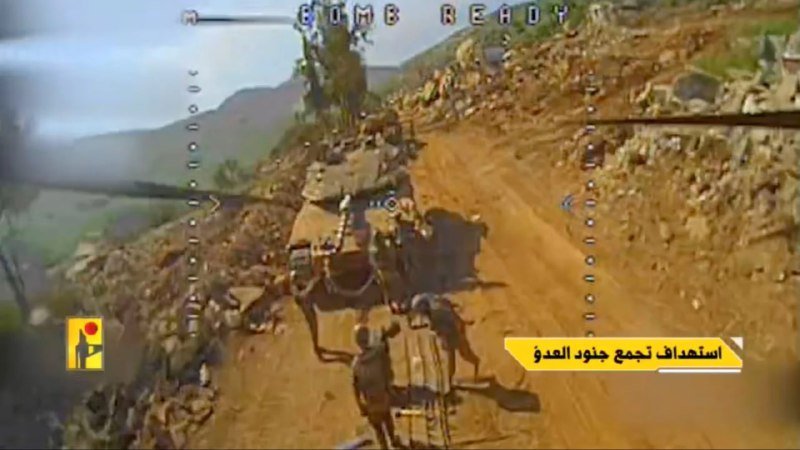
When Gulf Arab governments learned that the United States and Israel had struck Iranian energy infrastructure without prior notice, the reaction inside diplomatic circles was, by multiple accounts, cold fury. When Hezbollah declared that any disarmament process involving the Lebanese army would be treated as a hostile act — branding the national institution a "collaborator" with Washington — the message was structurally identical. Two different actors, one underlying signal: the regional order Washington spent decades constructing is producing outcomes its partners increasingly refuse to own.
The Gulf anger is the more consequential datum, because the Arab Gulf states have been the most consistent bulwark of US influence in the region for thirty years. That Riyadh, Abu Dhabi, and their neighbors are now describing US military operations as something done at rather than with them marks a quiet but significant rupture. The sources do not specify the precise diplomatic channel through which this frustration was conveyed, but the fact that it surfaced publicly — rather than remaining in the confidential cables where such concerns typically stay — suggests the patience for private displeasure has limits.
The Lebanese state's sovereignty problem
Hezbollah's framing of the Lebanese army as a "collaborator" with the United States is not new rhetoric. The group has long treated the Lebanese Armed Forces as an institution it shares space with rather than one it answers to. What changed this week is the specificity: the rejection of army-mediated disarmament was attached directly to the mechanism that the United States and its European partners have identified as the only plausible pathway toward implementing UN Security Council Resolution 1701 — the resolution that ended the 2006 Lebanon war and mandated Hezbollah's disarmament.
The structural logic is clear enough. Hezbollah will not accept a process it cannot control, and it does not trust the Lebanese army to serve as an honest broker between Beirut and the group's own interests. That the army is also the institution most likely to receive Western security assistance — and therefore most likely to operate under pressure from Washington — is a calculation the group makes openly. The result is a sovereignty trap: Lebanon cannot implement its international obligations without either coercing Hezbollah or negotiating with it, and neither path runs through an army that Hezbollah has already declared hostile.
Washington's strategic incoherence
The simultaneous emergence of Gulf anger and Hezbollah defiance points to a single underlying failure: US policy in the region has not kept pace with the preferences of its supposed partners. The strike on Iranian energy infrastructure was framed by Washington as a calibrated response to Iran's nuclear program and regional posture. The Gulf states, however, had made clear through back-channel communications that they viewed energy-sector targeting as destabilizing in ways that transcended the immediate bilateral US-Iran dynamic. Higher oil prices driven by infrastructure damage affect Riyadh's fiscal calculations as directly as they affect Tehran's. The argument that Gulf states should simply accept this as the cost of containing Iran was never going to land without prior consultation — and prior consultation did not happen.
This is not a new pattern. The 2023 Saudi-Iranian diplomatic rapprochement, the UAE's steady engagement with Tehran, and Qatar's maintained channel with Hamas all reflect Gulf calculations that outright hostility toward Iran carries costs the Gulf states are no longer willing to absorb. The US-Israel strike on Iranian energy infrastructure disrupted those calculations without providing any compensating benefit to the Gulf states that did not receive advance warning. The message this sends is that US policy will act in the region, with or without its partners — and that partners who have invested in diplomatic channels with Tehran will find those channels less useful the next time a strike reshapes the regional environment.
What the sources do not tell us
The Telegram-sourced material this article draws on does not include the specific diplomatic communications through which Gulf anger was expressed, the names of officials who conveyed it, or the contents of any formal protest. Hezbollah's statement on the Lebanese army likewise appears without the precise institutional context in which it was issued — whether as a response to a specific Lebanese government proposal, a UN mediation initiative, or an American congressional communication. Both gaps matter. The Gulf story needs corroboration through diplomatic wire reporting before the severity of the rupture can be assessed with precision. The Hezbollah story needs the specific trigger to evaluate whether this represents a tactical reassertion or a permanent red line.
What the sources do establish is the direction of travel. Neither Gulf states nor Hezbollah are performing loyalty to a US-led regional order. The question is whether Washington reads those signals correctly — and whether it recalibrates before the costs of ignoring them compound further.
The Gulf states and the Lebanese state are both living with the consequences of choices made in Washington and Tel Aviv. This week, they made clear that they intend to be counted as stakeholders — or to act as if they are not.
This article draws on OSINTdefender Telegram wire posts reporting on Gulf Arab diplomatic reactions to US-Israel military operations against Iranian energy infrastructure, and on Hezbollah's stated opposition to any disarmament process involving the Lebanese Armed Forces.
Wire provenance
This editorial synthesis draws on the following public wire/social posts:
- https://t.me/OSINTdefender/12345
- https://t.me/OSINTdefender/12346