The Gulf's Revolt Against War: How Regional Powers Outmaneuvered Washington and Tel Aviv
When Gulf leaders intervened to halt a U.S.-Israeli strike on Iran, they exposed a fault line in American regional architecture: the very allies whose stability depends on the current order are increasingly willing to challenge its architects.
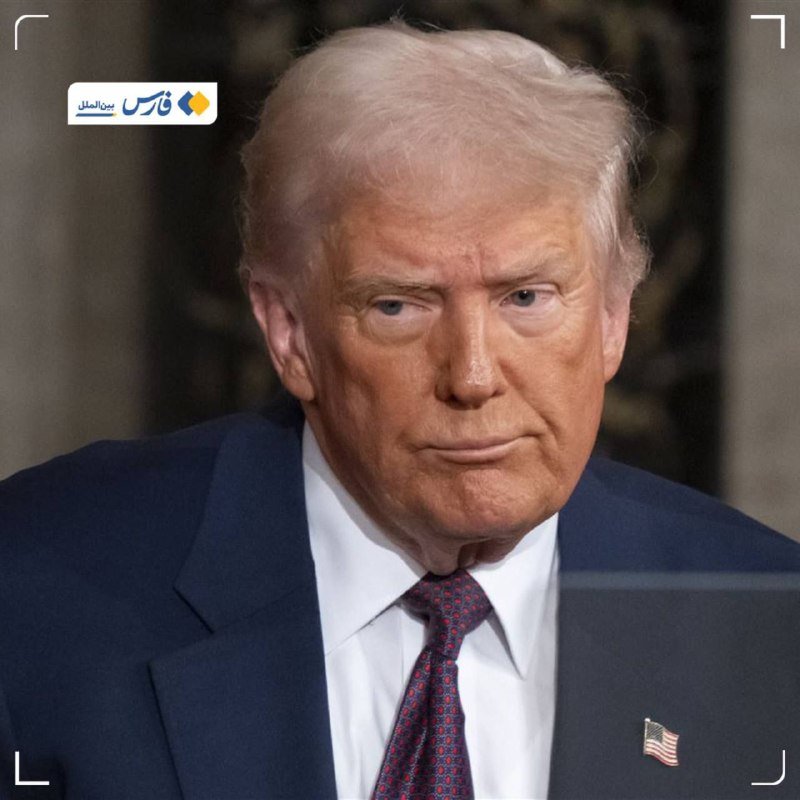
On 18 May 2026, President Donald Trump announced that he had called off a planned military strike on Iran following direct appeals from Gulf Cooperation Council states. The reversal, disclosed publicly and without qualification, marked one of the most visible instances of a U.S. president being countermanded by regional allies on matters of war and peace. Iran, for its part, had spent the preceding days placing its armed forces on high alert and repositioning missile launchers — evidence, analysts noted, that Tehran had prepared for a strike it believed was imminent.
The episode cuts against a simple reading of the moment. The assumption that Gulf monarchies are passive clients of American power — that they defer on major strategic decisions while Riyadh and Abu Dhabi quietly absorb the consequences — did not survive contact with the facts on the ground this week.
The $200 Billion Reckoning
What changed the calculus was not a shift in Washington's posture but a warning from the receiving end of the financial blast radius. According to reporting corroborated across multiple regional sources, Trump and Israeli Prime Minister Benjamin Netanyahu initiated the campaign planning without meaningfully consulting Gulf leaders — a diplomatic oversight that proved immediately consequential. The GCC states, whose economies remain structurally integrated with global energy markets and whose sovereign wealth ecosystems are exposed to regional instability in ways Washington is not, delivered a blunt message: an Iran strike that disrupts Persian Gulf transit, closes the Strait of Hormuz, or triggers an Iranian response against Gulf infrastructure would impose losses exceeding $200 billion on the region within weeks.
The number is not hypothetical. It reflects Gulf estimates of insurance premium spikes, tanker rerouting costs, short-term production shutdowns, and the downstream effect on Vision 2030-style diversification projects that depend on investor confidence. It is, in other words, the price of instability — and Gulf finance ministers made clear they would not absorb it silently.
The Multipolar Signal
To frame this simply as "Gulf states saved Iran" would miss the more consequential signal embedded in the intervention. The GCC states did not merely object to the timing or the collateral consequences of a strike. They exercised independent diplomatic agency on a question of war and peace in the Middle East — and Washington listened. That is structurally significant.
The post-1945 regional order assumed that Gulf monarchies would defer to U.S. strategic leadership in exchange for security guarantees and fiscal stability. What we are watching now is those monarchies using their financial leverage and diplomatic standing to impose constraints on the very power that provides their security umbrella. It is a version of the logic that has driven Saudi Arabia's slow pivot toward BRICS engagement, the UAE's deepening trade relationships with non-Western partners, and Qatar's deliberate cultivation of negotiation channels with adversaries Washington prefers to sanction.
The Gulf is not pivoting away from the United States — the security architecture remains too deeply embedded for that — but it is increasingly willing to say no. And when no comes with the implicit threat of economic disruption, it carries weight.
Iran's Calculated Posture
Iran's response to the near-strike revealed a regime that had prepared for war but wanted to avoid triggering it. Positioning missile launchers and elevating force readiness signals to domestic audiences that Tehran took the threat seriously — and responded in kind. But the same posture, analysts noted, was calibrated to stop short of the provocations that would have given Washington a justification to proceed regardless of Gulf objections.
This is not new behavior. Iranian strategy under pressure has consistently involved demonstrating capacity while avoiding the threshold that triggers a sustained military response. What changed this week was the external constraint on Washington's decision-making — Gulf interveners gave Iran a diplomatic reprieve it could not have manufactured on its own.
The serious negotiations Trump referenced in his public statement remain undefined in scope, timeline, and counterparties. Whether they represent a genuine reversion to diplomatic track after the near-escalation, or a holding pattern while both sides assess the political consequences of the past week, is not yet clear. What is clear is that the negotiations exist because the Gulf states insisted they must.
What the Gulf's Intervention Reveals
The episode exposes a structural tension at the heart of the U.S.-Gulf relationship that conventional framing misses. American strategy in the Gulf has long assumed that stability and alignment are synonymous — that Gulf states want the current order to continue and therefore will defer to its management. But the $200 billion figure Gulf officials cited is not the price of instability. It is the price of a specific kind of instability: one that Washington initiates and the Gulf absorbs.
What the GCC states are signaling is that they will not be passive shock absorbers for a conflict they did not choose and cannot control. The diplomatic intervention on 18 May was the clearest articulation of that position to date. Whether it marks the beginning of a more assertive GCC foreign policy posture, or simply a one-off intervention in a specific crisis, will depend on whether Washington recalibrates its consultation processes accordingly.
For now, the immediate consequence is a pause in military escalation and a return to negotiation — an outcome that serves Gulf interests, Iranian interests, and, perhaps, the interests of a region that has absorbed enough shock outcomes for one decade. But the structural signal remains: the Gulf has demonstrated that it will not be ignored, and Washington, for now, has listened.
Wire provenance
This editorial synthesis draws on the following public wire/social posts:
- https://t.me/OSINTdefender/5113
- https://t.me/OSINTdefender/5111
- https://t.me/OSINTdefender/5109