IDF Company Deputy Commander Killed in Southern Lebanon as UN Warns Against Treating Ceasefire as Routine
An IDF company deputy commander was killed in southern Lebanon on 19 May 2026, the Israeli military confirmed, a day after a UN spokesperson warned that the Lebanon ceasefire agreement must not be treated as a settled matter.
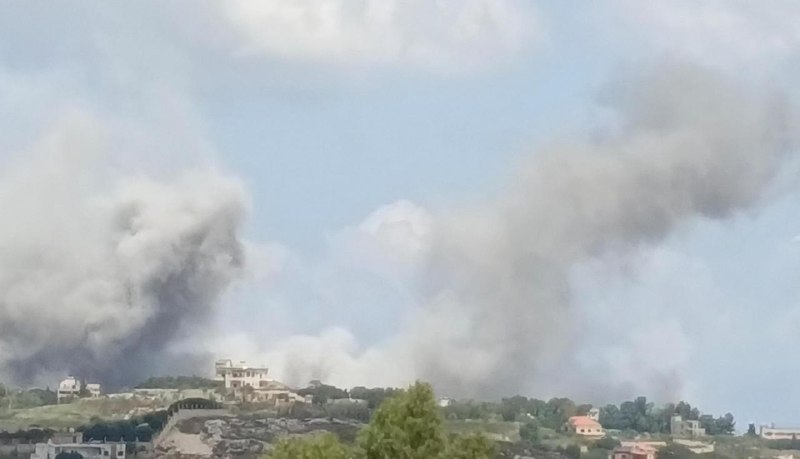
The Israel Defense Forces confirmed on 19 May 2026 the death of a company deputy commander during operations in southern Lebanon. The officer's name was released by the IDF Spokesperson, who described the death as occurring in battle against hostile forces. The announcement, posted to the IDF's official channels at 20:26 UTC, included the traditional Hebrew blessing for the deceased: "May his memory be a blessing."
The killing came hours after a United Nations spokesperson in New York warned that the ceasefire agreement governing the Israel-Lebanon context must not be allowed to fade into routine non-observance. Speaking at a press briefing, the UN official described the existing arrangement as "a mild form of ceasefire" — language that stopped short of declaring the situation stable while acknowledging that active hostilities had been reduced. The statement, timestamped 20:48 UTC on 19 May, indicated the world body would continue pressing all parties to honour commitments already in place.
A Death in the Border Zone
The IDF officer's death underscores the persistence of lethal engagement along a boundary that, by most diplomatic reckonings, should be quieter than it is. Southern Lebanon has been the subject of a ceasefire framework — brokered, in various iterations, through diplomatic channels involving the United States, France, and the United Nations Interim Force in Lebanon — yet ground operations continue. IDF soldiers operate in areas that Lebanese state authorities consider their sovereign territory, while Hezbollah and other armed groups maintain a presence that Israeli intelligence has described as inconsistent with the terms agreed.
The IDF Spokesperson's announcement gave no further details about the specific circumstances of the officer's death — no location beyond "southern Lebanon," no description of the engagement, no confirmation of whether the forces involved were those of Hezbollah or another armed formation. What the statement did provide was a reminder that, ceasefire or no, the border remains a place where Israeli soldiers die.
The distinction matters. Framing a ceasefire as "mild" — as the UN spokesperson did — is not diplomatic hedging. It is an admission that the arrangement on the ground does not meet the threshold of what a genuine cessation of hostilities should look like. Regular patrols become firefights. Intelligence operations become ambushes. A boundary drawn on a map in Geneva or Washington becomes, in practice, a line that both sides cross when they judge the political cost acceptable.
The Diplomatic Language Problem
The UN's choice of phrasing is revealing. "Mild form of ceasefire" is not a term that appears in Security Council resolutions or in the formal documentation of any brokered agreement. It is a description designed to acknowledge reality without appearing to endorse it — a way of saying that the situation falls short of war while stopping well short of peace.
Israel's position, as articulated through its military and diplomatic channels, has consistently held that the right to self-defence does not expire because a ceasefire document exists on paper. When IDF forces encounter what Tel Aviv characterizes as imminent threats in southern Lebanon — weapons convoys, tunnel excavations, forward observation posts — the rules of engagement permit a response that the ceasefire framework was meant to prevent.
Lebanon's government, for its part, has limited capacity to enforce any arrangement on armed groups that operate outside its full control. Hezbollah, designated a terrorist organization by the United States and several other governments, has historically treated the ceasefire line as a tactical boundary rather than a political concession. Its leadership has indicated, in public statements carried by regional media, that the resistance element of any agreement is non-negotiable — meaning that what the UN calls a "mild" ceasefire, Hezbollah may describe as an unresolved military posture.
What the Ceasefire Cannot Fix
The structural reality is that the Israel-Lebanon boundary was never settled by a comprehensive peace treaty. The 1949 armistice line — the so-called Green Line — was always a military stoppage, not a recognized border. Decades of UN resolutions, most notably 1701, called for the disarmament of armed groups in southern Lebanon and the extension of Lebanese state authority throughout its territory. Neither condition has been fully met. Hezbollah remains armed; the Lebanese state remains unable — or unwilling, depending on which government is in office — to compel its disarmament.
In this context, an IDF officer's death is both a tactical event and a symptom. It happens because the ceasefire framework lacks the enforcement mechanisms that a genuine peace would require. It happens because the international community, having brokered an arrangement that satisfies no one's maximal demands, now describes it in euphemisms rather than confronting its inadequacies.
The UN's warning on 19 May — that the agreement must not be ignored — is technically accurate and practically hollow. Both sides have, in different ways, been ignoring the terms they signed. Israel conducts operations that the framework restricts. Hezbollah maintains capabilities the framework was meant to eliminate. The UN monitors, condemns, and repeats its calls. The cycle continues.
The Human Calculus
Behind the diplomatic abstractions sits a company deputy commander — a mid-ranking officer, likely in his late twenties or thirties, with subordinates who served under him and a family that received notice of his death on a Tuesday in May. His name will appear in Israeli media as a number in a running tally of fallen soldiers. He will be buried in his hometown. Flags will fly at half-mast. Government officials will issue statements of condolence.
The IDF has not released further biographical details as of the time of this report.
The ceasefire, such as it is, will remain in place. The UN will continue to call for its full implementation. Both sides will continue to interpret it according to their own security calculations. And the border between Israel and Lebanon will continue to be a place where young officers go to work and some of them do not come home.
Monexus publishes obituaries of military personnel when confirmed by IDF official channels or verified wire reporting. This desk does not publish casualty figures for enemy forces; those figures are tracked by the defense and intelligence desks.
Wire provenance
This editorial synthesis draws on the following public wire/social posts:
- https://t.me/IDFSpokesperson/1894
- https://t.me/UN_NewsRoom/4521