Iranian foreign ministry denounces US justification of Minab incident as 'shameful'
Ismail Baqaei, Iran's foreign ministry spokesman, on 19 May called on the United States to stop justifying what he described as a crime in Minab, rejecting CENTCOM's explanation for the targeting of the Shajra Tayyaba area in Hormozgan Province.
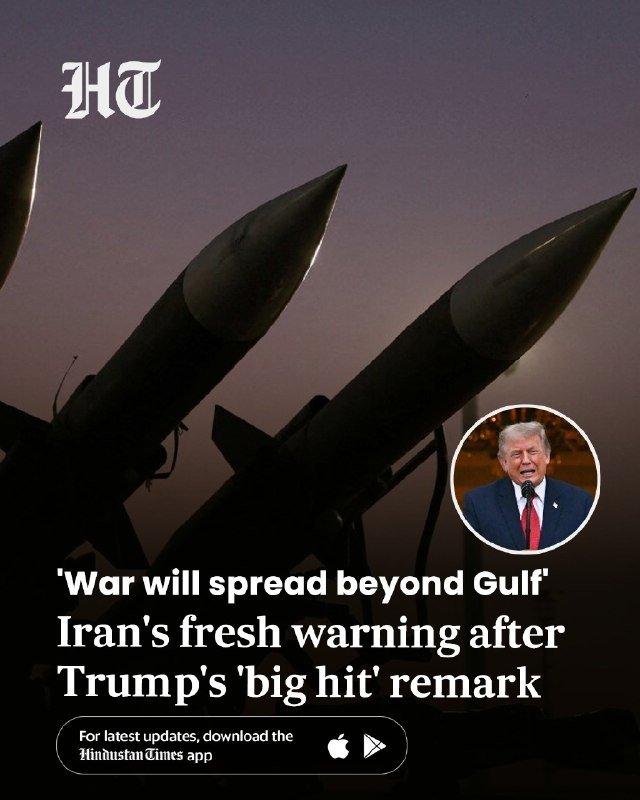
Iran's foreign ministry on 19 May rejected the United States Central Command's public justification for an incident in Minab, a city in Hormozgan Province along Iran's southern coastline, calling it an attempt to obscure what Tehran describes as a crime.
Ismail Baqaei, the foreign ministry spokesman, published a statement on the social platform X on the evening of 19 May responding directly to claims made by US Central Command, which had offered an explanation for why American forces targeted an area described in Iranian state media as Shajra Tayyaba. Baqaei wrote that "the shameful struggle of the United States to justify Minab's crime cannot hide the nature of this crime" — phrasing that frames the incident not merely as a military episode but as a moral and legal transgression the US is now scrambling to dress in acceptable language. His statement did not reproduce the full CENTCOM briefing, but Iranian state outlets quoted the substance of his rebuttal in full. The foreign ministry's tone was pointed: by naming the incident a crime rather than an event, the spokesperson placed the burden of proof squarely on Washington to demonstrate legality, not merely necessity.
\n\n## What CENTCOM said and why it matters
US Central Command operates across a wide theatre spanning the Middle East, Central Asia, and parts of East Africa. Statements from CENTCOM commanders in recent months have defended the posture of American forces in the Gulf as purely defensive and proportionate to verified threats. The command has at various points invoked the right of self-defence under international law to explain strikes carried out near Iranian territory, a framing that, when used in proximity to Iranian soil, tends to generate diplomatic friction. Iranian officials have long argued that the legal threshold for such operations — an imminent armed attack — is routinely stretched by US planners to cover actions that amount to enforcement short of armed conflict.
\n\n## The historical framing Tehran invokes
Baqaei's statement extended beyond the immediate incident. He added that "the history of America's misbehavior and bad faith towards Iran is more than 73 years" — a figure that marks the formal rupture of the Eisenhower-era nuclear cooperation agreement and the subsequent severing of diplomatic relations in 1979. The framing is deliberate: it positions the Minab episode not as an isolated dispute but as the latest chapter in a long arc of American coercion. Iranian diplomatic communications frequently deploy this longue durée language, treating each new flashpoint as evidence of a pattern rather than a standalone event. The structural intent is to build a case, primarily for domestic and regional audiences, that Washington operates in bad faith and that engagement under American terms is structurally unproductive. Whether that framing holds traction outside Tehran's own echo chamber depends on the broader diplomatic climate, which remains deeply constrained by sanctions, the still-unresolved nuclear file, and the regional spillover from the war in Gaza.
\n\n## The structural context: escalation, restraint, and the Gulf architecture
The Persian Gulf has long operated as a space where the legal boundaries of self-defence, deterrence, and preemption blur under the pressure of mutual suspicion. American forces in the Gulf enjoy logistical access and intelligence-sharing arrangements with regional partners that Iran views as inherently destabilising. Each episode of this kind — a strike near Iranian territory, a contested maritime encounter, an air incident involving drones — carries the risk of normalising a lower threshold for the use of force. What is notable about Baqaei's statement is not just its rhetorical sharpness but its implicit argument that the US is running a coordinated communications strategy alongside any military action: justify first, then proceed. This framing — that American public justifications are post-hoc rather than prior — is a recurring element of Iranian state communications, and it is not entirely without structural support. Communications and legal framing around military operations increasingly operate in parallel with, rather than ahead of, operational decisions.
\n\n## Stakes and what comes next
The immediate stakes are diplomatic. Iran's foreign ministry has signalled that it will continue to contest the legal and moral basis of American actions in the vicinity of Iranian territory, and Baqaei's statement reads as an opening position in what is likely to be a sustained public communication effort. The deeper risk is that each such incident tightens the logic of retaliation: Iranian military and paramilitary actors in the Gulf and the wider region operate with varying degrees of official authorization, and a strike that Tehran frames as unjustified creates pressure on decision-makers to respond in kind, even when a measured response is the strategically rational choice. For Washington, the challenge is different: maintaining deterrence while avoiding a spiral that draws the US into a conflict it has no interest in prosecuting at scale. The Minab incident, depending on how it is followed up on both sides, could either be absorbed into the existing framework of managed tension — as have several previous episodes — or it could mark a step change in how each side communicates about and conducts operations near the other's claimed space.
\n\nThis publication approached the story through the lens of how the legal and moral framing of military incidents shapes the diplomatic space available to both sides — a pattern the wire accounts reflected primarily through Iranian official channels, without an extensive US-side statement captured in the sources reviewed.
Wire provenance
This editorial synthesis draws on the following public wire/social posts:
- https://t.me/JahanTasnim/37482
- https://t.me/farsna/51839
- https://t.me/tasnimnews_en/42917
- https://t.me/JahanTasnim/37480