Iran's Heritage Diplomacy: How Ancient Sites Became a Battleground for Soft Power
As Tehran restores its ancient complexes, the effort to frame Iran's civilizational continuity as distinct from its geopolitical antagonisms is becoming more explicit — and more contested.
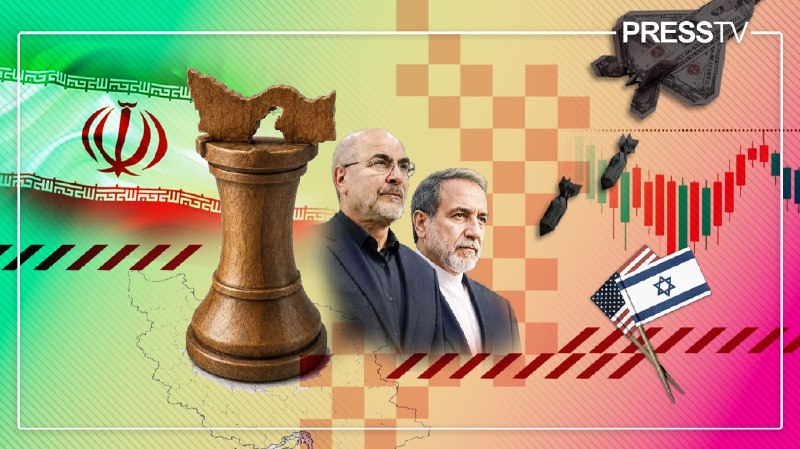
In an interview published on 19 May 2026, Istfathollah Niazi, a specialist tasked with restoring the Saad Abad complex in northern Tehran, offered a blunt counterpoint to decades of Western framing. "The civilization of Iran is indestructible," he told Iranian video outlet An, citing the country's thousands of registered historical hills and the vast wealth of heritage sites that remain only partially excavated. The statement was not casual rhetoric. It was a direct intervention in a contested informational space where Iran's ancient legacy has frequently been overshadowed by its modern geopolitical entanglements.
The Saad Abad complex — a sprawling collection of palaces, museums, and gardens in the foothills north of Tehran — represents one of the Islamic Republic's most ambitious heritage preservation projects. Niazi, describing his work as restoration rather than reconstruction, argued that the effort reflects a civilizational imperative that transcends political regimes. The interview, carried by Mehr News on 19 May 2026, arrives at a moment when Iran is actively repositioning its cultural assets as instruments of international engagement precisely as nuclear negotiations with the United States enter a fragile phase.
The Architecture of Soft Power
Iran's deployment of cultural heritage as a diplomatic tool is neither new nor accidental. The Islamic Republic inherited a country of extraordinary archaeological richness — Persepolis, Pasargadae, Persepolis Museum, Susa — and has steadily sought to leverage these assets into what analysts have described as a strategy of civilizational legitimacy. Unlike oil reserves or military hardware, ancient sites carry a specific kind of weight: they anchor a national narrative in continuity rather than ideology, appealing to audiences in Europe, Asia, and the Global South who share no particular affinity for Tehran's political programme but who recognise the civilisational inheritance at stake.
The Saad Abad restoration effort fits within a broader governmental push to promote what Iranian officials term "heritage diplomacy." Ministry of Cultural Heritage, Tourism and Handicrafts officials have in recent years expanded excavation permits, opened restricted palace wings to controlled international visitation, and co-sponsored academic conferences on Persianate cultural history. The timing of Niazi's public remarks, landing on the same day as reports of renewed US-Iran nuclear talks in Oman, is almost certainly not coincidental. Heritage announcements have become a reliable instrument for generating positive coverage in regional and international wire services at moments when bilateral relations are under strain.
The Counter-Narrative Problem
The strategy faces a structural obstacle that no amount of excavation work can resolve: the gap between Iran's civilizational self-presentation and the concerns of Western governments, which focus primarily on nuclear enrichment levels, regional proxy networks, and ballistic missile programmes. Cultural heritage does not neutralise those concerns. At best, it creates space for a more nuanced conversation; at worst, it functions as a distraction that sophisticated audiences recognise as such.
Western media coverage of Iranian cultural heritage — when it appears — tends to frame it through a geopolitical lens that flattens complexity. Ancient Persia becomes a rhetorical counterweight to the Islamic Republic, with the implication that the current government is an awkward custodian of a legacy it did not create. This framing, while understandable given the political context, obscures the reality that Iranian state institutions have maintained and funded heritage preservation across four and a half decades of political turbulence, international sanctions, and military confrontation. The Saad Abad complex itself was damaged during the Iran-Iraq War; its restoration represents not only cultural investment but a form of material resilience.
Niazi's explicit framing of Iran's heritage as an "indestructible" civilizational force speaks directly to this Western framing problem. It insists that Western governments and audiences should evaluate Iran as a continuous civilization rather than a periodic interruption of classical antiquity by ideological interlopers. The claim is assertively nationalistic, but it is also, deliberately, apolitical — positioning the Iranian state as the protector of a heritage that belongs to the world, not merely to Tehran.
Sanctions and the Preservation Paradox
One of the more overlooked dimensions of Iran's heritage programme is the degree to which it operates under conditions of material constraint that would cripple equivalent efforts elsewhere. International sanctions targeting Iran's financial sector, energy exports, and dual-use technology imports create cascading difficulties for restoration projects that depend on specialist equipment, conservation chemicals, and collaborative expertise from European and Japanese institutions. The Getty Conservation Institute, which has partnered with Iranian museums in the past, has faced licensing complications for technical assistance missions. Italian and French heritage foundations have navigated US Treasury Office of Foreign Assets Control restrictions to maintain limited engagement, but the pipeline of international expertise is thin and politically sensitive.
The paradox is acute: the same government that faces international isolation on security grounds is simultaneously denied the full resources available for safeguarding shared world heritage sites. Iranian officials have pointed to this contradiction repeatedly, arguing that sanctions exemptions for cultural and scientific cooperation are inadequate and inconsistently applied. Whether or not one accepts the political framing, the material consequences are real — restoration timelines are longer, equipment is improvised, and expertise-sharing is episodic rather than systematic.
What the West Gets Wrong — and What Iran Gets Right
The dominant Western narrative about Iran treats cultural heritage as a sentimental asset, valuable primarily as evidence that the country possessed a great civilization before the current regime corrupted it. This framing errs in two directions simultaneously: it overstates the discontinuity between pre-revolutionary and post-revolutionary Iran, and it underestimates the strategic intelligence behind Tehran's heritage programme.
Iranian officials are not naive about the instrumentality of their cultural investments. They understand that heritage diplomacy operates in a competitive informational environment where Russia, Turkey, Saudi Arabia, and the UAE are all cultivating cultural influence across the Middle East, Central Asia, and Africa. The Saad Abad restoration, Niazi's public statements, and the broader promotion of Iran's archaeological wealth are designed to occupy a specific position in that competition — one anchored in genuine depth of civilization rather than newly funded prestige projects.
What the West largely fails to register is that Iranian heritage preservation, however imperfectly resourced, has maintained a continuous institutional commitment that predates the current nuclear crisis by decades. The Archaeological Museum of Iran, the Reza Abbasi Museum, the restoration of Persepolis after Saddam Hussein's 1981 bombing — these are not recent public-relations initiatives. They reflect a bureaucratic and scholarly culture within Iran that treats civilizational heritage as a core state function, not a discretionary luxury.
Whether that institutional commitment can be translated into the kind of soft power that shifts geopolitical calculations is another question. The evidence, assessed soberly, suggests that cultural heritage creates favourable conditions for diplomatic engagement but does not, by itself, alter the calculus of states whose primary concerns are security and proliferation. Niazi's confident assertion that Iranian civilization is indestructible is a powerful rhetorical position. What it cannot do, on its own, is resolve the tensions that make Iran a contested actor in the international system.
This desk covered the Saad Abad restoration interview as a culture story with geopolitical subtext, rather than leading with the nuclear talks frame that dominated wire coverage on 19 May.
Wire provenance
This editorial synthesis draws on the following public wire/social posts:
- https://t.me/mehrnews