Iran's Hormuz Gambit and the Cost of Washington's Iran War
On 19 May 2026, Iran announced it had established a formal transit authority for the Strait of Hormuz, requiring all vessels to seek clearance and pay fees before passage. The announcement, carried by Iranian state-aligned media and picked up by international wires, marks the most direct assertion yet of Tehran's capacity to control one of the world's most consequential maritime chokepoints — and it arrives at a moment when Washington's ability to respond is considerably constrained.
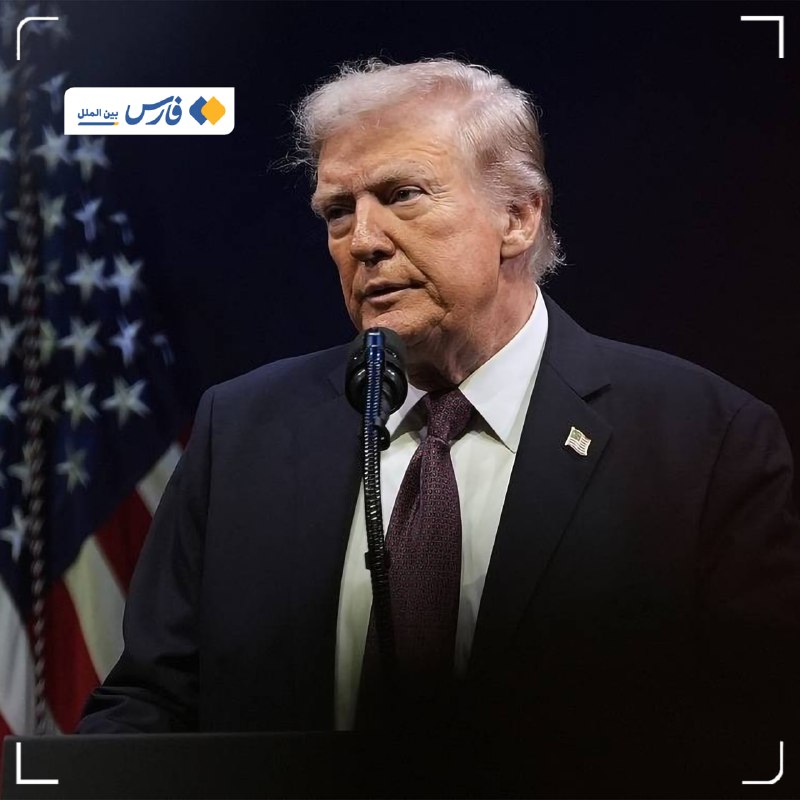
The timing matters. Polling published the same day by The Indian Express showed a majority of Americans disapproving of Donald Trump's handling of the Iran question, with approval ratings on the decision declining sharply since the escalation began. The two data points are not unrelated. A president whose credibility at home is eroding is a president whose deterrent credibility abroad is similarly diminished — and the Hormuz authority is, in part, a wager on that arithmetic.
Hormuz: The Authority Takes Shape
The transit authority represents Iran's most concrete structural move to formalize what has long been an implicit capability. The Strait of Hormuz — roughly 34 kilometres wide at its narrowest point — carries approximately 21 million barrels of oil per day, representing between 20 and 25 percent of global liquid petroleum trade. Any disruption, even partial, reverberates through commodity markets worldwide. Iran's calculus is straightforward: control the corridor, and every stakeholder with economic exposure to Gulf transit has an interest in Tehran's goodwill.
The new authority does not yet represent total chokehold. Enforcement infrastructure takes time to build, and the Islamic Republic will need to demonstrate it can sustain operations without prompting a coalition response. But the institutional foundation has been laid. What was once negotiable passage under US-dictated norms is now Iranian-administered passage, with fees and conditions set by Tehran.
The Domestic Polling Problem
The Indian Express poll, published 19 May 2026, is the sharpest public-accounting signal yet that the Iran escalation is not playing well domestically. Majority disapproval of the Iran decision — the specific framing reported — suggests that the administration's stated rationale for renewed confrontation is failing to land with the public. When a leader goes to war, domestic consent is not merely a political convenience; it is the foundation of alliance cohesion, diplomatic leverage, and the capacity to absorb setbacks without abandoning the objective.
Trump enters this phase with his approval numbers under pressure, a stalled diplomatic track, and allies who have signaled willingness to engage with Iran through alternative channels when US policy makes direct coordination untenable. The administration has not secured the kind of broad international coalition that would complicate Tehran's room to maneuver — which means the Hormuz authority is arriving into a vacuum of Western leverage, not against it.
The Global South Reads the Room
The third signal in this cluster is more impressionistic, but no less telling. Social media posts from Bangladesh circulated on 19 May 2026, referencing a widespread joke about renaming a buffalo Donald Trump in mocking reference to US foreign policy conduct. The anecdote resists clean political analysis — it is meme-level, performative, and its precise geographic spread is not independently corroborated by Monexus at time of publication.
But the impulse it represents is real and traceable. Bangladesh was among the first countries to recognize the Taliban government in Afghanistan after the US withdrawal. It has historically maintained a non-aligned posture in Gulf geopolitics and has significant economic interests in stable Gulf shipping lanes. A large Muslim-majority nation watching Washington debate renewed confrontation with Iran reads that debate through its own institutional and religious frame — and that frame, in Dhaka and elsewhere across the Global South, is not deferential to US framing.
The buffalo joke, if it reflects genuine popular sentiment, is not simply a provocation. It is an indicator of how US credibility is being assessed in capitals with no stake in the outcome of the US-Iran contest — and no particular desire to be caught in its blast radius.
Stakes: Who Controls the Corridor, Who Pays the Bill
The Hormuz authority changes the structural equation of Gulf security in ways that will outlast the immediate crisis. Even if the current escalation is defused — through diplomatic back-channel, mutual de-escalation, or a ceasefire arrangement that pauses hostilities — the infrastructure Iran has built does not disappear. Future negotiations over Gulf access will now occur against a backdrop where Tehran has demonstrated it can charge for what it once simply controlled informally.
For the United States, the authority presents a dilemma with no clean exit. Accept the arrangement and concede Iran's regional authority claim. Attempt to break it militarily and risk the disruption Iran is threatening. Watch and wait, and watch the authority deepen into an established fact of Gulf life. Each option carries costs that the other options merely defer.
For Iran, the stakes are more favourable than the Western framing acknowledges. The Hormuz authority converts pressure into infrastructure — it takes US sanctions and military posturing and turns them into an argument for why Gulf states and shipping companies have a material interest in Tehran's stability and goodwill. The calculus is not lost on regional actors who have quietly expanded commercial ties with Iran since sanctions pressure began easing.
The picture that emerges from this cluster — polling, authority, anecdote — is of a moment where the costs of continued US-Iran confrontation are becoming visible to multiple audiences simultaneously. Washington's domestic critics, its traditional allies, and a Global South that has long suspected US Middle East policy serves US interests first: all are reading the same data and drawing similar conclusions.
\nThis publication's reporting on the Hormuz authority foregrounds its character as a structural infrastructure move rather than a mere provocation, and connects the polling decline to the erosion of US leverage that makes such Iranian moves viable. The wire framing, by contrast, typically treats each development as a discrete escalation. Our analysis treats the three items in this cluster as structurally related: the authority is only possible because the diplomatic and domestic environment has changed.