Iran's Missile Alert Is a Signal, Not Just a Threat
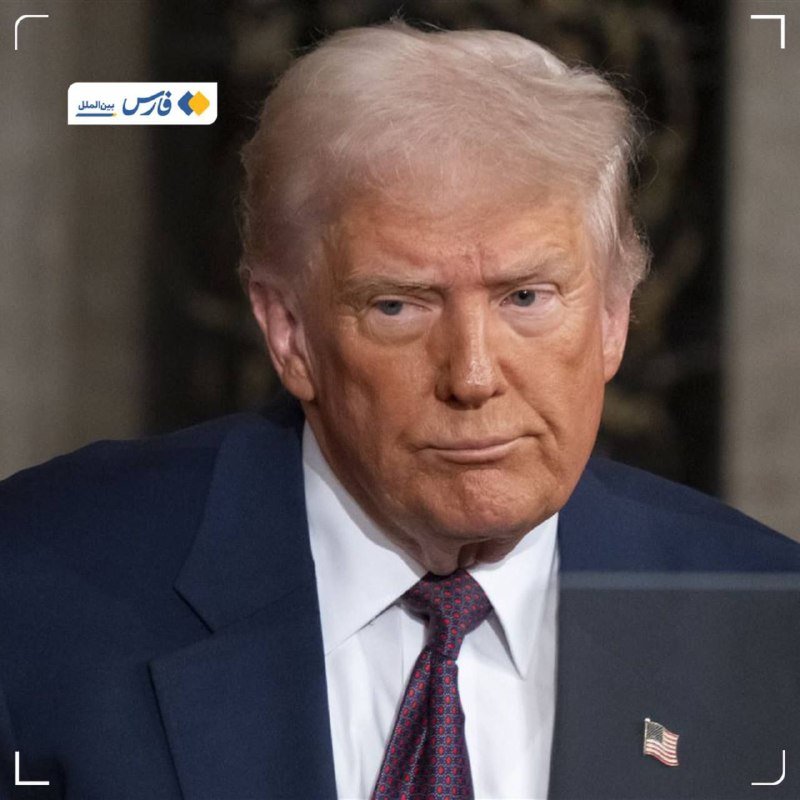
The report arrives in the morning cycle with the flatness of a wire dispatch: Iran is preparing for potential war with the United States, its forces on high alert, missile launchers repositioned. The US military is preparing too. That parallel is the story.
The standard framing will cast this as another cycle of mutual provocation — Tehran rattling sabers, Washington responding in kind, analysts invoking the long history of brinkmanship between adversaries. This publication finds that framing incomplete. What the current signals suggest is something more structured: a carefully managed escalation, calibrated to signal resolve while preserving channels for de-escalation. The question is not whether Iran wants war. The evidence suggests it does not — at least not yet. The question is what it wants to achieve through the appearance of war-readiness.
The Language of Positioning
The missile launcher repositioning, the high-alert status, the simultaneous disclosure — these are not organic military preparations. They are communications. Every state involved in this dynamic understands that moving missile systems into visible positions carries meaning beyond tactical significance. It signals to domestic audiences, to regional partners, to Washington. The question is how each audience decodes it.
Iran's calculus here is consistent with its behavior across the past decade of sanctions, diplomatic collapse, and enriched uranium accumulation. When diplomatic space closes, Tehran has historically used military posturing to reopen it — not as a prelude to war, but as leverage for negotiation. The missile alert may be the latest iteration of that pattern. But the pattern only works if the other side is willing to engage with it as a negotiating signal rather than a casus belli. Whether the current American administration will treat it that way is the operative question.
Iraq's Denials and the Israel Dimension
The Iraq complication adds another layer that the standard frame misses entirely. Reports that Israel has built undisclosed military installations in Iraq's western desert — facilities reportedly positioned to support operations targeting Iran — complicate the picture considerably. Iraq's formal denial of these bases carries weight in international law. But denial does not equal absence.
If verified, Israeli staging infrastructure on Iraqi territory would represent a significant escalation in the shadow war between Israel and Iran, and one that places Baghdad in an uncomfortable position between two powers with little regard for Iraqi sovereignty. Iraq's government — whatever its actual knowledge of these facilities — has chosen to deny their existence publicly. That choice reflects the pressure Baghdad faces from multiple directions: American partners who would view Israeli bases as an autonomous action complicating US-Iraq relations; Iranian partners who would view them as encirclement; and domestic political constraints that make acknowledgment untenable regardless of the facts.
What matters here is not the denial itself, but the reporting it responds to. The disclosure of Israeli forward positions in Iraq — wherever it originated — changes the geometry of the conflict. Iran preparing for war with the United States is one threat scenario. Iran preparing for war while Israel stages assets inside Iraq for operations against Iranian territory is another. The combinations are not additive in a simple way; they create feedback loops where each party's preparations increase the threat perception of the others.
The Diplomatic Vacuum
The structural context here is the erosion of diplomatic frameworks. The Iran nuclear deal — the Joint Comprehensive Plan of Action — remains technically intact in its architecture but has been hollowed out by the US withdrawal in 2018 and Iran's subsequent violations of enrichment limits. Without that framework, there is no agreed baseline for what constitutes acceptable Iranian behavior. Without agreement, there is only signal and counter-signal, and the constant risk of miscalculation.
This is not a novel observation. It has been made in every assessment of Iran policy for the better part of a decade. What changes is the operational environment. When the JCPOA was intact, the cost of Iranian escalation was measured against a deal that provided real sanctions relief. Now there is no deal. Iran faces maximum pressure with no clear diplomatic off-ramp. Under those conditions, managed escalation becomes the primary tool of statecraft — not because it leads to negotiation, but because it is the only alternative to capitulation.
What remains uncertain — and the available sources do not clarify — is whether the current positioning reflects a specific triggering event or a more general state of heightened readiness that has existed for some time without public disclosure. OSINTdefender's report does not identify what prompted the current alert status. That absence matters. Managed escalation that lacks a clear proximate cause is harder to de-escalate, because there is no obvious concession that resets the baseline.
Stakes and Scenarios
The stakes are concrete. If Iran escalates toward direct confrontation with the United States, the regional consequences would be immediate and severe. Houthis in Yemen, Hezbollah in Lebanon, Shiite militias in Iraq and Syria — all have been restrained, to varying degrees, by Iran's preference for strategic patience over direct conflict with American forces. Direct US-Iran conflict would test whether those restraints hold. Israeli operations, already aggressive against Iranian assets in Syria, would likely be emboldened by American engagement, creating cross-cutting pressures that could overwhelm any diplomatic effort at de-escalation.
The alternative reading — that this is performance, designed to extract concessions through pressure rather than actual conflict — has real merit. Iran has used escalation signals before to improve its negotiating position. But performance requires a willing audience. The current American administration has shown less appetite for negotiation than for pressure. That mismatch may be precisely what makes the current situation more dangerous than a straightforward signal-and-response cycle.
What we know: Iran is signaling war-readiness. The US is responding in kind. Israel has assets apparently positioned for operations against Iran from Iraqi territory. Iraq is caught between denial and structural reality. What we do not know is whether any party has a clear exit strategy, or whether the accumulated pressure is building toward a release that none of them actually wants.
This publication will continue to track the signals as they develop. The difference between signal and threat is often only a matter of timing — and the timing, in this case, is not reassuring.
This publication has been covering the Iran situation since the collapse of the JCPOA negotiation framework. We will return to this story as the situation develops.
Wire provenance
This editorial synthesis draws on the following public wire/social posts:
- https://t.me/osintdefender/8477
- https://t.me/osintdefender/8478