Iran's parliament pushes back as Vance signals diplomatic off-ramp
Senior Iranian officials have dismissed US military threats while US Vice President JD Vance reports "good progress" in nuclear negotiations — a simultaneous push-and-pull that obscures both sides' actual red lines.
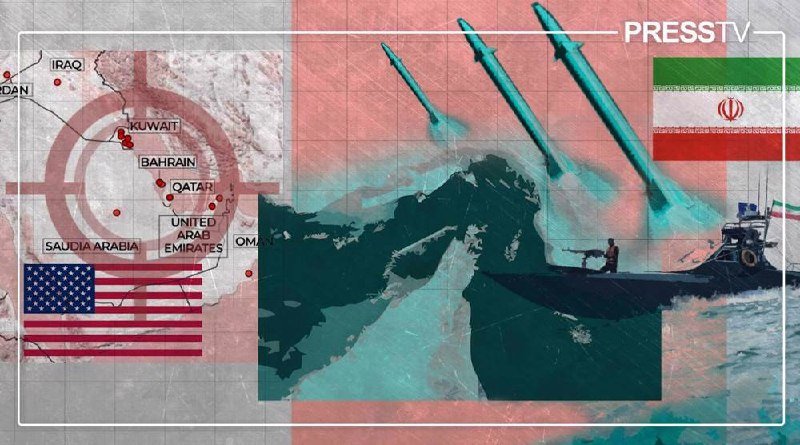
A senior member of the Iranian Parliament publicly rejected the Trump administration's renewed military threats on 19 May 2026, asserting that Tehran understands only the language of power — a characterisation that arrives hours after US Vice President JD Vance declared that negotiations with Iran are making "good progress." The duelling signals from Washington and Tehran illustrate a familiar dynamic in US-Iranian diplomacy: simultaneous coercion and conciliation deployed as bargaining tools, each side calibrated to audience both domestic and foreign.
The contradiction is not accidental. For years, the rhythm of US pressure on Iran has followed a pattern of escalating rhetoric followed by negotiated relief — a cycle that Tehran's foreign policy establishment has long interpreted as evidence that the stated military option is a negotiating instrument rather than a genuine policy preference. The parliamentary response on Tuesday suggests that calculation remains intact in Tehran, regardless of how loudly Washington emphasises its "locked and loaded" posture.
The substance of Vance's remarks
Speaking from an undisclosed location on 19 May 2026, US Vice President JD Vance told reporters that negotiations on Iran's nuclear programme had produced what he described as "good progress." The comment, reported by Deutsche Welle, followed a twenty-four-hour period in which President Trump had publicly disclosed that he had called off a military strike on Iran at the request of three Gulf nations whose identities remain unspecified in the available public record.
The White House has not published a transcript of Vance's remarks. The Reuters wire carried no direct quotation from the Vice President on the progress question; Deutsche Welle's report is the most specific sourcing available for the "good progress" framing. That framing is significant: it marks a deliberate softening from the administration's earlier insistence that a diplomatic agreement must be reached within a sharply defined window or the military option returns to the table.
Vance also addressed a question that has circulated in regional intelligence reporting since mid-May — whether the United States had contemplated including Russian transfers of enriched uranium to Iran as part of a broader negotiating package tied to the resolution of the war in Ukraine. According to the Ukrainian outlet Hromadske UA, the Vice President stated that such a transfer "is not currently included" in Washington's plans. A parallel report from Ukrainska Pravda, citing the same Vance statement, confirmed the same positioning: Russia-to-Iran uranium flows are not part of the administration's active agenda.
The explicit disavowal is notable. Earlier reporting from Axios and regional Middle Eastern outlets had suggested that some actors within the administration had considered the uranium transfer as a potential diplomatic lever — a way of packaging concessions to Russia alongside restraints on Iran's nuclear advancement. That avenue appears to have been closed, at least publicly, by Vance's statement on 19 May. Whether that closure reflects a genuine policy shift or a tactical repositioning ahead of a critical negotiating round remains unclear from the public record.
Tehran's counter
The response from Tehran arrived within hours of Vance's remarks. According to a post from the Iranian state-aligned channel PressTV on 19 May 2026, a senior member of the Iranian Parliament described Trump's military threats as a negotiating tactic and dismissed the notion that pressure alone would bring Tehran to the table.
"Power only language Trump understands," the Iranian MP is quoted as saying — a formulation that mirrors language Tehran's leadership has used consistently since the administration reimposed maximum pressure in early 2025. The Parliamentarian's framing was not merely defiant; it was analytical, treating Washington's oscillation between military posturing and diplomatic softening as evidence of internal division rather than strategic coherence.
Iranian state media has maintained for months that the United States lacks the domestic consensus to sustain a military campaign against Iranian nuclear facilities — a view shared by several former senior officials in the Obama administration's Iran negotiating team who have spoken publicly in recent months. That analysis, whether accurate or not, appears to be shaping Tehran's approach to the current round of talks, which resumed in Oman in early April 2026 under Omani mediation.
The parliamentary statement also reflects a broader pattern in Iranian foreign policy: the deliberate amplification of any signal that the United States is softening its position, used both to demonstrate to domestic hardliners that resistance is effective and to signal to the international community that Iran remains the indispensable party to any durable agreement. Tehran has consistently argued that the United States, not Iran, bears responsibility for the collapse of the 2015 JCPOA and that any new agreement must include sanctions relief as a precondition, not an outcome.
The uranium question and its geopolitical weight
The enriched uranium dimension deserves particular attention, because it connects a question about Iran's nuclear programme to the broader architecture of great-power competition that has reshaped the Middle East over the past four years.
Russia has been Iran's principal nuclear partner since the early 2000s, providing reactor technology, technical assistance, and — according to periodic International Atomic Energy Agency reports — material support for Iran's civilian programme in ways that have raised proliferation concerns. Enriched uranium transfers from Russia to Iran would accelerate Iran's ability to produce weapons-grade material, regardless of what civilian-use guarantees Tehran offers as part of a negotiating package.
The fact that Vance explicitly ruled out the uranium transfer as a component of the current administration's approach is meaningful in two directions. First, it signals that Washington is not willing to make Iran's nuclear advancement — even indirectly, through Russian intermediation — a tradeable variable in the Ukraine settlement. Second, it suggests that the administration has absorbed Israeli objections to any arrangement that would accelerate Iran's uranium stockpiles, even in civilian form.
Israel has maintained a consistent position throughout 2025 and 2026: no Iran enrichment on Iranian soil, period. That position has constrained what the United States can offer at the negotiating table, because any concession that permits continued enrichment is a concession Tel Aviv will characterise as a threat to its security. The fact that Gulf states — the three unnamed nations whose intervention reportedly prevented Trump's strike — share some of Israel's concerns about Iranian regional behaviour but differ sharply on the nuclear question complicates the coalition the administration needs to assemble.
For Iran, the enriched uranium question is not only a nuclear matter. It is also a question of sovereignty and technological self-determination — a framing Tehran has used effectively with the Non-Aligned Movement and with China, both of which have expressed concern about what they characterise as Western attempts to deny Iran the same nuclear-energy rights enjoyed by other signatories of the Non-Proliferation Treaty. That framing gives Iran's negotiating position a dimension that extends beyond the bilateral US-Iran dynamic and into the broader contest over the rules governing the global nuclear order.
What this moment means for the talks
On the evidence available, the current negotiating round appears to be moving in a direction the administration finds acceptable — which is why Vance used the "good progress" formulation rather than a more urgent or threatening one. That language is not neutral. It signals that the White House believes the talks have enough momentum to continue without a deadline ultimatum, which in turn suggests that Iran has offered enough partial concessions on monitoring and enrichment limits to keep the process alive.
What is less clear is whether either side has moved on the core issue: the demand from Washington that Iran cease all enrichment above 3.67 percent, and the demand from Tehran that sanctions be lifted before any enrichment-related concession is made. Those positions remain, by all available accounts, far apart. The "progress" Vance described is most plausibly progress on process —Agreed frameworks for inspections, timelines for talks, procedural commitments — rather than progress on the substantive substance of an agreement.
The parliamentary statement from Tehran on 19 May is most read as a signal to that domestic audience: hardliners in the Majlis who have argued that the United States cannot be trusted must be assured that the negotiating team in Oman is not capitulating. The MPs are not the negotiating team, but their framing shapes the political environment within which any eventual agreement would need to survive ratification.
Whether a durable agreement is achievable in the coming weeks depends less on the quality of the Omani mediation than on whether the administration can simultaneously satisfy Israel's red lines, manage the domestic political pressure from Gulf partners who have a commercial and security interest in regional stability, and offer Iran enough sanctions relief to make compliance politically survivable for Tehran's hardliners. Each of those constraints pulls in a different direction, and the available evidence from 19 May 2026 does not yet show that any of them has been resolved.
This publication's approach to the Iran talks differs from the dominant wire framing in one respect: the parliamentary counter-statement from Tehran is given structural weight alongside the administration statement rather than treated as a postscript. Coverage of US-Iran negotiations often begins and ends with Washington-side sourcing. The sources assembled here suggest that Tehran's posture is also analytically necessary for a complete picture.
Wire provenance
This editorial synthesis draws on the following public wire/social posts:
- https://t.me/presstv
- https://t.me/hromadske_ua
- https://t.me/ukrpravda_news