Iran's Pharmacies and the Arithmetic of Withdrawal
Pharmacies across Iran are owed money by insurance funds, and they want to know when those debts will be settled. That is the blunt message of a report published by Tasnim News on 19 May 2026. No timeline was offered. No official站出来 gave a commitment. The story landed on the same day that another Tasnim dispatch carried the headline: "Trump's only option is to withdraw again." The two reports share no byline, no byline, and no dateline beyond a shared wire. They belong to different beats. But they describe the same arithmetic.
The mathematics of sanctions pressure on Iran is not complicated. Western financial restrictions target the Central Bank of Iran, restrict oil export revenues, and choke the correspondent banking relationships that allow any country to settle invoices abroad. The effect on a pharmaceutical manufacturer or importer is direct: foreign suppliers require payment in hard currency or through banking channels that sanctions have narrowed to near-uselessness. The result is a supply chain under perpetual cash strain, with pharmacies caught between patients who need medicine today and insurers who are processing claims against revenues that arrive slowly and incompletely. Tasnim's reporting on unpaid insurance debts to pharmacies is not an anecdote. It is a ledger entry in a sanctions regime that routinely advertises its own effectiveness in public communications while generating exactly this kind of downstream friction in the private lives of ordinary people.
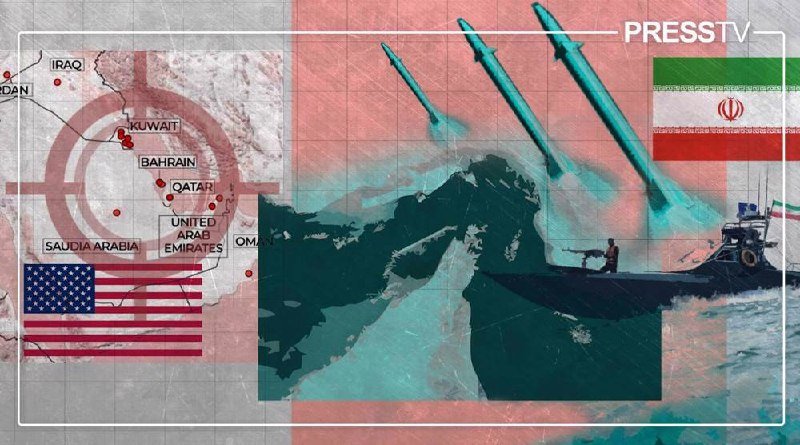
The second dispatch takes the argument in a different direction. A published commentary argues that the United States administration faces a structural dead-end in its current Iran posture: that the conditions for a renewed nuclear agreement do not exist, that escalation carries prohibitive costs, and that therefore withdrawal — or more precisely, the abandonment of the precondition framework that has defined US negotiating positions — is the only available move. The framing is Iranian state-adjacent media framing, and it carries a clear editorial intent. But the structural observation is worth examining on its merits. When a negotiating party declares that its counterpart has no option but capitulation, the claim warrants scrutiny. When a counterparty declares the reverse — that the initiating party has no option but to leave the table — the symmetry is itself informative.
Market sentiment on one narrow aspect of this standoff offers a data point. Polymarket, a prediction market platform, listed odds on whether what it termed "Trump's ballroom" would be unblocked by the end of May 2026. The listing, visible on the platform on 19 May, carried a 20 percent implied probability. The phrase "ballroom" almost certainly references a specific logistical or symbolic project whose details are not elaborated in the market description. The figure itself — one-in-five — is not a rigorous forecast. Prediction markets are instruments of sentiment aggregation, not prophecy. But that a nontrivial fraction of speculative capital was on that date wagered against a positive outcome is worth noting as ambient signal rather than evidence.
What the sources do not specify is what a withdrawal would look like in practice. The commentary makes the claim; it does not define the trigger, the timeline, or the alternative framework that would replace the current negotiating structure. That ambiguity is where the more interesting analysis lives. A US withdrawal from the nuclear negotiating track would not be a single event. It would be a cascade: renewed UN Security Council escalation risk, further designation of Iranian entities, a possible attempt to enforce secondary sanctions on third-country banks processing Iranian transactions. Each of those steps has its own constituency and its own resistance points. The European parties to the original Joint Comprehensive Plan of Action have repeatedly stated their preference for diplomatic continuity. Whether that preference translates into actual enforcement of carve-outs against US secondary pressure is a separate empirical question that current sources do not resolve.
The pharmacy story offers a reminder of what sits beneath the headline geography of great-power negotiation. Medical supply chains do not wait for diplomatic breakthroughs. Patients in Isfahan or Tabriz do not experience sanctions as a geopolitical abstraction; they experience them as a pharmacy that cannot restock a diabetes medication because the importer is waiting for a payment that got stuck in a correspondent banking channel that no longer functions the way it did in 2017. That friction is real, it is ongoing, and it is a direct product of the architecture that the current negotiation — and its potential collapse — is designed to either sustain or dismantle. The sources do not quantify the debt. They do not name the insurers. They do not estimate how many pharmacies have reduced stock or closed temporarily. That gap in the record is not a minor omission; it is the gap where the human consequences live.
Both dispatches from this single wire on 19 May point toward a system under stress. The pressure is not uniform. It does not fall equally on all participants in the Iranian economy. But the pharmacy ledger and the withdrawal commentary, read together, describe a moment in which the formal instruments of statecraft and the informal infrastructure of daily life are operating on the same timeline, toward outcomes that neither the pharmacist nor the negotiator fully controls.
This desk notes that Tasnim News provided both the pharmacy debt dispatch and the withdrawal commentary, both datelined 19 May 2026. No independent corroboration of the debt figure or the withdrawal analysis was available from the wire inputs at time of publication. A Polymarket listing offered directional sentiment data but no explanatory context for the "ballroom" reference.
Wire provenance
This editorial synthesis draws on the following public wire/social posts:
- https://t.me/tasnimnews_en/51482
- https://t.me/tasnimnews_en/51480