Iran's Hottest Province: How Systemic Neglect Amplifies Extreme Heat for Sistan and Baluchistan
Eight weather stations in Iran's Sistan and Baluchistan province recorded the country's highest temperatures on May 19, 2026 — the latest in a pattern of extreme heat that disproportionately burdens one of Iran's most economically marginalised regions.
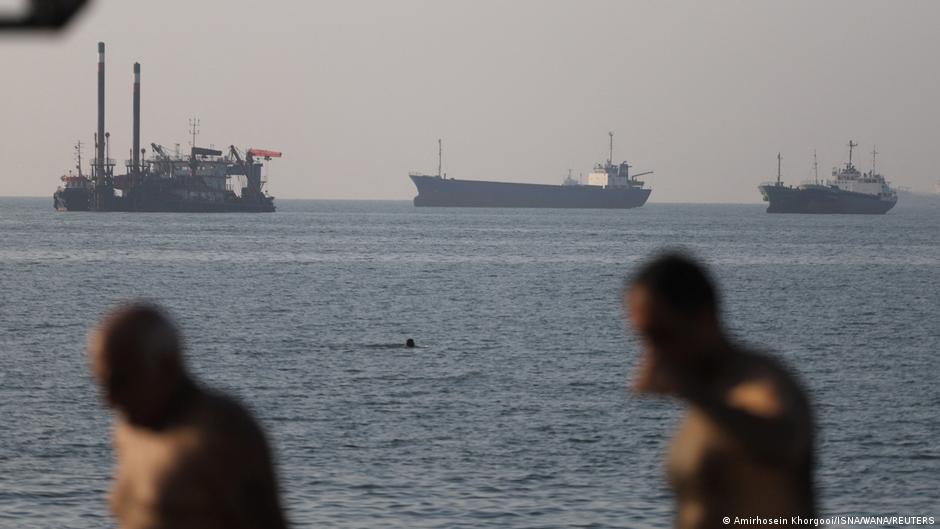
Eight weather stations in Iran's Sistan and Baluchistan province recorded the country's highest temperatures on May 19, 2026, according to the Director General of Meteorology for the province, writing in a Mehr News report published at 10:58 UTC. The data points — eight separate locations registering peak heat simultaneously — landed in news feeds as a weather alert. They deserve closer reading.
Sistan and Baluchistan is Iran's largest province by land area and its most sparsely populated. It shares a long, porous border with Pakistan and, to the north, Afghanistan. The Baloch people who form its majority population have a long history of navigating state power from the margins — whether under Tehran, under Islamabad, or under whoever controls the corridor connecting Central Asia to the Gulf. The heat is a concrete, measurable fact. What it reveals about how Iran governs its periphery is a structural question.
The Measurement Problem
Meteorological data from the province's eight stations told a consistent story on May 19: surface temperatures in the interior basin areas had reached a threshold that registered as the national extreme. The Director General of Meteorology for Sistan and Baluchistan provided the official frame, confirming that these were not isolated readings but the product of a monitoring network — however modest in scale — capable of capturing regional extremes.
The sources do not specify exact degree figures for May 19. What they confirm is directional: the province was running hotter than anywhere else in Iran on that date. Historical climate data for the region routinely places summer peak temperatures in the 50°C range across the interior lowlands. Zahedan, the provincial capital, historically records some of the highest reliable temperatures anywhere on the planet during the June–August peak. What the May 19 event signals, to the extent the data permits, is that the heat season has arrived early and at scale.
A Region Habituated to Extremes
Heat waves in Sistan and Baluchistan are not novel. The province exists inside a hyper-arid climatic zone defined by the Sistan Rud basin, seasonal wind systems — the famous "bad winds" of the region's Persian literature — and water scarcity that predates contemporary governance structures. What has changed incrementally is the infrastructure available to absorb and respond to those extremes.
Water tables in the province have been declining for decades. Agricultural output in the traditional cultivation zones is constrained not merely by heat but by the intersection of heat with declining groundwater and aging irrigation infrastructure. The provincial economy, heavily informal and dependent on border trade with Pakistan alongside subsistence agriculture and animal husbandry, lacks the institutional depth found in Iran's northern provinces.
International reporting on the province, including coverage from Reuters and regional wires, has consistently noted that Sistan and Baluchistan ranks among Iran's lowest provinces by Human Development Index metrics. Access to healthcare, clean water, reliable electricity during peak demand periods, and quality education all trail national averages. These are not observations about climate. They are observations about the social infrastructure that determines who survives a heat wave and who does not.
The Baloch Question in Iranian Governance
Iran's Baloch minority — concentrated overwhelmingly in this province but present also in other southeastern areas — occupies a particular political position. Baloch nationalist politics, across the Iran-Pakistan-Afghanistan tri-border zone, have historically been treated by all three states as a security problem rather than a development priority. The consequences of that framing compound over decades: infrastructure investment follows security logic rather than need logic; the provincial administrative apparatus is under-resourced relative to population; and the region's economic contribution (as a trade corridor, a energy transit zone, a source of cheap informal labour) flows outward while investment in local human capital flows in at a fraction of comparable provinces.
The Mehr News report itself is unremarkable by Iranian media standards — a meteorological note, factual, apolitical. The absence of political framing around why the province is always among the hottest, and always among the least prepared, is itself a form of framing. It treats extreme heat as a natural event rather than a political condition amplified by natural circumstance.
There is no credible evidence, from any mainstream source, that the Iranian state deliberately starves Sistan and Baluchistan of resources. But there is ample evidence that the province's marginal political status — its distance from Tehran's decision-making centres, its ethnic composition, its border proximity — results in a pattern of investment that does not match the region's exposure to climate risk.
Regional Geopolitics and the Corridor Question
Any analysis of Sistan and Baluchistan must account for its position within a contested regional architecture. Pakistan's Balochistan province sits directly to the east; Afghanistan's Nimroz and Farah provinces to the north. The Iran-Pakistan border region has been the subject of sustained counter-insurgency operations on both sides, periodic cross-border tensions, and, more recently, scrutiny over the movement of narcotics, migrants, and — in the context of Red Sea and Gulf tensions — potentially strategic materials.
Iranian state media, including Mehr News, frames the province largely in security-administrative terms. The question of whether the province's chronic vulnerability to extreme heat undermines its capacity to function as a stable corridor — and whether that in turn has implications for Iran's regional standing — does not surface in routine coverage. It is a question worth raising, because infrastructure resilience and state legitimacy are linked in ways that migration pressure and border security rhetoric tend to obscure.
Stakes
If the heat season of 2026 follows the pattern of recent years, Sistan and Baluchistan will face sustained peak temperatures through August with periodic breaks that offer little respite. The population most exposed — rural, poor, without climate control infrastructure — will manage through a combination of social networks, informal coping mechanisms, and whatever state-provided services the provincial apparatus can deliver.
The stakes are not abstract. Excess mortality during heat events is well-documented across the Middle East; the 2022 Pakistan floods, the 2023 Persian Gulf heat anomalies, and the 2024 Iranian summer all generated data points that are now accumulating into a pattern: heat is a development challenge wearing the clothing of a weather event. For Sistan and Baluchistan, that challenge arrives atop existing deficits in water, health infrastructure, and economic opportunity.
What this publication finds is that the gap between the national conversation about Iran's science of meteorology and the provincial experience of climate vulnerability tells a story about political geography that weather reports, by design, do not tell.
Desk note: Wire coverage of this story focused on the meteorological data — eight stations, hottest in the country — and provided the provincial meteorology director's confirmation without contextual framing. Monexus has contextualised the data against the province's known development deficits, its geopolitical position, and the structural question of how Iran governs its most peripheral regions.
Wire provenance
This editorial synthesis draws on the following public wire/social posts:
- https://t.me/mehrnews/589321