Iran's State Media Frames Raisi's Legacy as a Governance Model Ahead of Election
Iranian state media has amplified claims that late President Ebrahim Raisi's administration demonstrated the effectiveness of religious governance, a narrative that analysts see as designed to shape both domestic confidence and international perceptions ahead of a presidential election on June 28.
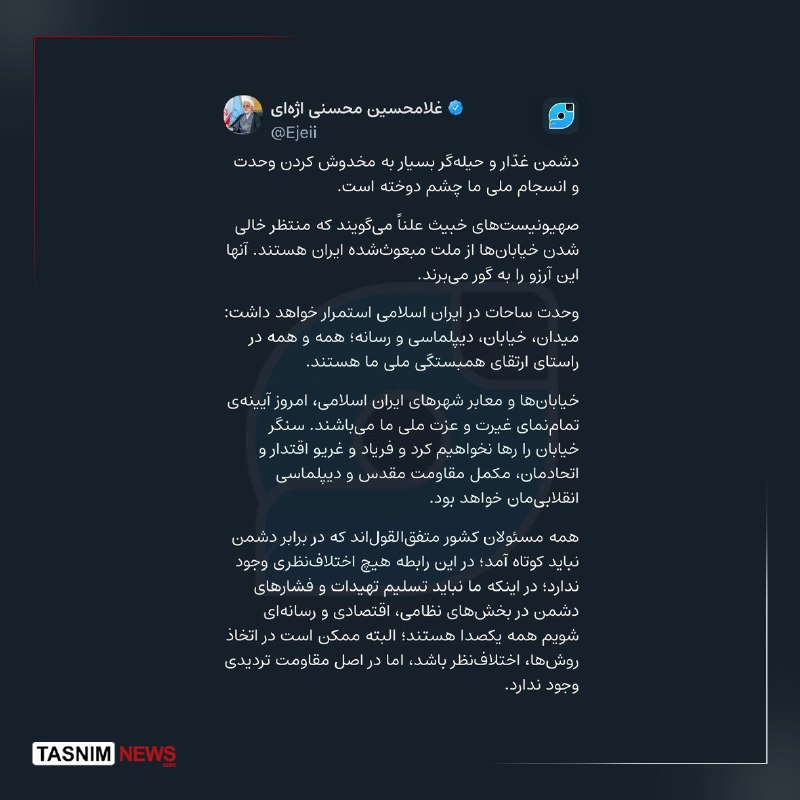
On 19 May 2026, two years to the day after President Ebrahim Raisi died in a helicopter crash, Iranian state media amplified a series of claims positioning his brief presidency as proof of concept for religious governance. Three posts from the Tasnim News English-language Telegram channel, attributed to a commentator identified as Moghadamfar, argued that Raisi's administration had demonstrated administrative effectiveness, refuted claims that religion cannot govern, and presented his tenure as an alternative to secular political models. The communications carry the hallmarks of a carefully orchestrated narrative designed to influence both domestic political sentiment and international perceptions ahead of a presidential election scheduled for 28 June.
The framing is notably strategic. Rather than focusing solely on Raisi's role in suppressing dissent or his association with the 2022 protests—matters that dominate Western coverage—Iranian state media has foregrounded administrative language: rationality, planning, competence. The choice of vocabulary matters. It signals an effort to present Iran's governance model as internally coherent and operationally effective, a counterpoint to characterisations that treat Iranian policy as primarily ideological.
Domestic confidence and electoral framing
The timing of these communications, on the anniversary of Raisi's death, is unlikely to be coincidental. The 28 June election will select his successor. Hardline candidates aligned with Raisi's political lineage are expected to feature prominently in the contest. By amplifying claims about his administration's rationality and effectiveness, state-aligned commentators appear to be constructing a narrative of continuity—one in which Raisi's approach represented a successful governance model rather than a set of contested political choices.
This framing serves a dual purpose domestically. It honours a figure whose death generated significant public emotion, while simultaneously providing electoral context for candidates who wish to align themselves with his legacy. Whether that framing resonates with a population navigating economic strain and ongoing international isolation remains an open question that the sources do not directly address.
Countering the international narrative
Western coverage of Iran has historically foregrounded ideological dimensions of its governance, often presenting religious identity as the primary driver of policy choices. Iranian state communications, including those published on 19 May, push back against that framing. Moghadamfar's commentary argues that Raisi's presidency demonstrated that religion in administration can be effective, not merely symbolic. The implicit argument is that Western observers who dismiss Iran's governance as purely ideological miss the pragmatism embedded in its operations.
The claim that recent wars neutralised Western civilizational thinking inside Iran appears in these communications, though it is presented without corroborating evidence and reflects a political narrative rather than an observable trend. That caveat applies to the broader framing as well. Iranian state media is not an independent analytical body; it operates within a system of official direction.
Geopolitical context and diplomatic positioning
The communications arrive at a moment of acute diplomatic sensitivity. Talks between Iran and the United States over the nuclear file have produced no resolution, and Iran's uranium enrichment programme continues to expand. Regional tensions—including the conflict in Gaza and its spillover effects—shape the broader environment in which Iranian officials communicate.
Within that context, framing Raisi's governance as rational and effective may serve a diplomatic signalling function. The communications suggest a political system capable of principled compromise without appearing weak—a message aimed as much at potential negotiating partners as at domestic audiences. Whether that framing represents a genuine shift in approach or a communication strategy designed to manage perceptions remains unclear from the sources available.
What the sources do and do not establish
The three Telegram posts from Tasnim News represent the official Iranian framing of Raisi's legacy. They are not independent analysis. The claims about administrative effectiveness, the refutation of secular governance models, and the assertion of civilizational independence are assertions from a state-aligned commentator, not verified findings. The sources do not provide data on economic performance, social indicators, or administrative outcomes that would allow a reader to assess the accuracy of these claims independently.
What the sources do establish is the existence of a deliberate communications campaign—one that seeks to shape how Raisi's presidency is understood, both inside Iran and abroad. The sophistication of that campaign, its use of anniversary timing, and its careful balance of ideological language with administrative vocabulary suggest strategic intent. Whether it succeeds in influencing perceptions is a separate question from whether it is being conducted.
The election on 28 June will provide one measure of its domestic impact. International responses to continued nuclear negotiations will provide another.
Wire provenance
This editorial synthesis draws on the following public wire/social posts:
- https://t.me/tasnimnews_en/48362
- https://t.me/tasnimnews_en/48361
- https://t.me/tasnimnews_en/48360