The War in Iran Has a Wheat Problem — And It's Spreading Beyond the Middle East
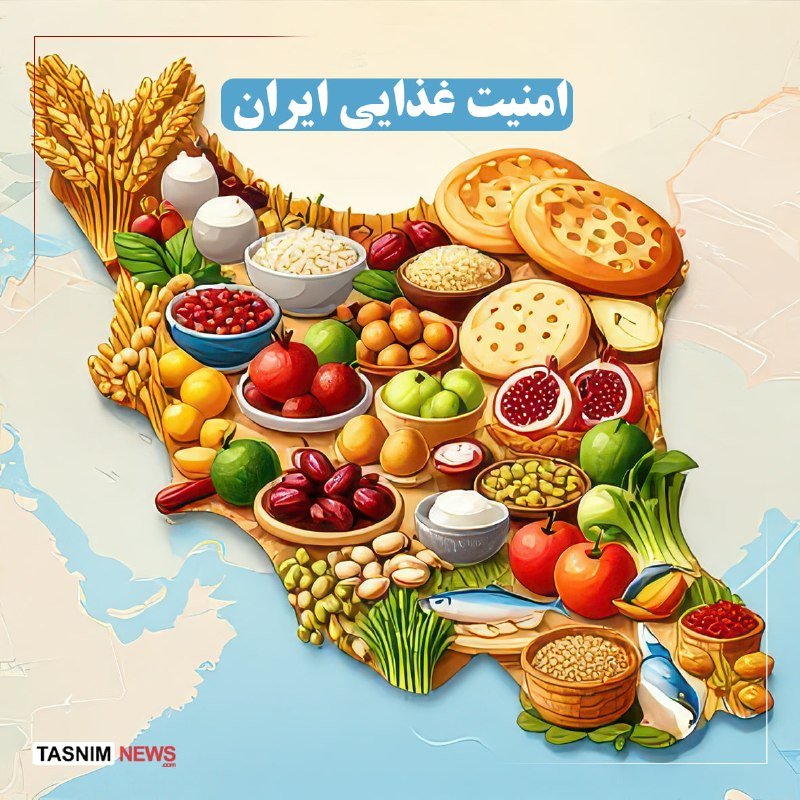
Justin Everitt is planting fifty percent less wheat this year than he planned to. The forty-four-year-old Australian farmer attributed the pullback to two compounding forces: below-average rainfall across his region, and the rapid escalation of fuel and fertilizer prices driven by the war in Iran. His story, reported by Reuters on 19 May 2026, is not isolated. Australian agricultural producers broadly are cutting planted acreage in response to the same pressures — a dynamic that illustrates how a regional military conflict can outrun its geography and begin dictating food availability thousands of kilometres away.
The mechanism is straightforward, even if its downstream consequences are not. Fertilizer production depends on natural gas. Natural gas markets have been destabilised by the disruption of shipping routes and the hardening of sanctions regimes tied to the Iran conflict. Fuel costs for machinery follow the same trajectory. When a farmer in Western Australia faces input costs that have moved beyond what current wheat prices can justify, the rational choice is to plant less. That decision, multiplied across enough operations, becomes a supply-side contraction that global markets have not yet priced in.
A Supply Shock That Wasn't Inevitable
The standard framing treats food-price inflation as a force of nature — drought here, flood there, weather as the great equaliser. That framing is convenient for markets and comfortable for policymakers because it locates the problem outside human agency. But the Australian case this year is instructive precisely because the drought and the war are presented as co-equal drivers. The rainfall deficit is a genuine meteorological event. The fertilizer cost spike is a geopolitical one. One is a fact of geography; the other is a consequence of decisions made in Washington, Tehran, and capitals across the Gulf. Conflating them obscures where the policy space actually lies.
Middle East Eye reported on 19 May 2026 that an Iranian official stated Iran would force the United States to "retreat and surrender" — language that suggests Tehran is calculating that sustained pressure, including on energy markets, serves its strategic position. Whether or not that calculation is accurate, it has the effect of keeping energy markets volatile. Agricultural commodity traders are watching. Australian farmers are not waiting for the all-clear.
The Global South Doesn't Get to Choose Its Exposure
The war in Iran is being reported through the lens of its immediate theatre — air defence architectures, drone corridors, diplomatic negotiations. Those are legitimate frames. But the reverberations through commodity markets represent a quieter, slower-moving crisis that will be felt most acutely by nations that import food and lack the fiscal reserves to cushion the blow.
Australia is, in the global hierarchy of food security, relatively privileged. It is a net exporter of grain. A reduction in Australian wheat production does not immediately threaten domestic food availability; it threatens export volumes. The countries that rely on those export volumes — across Sub-Saharan Africa, Southeast Asia, and parts of the Middle East already destabilised by the conflict itself — are the ones who will see price effects materialise on import invoices they cannot defer. This is the architecture of food dependency: a farmer in Western Australia making a planting decision, and a family in a food-import-dependent city absorbing the consequence months later.
The structural point here is not that Australia caused this, or that Iranian strategy is designed to target wheat markets. It is that the global food system is a single infrastructure, and its fault lines run along the same lines as energy and financial architecture. When one pressure point gives way — whether through conflict, drought, or logistical disruption — the stress migrates to wherever the system is weakest. That is typically not the wealthy agricultural exporters. It is the nations with narrow import diversification, thin foreign reserves, and domestic political economies that have no margin for price spikes.
The Dollar, the Fertiliser Plant, and the Quiet Arithmetic of Sanctions
There is a layer of this story that routine agricultural reporting rarely surfaces: the role of the dollar-denominated commodity trade in amplifying cost shocks. Iran is not a marginal player in global energy markets — its position in the Gulf, its refining capacity, and its regional supply chains mean that disruption reverberates in dollar-priced markets far beyond what Tehran's own export volumes would suggest. When sanctions tighten and financial channels narrow, the premium on alternative supply routes rises. That premium lands in the fuel and fertilizer costs that Australian farmers — and farmers across the world — are paying.
This is not a novel dynamic. It has precedents in the way Russian energy supply chains structured European agricultural input costs following the 2022 invasion of Ukraine. The difference is that the Iran conflict is younger, its trajectory less settled, and the global food system already weakened by the prior episode. The arithmetic of sanctions is simple in outline and brutal in execution: restricting a producer nation's financial access raises costs for everyone who buys what that producer was supplying, including the intermediaries and derivatives markets through which agricultural inputs are priced.
The implications for dollar hegemony are real, even if they are not the immediate concern of a farmer like Justin Everitt. Every regional conflict that disrupts dollar-priced commodity flows accelerates the interest of large commodity producers and their state-aligned banking systems in alternative settlement currencies. That process is slow and structural. But the political urgency it generates at the level of Gulf state finance ministries and central bank reserve managers is real, and it is growing.
What Comes Next Depends on Decisions Made Far From the Farm
The honest uncertainty in this story is not about the Australian harvest — it will be smaller, all else equal, and that is a near-term fact. The uncertainty is about the war's duration and whether energy markets stabilise before the next planting season. If the conflict is contained and resolved within months, the fertilizer cost spike is a temporary dislocation. If it persists through another growing cycle, the supply contraction compounds, and the price signal that eventually reaches import-dependent nations carries a larger deficit than anyone is currently modelling.
The broader lesson is structural and recurring: the global food system is not designed for resilience to geopolitical disruption. It is designed for efficiency, which means low buffers, lean inventories, and just-in-time logistics. That design choice served consumers and processors well in a stable world. In a world of overlapping regional conflicts and weaponised financial access, it is a vulnerability. Australian farmers are discovering this in their planting decisions. The countries that depend on Australian wheat will discover it in their import bills. The latency between those two moments — the decision and the consequence — is measured in months, not news cycles.
The thread was sourced from Reuters and Middle East Eye wire reports filed on 19 May 2026. This article reflects those inputs without editorial supplementation.
Wire provenance
This editorial synthesis draws on the following public wire/social posts:
- http://reut.rs/3RzsofP
- https://www.middleeasteye.net/live/iran-war-live-israel-says-it-will-control-bridges-and-area-south-lebanons-litani-river
- http://reut.rs/3RzsofP