Israel's Abu Dhabi Flight Is Not a PR Stunt — It's a Economic Survival Strategy
An Israeli government plane's unusual public flight to Abu Dhabi arrives at the worst possible moment for a domestic economy bleeding by the quarter — and that timing is not coincidental.
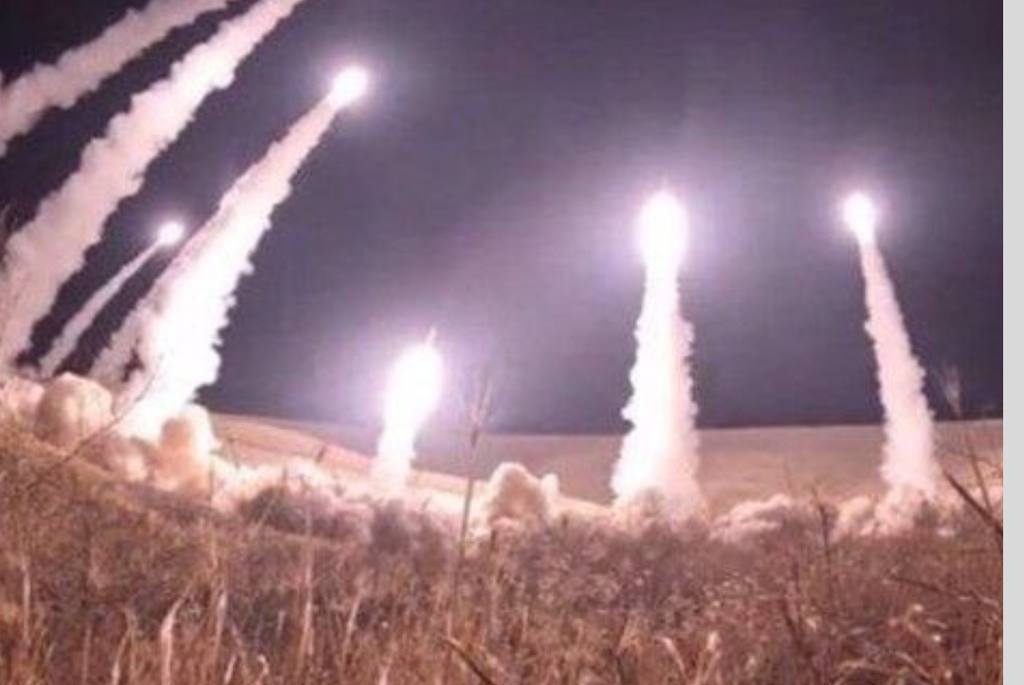
On the morning of 19 May 2026, an Israeli government aircraft lifted off from an Israeli airfield and headed east toward Abu Dhabi. Israeli media outlets reported the flight in near-real-time — the kind of coverage usually reserved for heads of state, not cargo planes. The symbolism was the story, or so it seemed.
But look at the data released hours before the aircraft cleared Israeli airspace. Israel's gross domestic product contracted by 3.5 percent in the second quarter of 2025 — the steepest quarterly collapse since the opening months of the ongoing military conflict. Investment flows, the statistical bureau confirmed, fell in parallel. This is not aconomy in mild distress. This is a country watching its productive base erode while trying to maintain the diplomatic posture of a functioning state.
The Abu Dhabi flight did not happen despite the economic crisis. It happened because of it.
Diplomatic theatre or economic lifeline?
The pattern here is not unique to Israel. When domestic economic fundamentals deteriorate sharply, governments with access to alternative trade corridors and financial networks tend to accelerate outreach to economies outside their traditional Western orbit. Abu Dhabi — the capital of the United Arab Emirates — sits at the intersection of Gulf capital, Asian trade routes, and a financial ecosystem that has grown increasingly independent of dollar-denominated settlement systems.
The UAE has been cultivating exactly this kind of diplomatic bridging role for the better part of a decade. Its 2022 diplomatic normalization agreement with Israel — the Abraham Accords — was framed in Washington as a Middle Eastern tectonic shift. In practice, it opened a direct channel between Israeli tech and financial firms and Gulf sovereign wealth structures that had previously been politically inaccessible. That channel is now more valuable, not less, precisely because the Western support architecture that sustained Israel's economy through the conflict's first phase is showing strain.
Gulf states are not naive about what they are doing. The UAE and Saudi Arabia have maintained calibrated relationships with Tehran even as they hosted American military infrastructure. They have deepened energy-trade relationships with China while keeping the dollar-denominated oil market intact. What they are offering Israel is not charity — it is a re-pricing of their own strategic value as the Western alliance system grows more volatile.
The domestic economy is the pressure valve
The numbers from Israel's statistical bureau are not ambiguous. A 3.5 percent quarterly GDP contraction, with investment falling simultaneously, describes an economy entering a feedback loop: uncertainty reduces capital formation, reduced capital formation weakens productive capacity, weakened productive capacity depresses tax revenues, depressed revenues constrain government spending, constrained spending deepens the uncertainty. The military conflict has accelerated this cycle by diverting fiscal resources toward security expenditure while simultaneously destroying productive infrastructure in the north and along the Gaza border.
In such conditions, diplomatic deals — even symbolically loaded ones — carry real economic weight. A commercial partnership negotiated through the Abu Dhabi channel could unlock Gulf investment into Israeli technology sectors that have seen Western venture funding dry up. A bilateral trade arrangement that bypasses dollar-clearing infrastructure could offer Israeli exporters a settlement route that avoids the delays and compliance costs that have increasingly complicated cross-border commerce through traditional Western banking channels.
None of this is guaranteed. Gulf capital flows are politically conditional — the Abraham Accords were premised on Israel's relationship with Washington remaining stable. If that condition frays, the Gulf's willingness to absorb Israeli economic exposure evaporates quickly. But right now, the alternative — waiting for a recovery in Western investor sentiment — looks worse than the diplomatic gamble.
What this says about the regional order
The flight to Abu Dhabi is a small data point in a very large picture. Across the Middle East, the architecture of economic interdependence is shifting. The Gulf monarchies have spent the past decade building redundancy into their financial and trade relationships — hedging between American and Chinese technology partnerships, diversifying energy buyers, investing in domestic financial infrastructure that doesn't require dollar intermediaries. They have done this not because they wanted to replace the Western order but because they learned, from the sanctions architecture applied to Russia, that the Western order can be withdrawn.
Israel is arriving late to this reckoning but arriving nonetheless. The flight to Abu Dhabi is, in this reading, an institutional acknowledgment that the economic model built on preferential Western access — trade preferences, development finance, a functioning bilateral relationship with Washington — is no longer a reliable foundation. The Gulf states figured this out earlier. They built the redundancy. Israel is now reaching for it.
That does not mean the Western alliance is finished. But it means that the exclusive依赖 — to use the Arabic word for reliance — on a single system of economic partnership is being quietly dismantled, and from the Israeli side no less than the Gulf side. The aircraft did not fly to Abu Dhabi because someone in Jerusalem wanted a headline. It flew there because the numbers demanded a new address.
This desk covered the Abu Dhabi flight primarily through Israeli domestic media and the economic statistical release. The Western wire picture — dominated by ceasefire and hostage-negotiation framing — largely missed the economic subtext that makes the diplomatic movement legible.
Wire provenance
This editorial synthesis draws on the following public wire/social posts:
- https://x.com/sprinterpress/status/1923153912674529482
- https://t.me/tasnimplus/48242
- https://x.com/sprinterpress/status/1923143084634710528