Itamar Sabir, Major, IDF Magellan Unit — Killed in Southern Lebanon
Major Itamar Sabir of the IDF's Magellan unit was killed in southern Lebanon on 19 May 2026, according to Hebrew-language media reports. His death adds to a steady ledger of casualties in a conflict that has defied diplomatic resolution since late 2023.
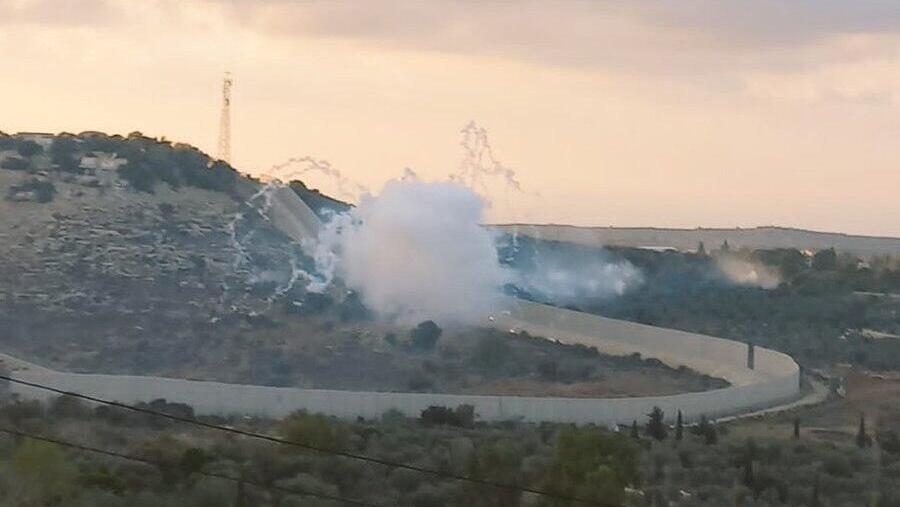
Major Itamar Sabir, a career officer in the Israel Defense Forces' Magellan unit, was killed in southern Lebanon on 19 May 2026, according to Hebrew-language media outlets cited by Iranian state-linked channels. The IDF had not issued a full operational statement as of late afternoon UTC. Initial reports described Sabir as a major with multiple northern-border deployments — a profile that places him in one of the IDF's most consistently exposed units in the post-October 2023 environment.
The death surfaces the particular friction of a conflict without clear front lines. Southern Lebanon has become a zone of overlapping surveillance, tunnel networks, and ambush-ready positions sustained by both sides since Hezbollah accelerated cross-border operations following the Gaza escalation. Major Sabir's unit operated in that terrain — contested, partially evacuated, and reoccupied in irregular cycles over more than eighteen months. Intelligence gaps, miscommunication, and the compounding fatigue of extended rotations produce outcomes that strategic-level analysis cannot fully anticipate or prevent.
The Framing War Around the Death
The language applied to Major Sabir's death by the outlets that first amplified the reports introduced a sharp dissonance for readers tracking multiple sources simultaneously. PressTV and FarsNews characterized him as a "Zionist soldier" and a "Zionist terrorist trooper" — terminology calibrated for audiences already positioned to view Israeli military activity as inherently criminal. That framing does significant work: it denies the subject any status as a legitimate uniformed combatant and applies the legal category of terrorism to a career officer killed in an internationally disputed border zone.
The sourcing calculus is worth examining. Iranian state-linked outlets have consistently backed Hezbollah's military posture. They have an obvious structural interest in framing every Israeli casualty as earned and every Israeli operation as aggression. The Hebrew-language media reports that PressTV cited did not carry that loaded terminology — they reported a soldier's death with straightforward language appropriate to domestic coverage of a national loss. The Iranian outlets amplified the same facts while attaching interpretive scaffolding that the original sources did not provide. This is a documented pattern in conflict coverage across multiple theaters: the underlying event is reported accurately, but the framing vocabulary transforms its meaning for different audiences.
The Steady-State War on the Northern Border
Hezbollah and Iranian-aligned militias have maintained sustained military pressure along the Israel-Lebanon frontier since October 2023, deploying rocket barrages, anti-tank missiles, drone surveillance, and probing ground operations that keep Israeli forces in a posture of continuous alert. Military analysts in Jerusalem speak of a "steady-state war" — something above a ceasefire but below a full-scale invasion, defined by daily friction and periodic spikes rather than continuous large-scale combat.
Major Sabir's death fits that pattern precisely. It was a named officer killed in a specific location during routine operational activity — not in the headline-generating strikes that generate diplomatic crises, but in the grinding attrition that defines the conflict's daily texture. Israeli forces have responded to border fatalities with targeted strikes on Hezbollah positions, sometimes within hours of a soldier's death. The IDF's standard practice is to hold hostile units accountable for attacks that produce Israeli casualties, a policy that military officials describe as necessary for maintaining deterrence along a border where the adversary has demonstrated sustained willingness to operate aggressively.
Hezbollah's command structure, while formally integrated into Lebanon's political framework through the 2006 understanding and subsequent arrangements, has historically treated retaliatory Israeli strikes as confirmation that its operations are generating pressure on an adversary struggling to contain border incursions. The exchange has produced a cycle where each Israeli fatality generates further escalation pressure, and each Israeli strike generates Hezbollah statements framing the incident as evidence of resistance effectiveness. International mediators have repeatedly attempted to establish rules of engagement that would reduce casualties on both sides; those attempts have repeatedly broken down as each incident triggers responses that the other side characterizes as violations of existing understandings.
The Human Ledger and What Remains Unresolved
The human dimension of Major Sabir's death is straightforward but often underreported in coverage focused on strategic dynamics. He leaves behind a family, a unit that trained alongside him for years, and a community in a country where military service is universal enough that border deaths register simultaneously as individual tragedies and national events. Israeli military traditions — shaped by a country that has experienced conscription as a defining social institution for seventy-five years — treat the loss of named individuals with a formality that contrasts sharply with the abstraction preferred by adversarial outlets. The Telegram-sourced reports filtered through Iranian state media reduce him to a symbol; Israeli coverage tends toward specificity of name, rank, unit, and background that makes the war legible as individual sacrifice rather than purely geopolitical abstraction.
What remains unclear is the specific mechanism of Major Sabir's death. The IDF had not released a full operational report at the time of this article's filing. Whether the fatal incident resulted from direct fire engagement, an anti-tank missile strike, an ambush in a tunnel complex, or a combination of factors will shape how both sides frame the incident politically. Israeli military spokespeople will likely characterize it as a Hezbollah violation of whatever operational understandings currently govern the border zone. Hezbollah and its allied messaging apparatus, drawing on Iranian strategic guidance, will likely characterize it as a legitimate response to Israeli operations inside Lebanese territory. The factual questions — who fired first, what the rules of engagement permitted, whether the unit was inside Lebanese or Israeli territory at the time — will take time to establish and will likely remain contested even after the IDF's official review.
The broader pattern, however, is not in dispute. The southern Lebanon border has become a zone of managed attrition, with both sides maintaining forces, conducting operations, and absorbing casualties in a conflict that international diplomacy has largely failed to resolve. Major Sabir's death adds to a ledger that both sides continue to write — individually identifying each loss while the strategic calculation that produced it remains unchanged. The framing war around his death, fought out through media outlets aligned with opposing sides, illustrates how the conflict extends beyond the physical battlefield into an informational space where definitions of terrorism, aggression, and legitimacy are contested daily. The underlying facts — a career officer killed on active duty — deserve reporting without the distortion that competing political vocabularies inevitably introduce.
This publication tracked the Iranian state-linked framing against the Hebrew-language sources cited within those reports, noting where the amplification added interpretive load that the original reporting did not carry.
Wire provenance
This editorial synthesis draws on the following public wire/social posts:
- https://t.me/FarsNewsInt/87492
- https://t.me/presstv/112391