The Price of Someone Else's War: How the Iran Conflict Sank Kenya's Fuel Markets
Kenyan workers are paying for a conflict they had no hand in starting. The mechanics are worth examining closely, because they will repeat.
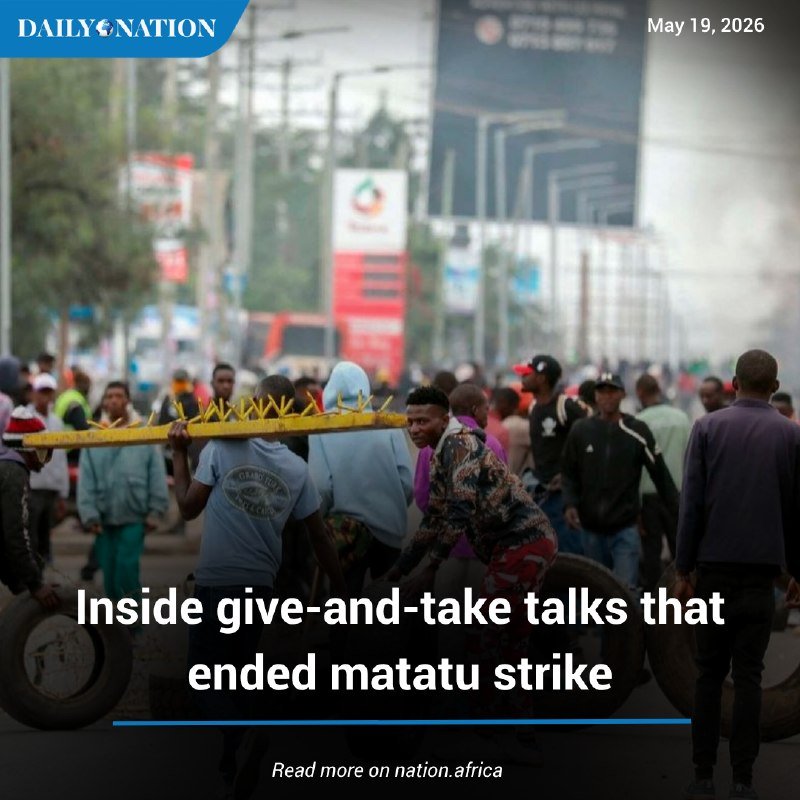
When fuel prices spike in Nairobi, the explanation usually offered is macroeconomic — global crude benchmarks, currency depreciation, subsidy reform. What is offered less often is the geopolitical ledger beneath those numbers: who disrupted the market, and who bears the cost of that disruption. The Kenyan transport strike that left four dead and more than 30 injured on 19 May 2026 is a case study worth keeping.
According to Kenya's interior minister, the nationwide work stoppage was a direct response to pump price increases — increases the government linked explicitly to disruptions tied to the Iran conflict. Four people were killed. More than 30 were injured. The strike has been suspended for one week to allow negotiations to proceed, but the underlying pressure has not dissipated. Kenya is not at war with Iran. Kenyan truck drivers had no vote in the strikes, sanctions escalations, or ceasefire negotiations that roiled global energy markets over the preceding months. They are, in the plainest possible sense, paying for someone else's conflict.
The Transmission Mechanism
The chain connecting Tehran to Nairobi is not mysterious, but it is routinely underreported. Kenya imports refined petroleum products — it is not an oil producer and its domestic refining capacity is limited. Global fuel markets, denominated in dollars, respond to supply disruptions. When the Iran conflict introduced uncertainty into shipping lanes, insurance premiums for tankers, and broader commodity market volatility, the landed cost of imported fuel in Mombasa rose accordingly. That cost flows, via the pump price mechanism, directly into the operating expenses of every matatu operator, every commercial trucking firm, every logistics company whose margins were already thin.
The transport sector is not incidental to Kenya's economy — it is its circulatory system. A strike that shuts down commercial movement for days does not merely inconvenience commuters. It fractures supply chains, inflates food prices in landlocked interior provinces, and delivers an immediate, measurable blow to the informal workers who make up the bulk of the Kenyan labour force. The four deaths and 30-odd injuries recorded on 19 May are not collateral. They are the direct product of a political economy that prices Global South consumers into the risk of conflicts they did not author.
The Ceasefire Does Not Equal Relief
It would be convenient to assume that the ceasefire currently holding between Iran and the United States — fragile as it is — would begin unwinding this pressure. Iran's own state media, reporting on 19 May, indicated that Tehran's peace proposal to Washington includes demands for reparations for war damage and the withdrawal of US forces from the region. Those are negotiating positions, not a settled outcome. Ceasefire architectures in high-stakes conflicts routinely crack at the edges before they solidify, and the commodity markets know this. Kenyan consumers cannot afford to wait for negotiations to conclude before they fill their tanks. They are paying 2026 prices for a 2025 disruption.
The mass wedding ceremony in Tehran on 19 May — more than 100 couples married in a state-linked ceremony presenting national readiness to defend the country — underscores that the Iranian domestic political context is one of mobilization and signalling, not post-conflict normalisation. Tehran is still in a posture of confrontation. Global fuel markets are still priced with that risk premium embedded. Nairobi is still exposed.
The Structural Problem
What the Kenyan case illustrates is a structural asymmetry in how the costs of great-power-adjacent conflicts are distributed. When the Iran conflict disrupted shipping, refineries in Singapore and Rotterdam adjusted their risk models. Hedge funds adjusted their commodity positions. But the adjustment that matters for a matatu driver in Kasarani is the one that happens at the pump — and there is no mechanism, in the current global financial architecture, that cushions the final consumer from that pass-through. Subsidy schemes exist, but they are politically contested, fiscally unsustainable over any extended period, and subject to the same dollar-denominated cost pressures that created the problem in the first place.
Kenya is not unique in this exposure. The same structural logic applies across sub-Saharan Africa's fuel-importing economies — Nigeria, Ghana, Ethiopia, Tanzania. The Iran conflict is the proximate cause in the current instance; the underlying condition is a global economic architecture that concentrates risk in the places least able to absorb it. Multipolar rearrangements in the global order, whether they involve new trade corridors, alternative currency arrangements, or regional fuel reserves, are discussed in policy circles as long-term projects. The matatu driver in Nairobi is dealing in the short term, and the short term is now.
What Comes Next
The one-week suspension of Kenya's transport strike buys time, not resolution. Negotiations between the government and transport operators may produce temporary palliatives — a subsidy, a price cap, a temporary levy waiver. These are legitimate responses to an immediate crisis. But the structural exposure remains: Kenya's fuel market will remain tethered to dollar-denominated global benchmarks until the underlying architecture changes, and the architecture will not change meaningfully until the Iran ceasefire either solidifies into something durable or collapses into renewed disruption. Either outcome leaves Nairobi waiting.
The deaths in Nairobi on 19 May are a cost that has been externalised — borne by people who had no voice in the decisions that produced it. That is not a novel observation. But it is one worth making with precision, because it is a cost that will recur. The global economy is increasingly characterised by supply chain fragility, geopolitical risk premiums embedded in commodity prices, and a dollar system that transmits shocks outward from centres of power to peripheries of consumption. Kenya is not the only place where the bill for a Middle Eastern conflict will arrive at someone's doorstep. It is simply the place where the bill arrived first.
This publication framed the Kenya transport strike as a case study in externalised conflict costs rather than a standalone domestic labour dispute — a framing that better captures the geopolitical provenance of the price pressures driving Kenyan civil unrest.
Wire provenance
This editorial synthesis draws on the following public wire/social posts:
- https://reut.rs/4tOl9hF