Kenya's Fuel-Price Protests Spiral Into Widespread Disorder as Transport Crisis Bites
What began as a coordinated national demonstration against soaring fuel costs quickly devolved into extortion, highway blockades, and organised chaos across Kenya's major urban centres and transport corridors, raising urgent questions about governance capacity and social resilience.
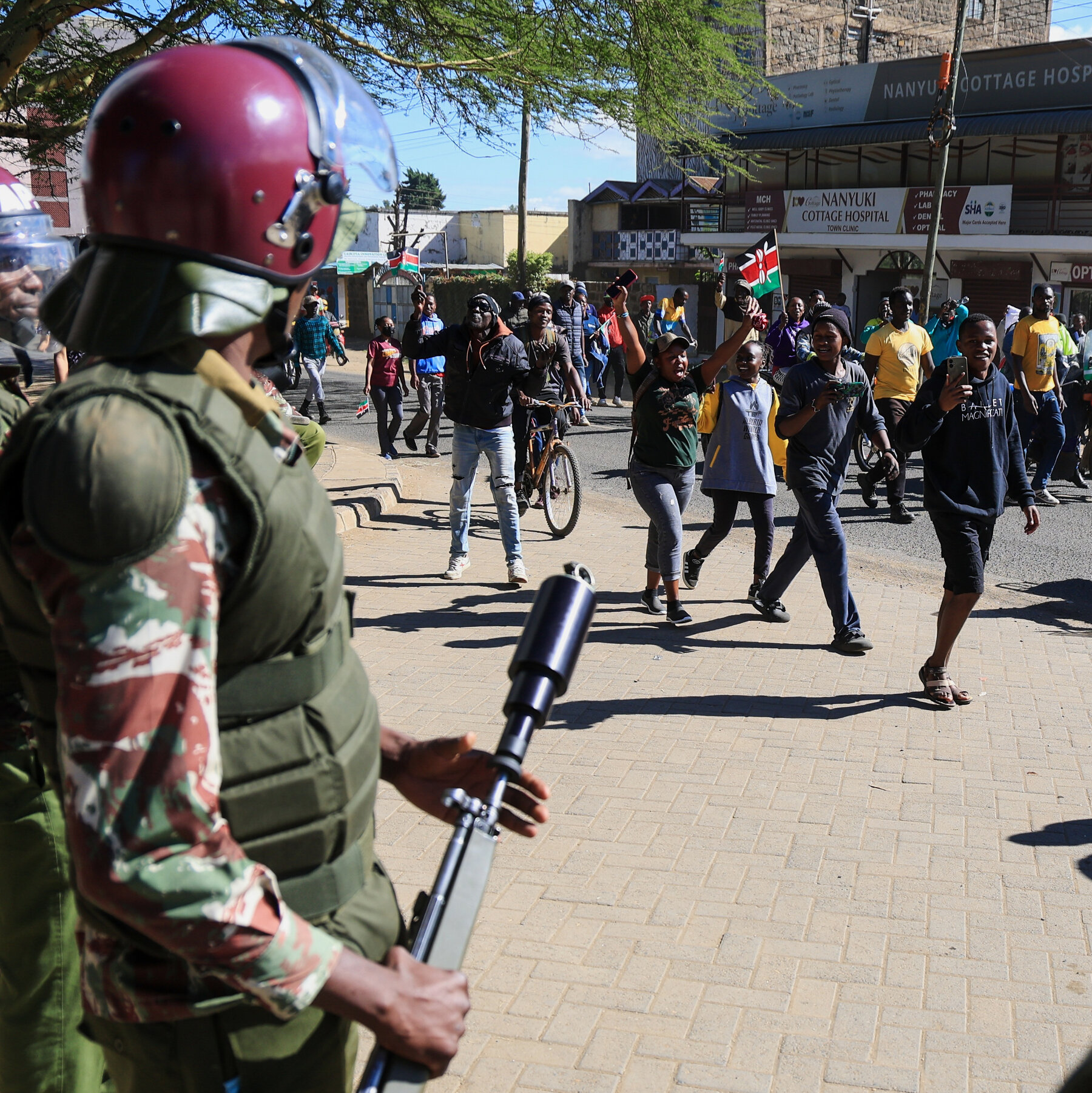
On 19 May 2026, Kenya awoke to a country it barely recognised. What had been called, a day earlier, as a nationwide protest over unaffordable fuel and a transport sector in freefall had by morning collapsed into scenes of extortion, highway seizures, and armed disorder spreading from estates into peri-urban zones. The protest had a clear economic origin; its evolution into something far more volatile was not.
The demonstrations, confirmed by Daily Nation reporting on 19 May 2026, drew their initial momentum from a transport sector that had effectively ceased to function for thousands of Kenyan commuters. Rising pump prices had pushed matatu operators and independent drivers to the brink, and the government's failure to address subsidies or price caps in any timely fashion left a combustible public mood. The spark, when it came, ignited simultaneously in multiple locations — a hallmark of organised civil-discontent campaigns that analysts have watched play out in neighbouring states over the past decade.
Within hours, the character of the mobilisation shifted. What began as a peaceful refusal to pay fares or a collective parking of vehicles in major towns gave way to reports of organised groups demanding protection money from businesses along key corridors. Highway blockades followed, severing the Nairobi–Mombasa and Nairobi–Nakuru routes at critical points. Daily Nation's on-ground reporting described scenes of chaos that bore little resemblance to the initial protest organisers' public messaging.
The Kenyan police and internal security apparatus were pressed into a response that officials described as "proportionate force to restore order," though independent observers noted that the speed of the escalation had outpaced any coherent security strategy. Senior government figures held emergency sessions at State House, Nairobi, on the morning of 19 May, with official statements promising both a fuel-price relief package and a clampdown on those exploiting the unrest for criminal ends. The twin-track approach — economic concession paired with security enforcement — is a familiar government playbook in East African crisis management. Whether it succeeds depends almost entirely on execution speed and credibility.
The structural backdrop to this disorder deserves more attention than it typically receives in wire-service accounts. Kenya's economy has been under sustained pressure from global commodity volatility since 2023, with the shilling losing ground against the dollar in ways that make fuel imports — priced in dollars — progressively more expensive for Kenyan consumers. That currency-pressure dynamic, combined with incomplete passthrough of oil-price declines at the global level, has created a situation where official pump-price figures do not reflect the lived reality at the retail level. The transport sector, where cost structures are tightly bound to fuel inputs, absorbed the first shock; workers, students, and low-income households bore the second.
There is also a political economy dimension that cannot be ignored. Kenya's governing coalition has been navigating internal tensions between reform-minded technocrats and party loyalists whose institutional interests are tied to maintaining the current patronage architecture. Fuel subsidy reform, when it finally came, arrived late and in forms that critics argued were designed to protect mid-tier political operators rather than vulnerable consumers. That perception — real or constructed — fed directly into the resentment that protests weaponised.
Whether this week's disorder marks a turning point or a contained episode depends on variables that remain in flux. A successful relief package that reaches the pump within days rather than weeks could defuse the immediate grievance. A security response that is perceived as heavy-handed will likely deepen alienation and produce a second, harder wave of mobilisation. The precedents from other East African transitions suggest that governments have a narrow window — measured in days, not weeks — to demonstrate both intent and capacity before organised anger calcifies into something structural.
For ordinary Kenyans, the stakes are immediate and material: the ability to commute to work, the price of food transported from rural areas to urban markets, the viability of small businesses that depend on road corridors for supply chains. The protests exposed how thin the margin has become between normal economic functioning and breakdown in a country where savings buffers are minimal and social safety nets are largely theoretical. Whatever the political calculations in Nairobi, the human calculus in Kibera, Mathare, and the informal settlements ringing major cities is measured in shillings per litre.
Wire provenance
This editorial synthesis draws on the following public wire/social posts:
- https://t.me/DailyNation/12345