Kenya's logistics fracture: flower exporters bleed Sh200m while restaurant chains race to build their own delivery muscle
Kenya's flower exporters are navigating their most severe logistics crunch in recent memory. According to figures reported by Standard Kenya on 19 May 2026, the industry has lost at least Sh200m in delayed shipments and spoilage, with approximately 200 tonnes of cut flowers held up — cargo that has a narrow shelf life and no meaningful buffer once the cold chain breaks down. The proximate cause is an ongoing transport disruption that has clogged the freight corridors connecting Nairobi's flower farms to Jomo Kenyatta International Airport. Producers are calling for urgent government intervention.
The Sh200m figure is not abstract. Kenya's cut flower sector is one of the country's top foreign exchange earners, employing tens of thousands of workers across farms in Naivasha, Nakuru, and Thika. When cargo sits unshipped, the flowers die. When the flights are missed, buyers in Amsterdam and London — the two hubs that anchor Kenya's floral trade — switch to Ecuadorian and Colombian suppliers whose logistics chains are running cleanly. The reputational and commercial damage accrues long after the cargo is written off.
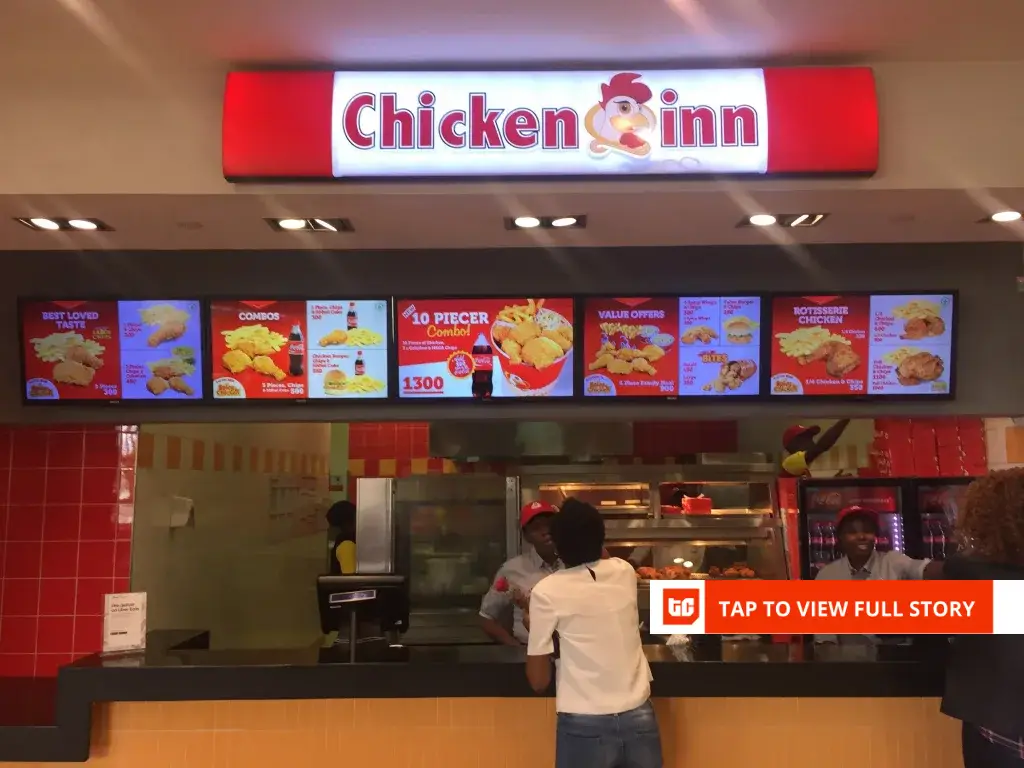
What makes the episode more than a seasonal blip is the parallel activity unfolding in Kenya's food delivery sector. TECHCABAL reported on the same date that Chicken Inn, one of Kenya's largest fast-food chains, is now handling 6,000 daily deliveries through its owned and managed logistics network. The figure itself is modest by global standards — delivery platforms in Lagos, Nairobi, and Johannesburg routinely handle multiples of that — but it marks a deliberate pivot. Rather than outsourcing last-mile distribution to aggregators, Chicken Inn's parent company is building internal capacity. The strategic logic is straightforward: the same roads, the same fuel constraints, the same urban congestion that are slowing flower exports are the daily friction points for food delivery operations. Whoever controls the logistics layer controls the growth ceiling.
The transport backdrop
Kenya's freight logistics have been under strain for several years, shaped by overlapping pressures: post-pandemic aviation recovery, rising fuel costs, and infrastructure maintenance backlogs on key road corridors. The specific disruption affecting flower shipments in mid-May 2026 appears to centre on delays at the inland container depot and reduced cargo flight capacity. The sources do not specify the cause of the disruption — whether it is operational, regulatory, or a downstream consequence of earlier aviation constraints — and both Standard Kenya and industry body statements stopped short of attributing it to a single factor.
What is clear is that the flower sector has limited capacity to absorb delay. Cut flowers are among the most time-sensitive agricultural commodities in global trade. From harvest to arrival in a European florist, the window can be as short as 72 hours. Every hour of cold-chain disruption degrades the product and compresses the saleable shelf life on the other end. The 200-tonne holdup represents multiple days of output from some of the country's most productive farms, and the Sh200m loss figure covers only the directly measurable costs — wasted inputs, extra cold-storage charges, rerouting fees — not the downstream customer-relationship damage that may take months to repair.
Restaurant chains and the logistics pivot
The Chicken Inn delivery figure needs to be read against the broader trajectory of African quick-service restaurant expansion. Over the past five years, chains operating across Nigeria, Ghana, South Africa, and Kenya have faced a consistent constraint: opening new outlets is capital-intensive and rate-limited, but building delivery volume against the same infrastructure can scale faster if the logistics layer is reliable. The companies that have expanded fastest — whether it is Chicken Inn in Kenya, KFC franchisees across West Africa, or Domino's operations in South Africa — are the ones that have treated supply chain and last-mile delivery as a core operational competency, not a back-office function.
The 6,000-daily-delivery figure for Chicken Inn suggests a mature operation but also a ceiling. Internal logistics at that scale are manageable; scaling to 20,000 or 30,000 daily deliveries requires a different infrastructure — dedicated fleet, routing optimisation, cold-chain integrity for food safety compliance. That is where the flower industry's pain point and the restaurant sector's ambition intersect. The same corridors that move flowers to the airport also move ingredients into Nairobi's central business district and its residential suburbs. A systemic logistics failure does not discriminate by cargo type.
What the infrastructure gap means
Kenya has invested substantially in its logistics infrastructure over the past decade — the LAPSSET corridor, JKIA cargo terminal upgrades, the Mombasa port expansion — but the middle-mile and last-mile layers inside Nairobi and to secondary cities remain the choke points. Air cargo capacity serving floriculture relies heavily on scheduled belly space on passenger aircraft; when those schedules are disrupted, there is limited freighter fallback. Road freight through the northern corridor to Mombasa is robust for heavy cargo, but Nairobi's internal road network creates delivery bottlenecks that are more acute for time-sensitive goods.
The gap matters for Kenya's export economy in a specific way. Flowers, vegetables, and specialty agricultural exports together represent billions of shillings in annual foreign exchange. If logistics disruptions become more frequent — whether through infrastructure wear, regulatory bottlenecks, or aviation market concentration — the competitive position of Kenyan produce against East African rivals like Ethiopia and Rwanda (both aggressively expanding floriculture capacity) will erode. Ethiopian flowers already benefit from a shorter truck-haul to Addis Ababa Bole International Airport; Kenyan exporters are competitive largely because of cold-chain expertise and buyer relationships, not infrastructure advantages.
Forward stakes
The immediate risk for Kenya's flower sector is reputational. European buyers who cannot guarantee delivery windows will progressively reroute supply relationships toward South American and Middle Eastern producers with more predictable logistics chains. That shift would be slow — buyer relationships are sticky — but it is directionally clear and compounds with each disruption.
For the restaurant sector, the stakes are about market share. Companies that invest in owned logistics will capture the delivery segment that aggregator platforms have difficulty serving efficiently in secondary urban areas — where addressing, routing, and customer communication are less standardised than in high-income suburbs. Owning that capacity is a competitive moat against both rival chains and delivery aggregators who charge commissions that compress restaurant margins.
The common thread is infrastructure. Kenya's logistics sector is capable — the flower industry has built a world-class cold-chain operation over 30 years — but it is operating against a transport backbone that has not kept pace with the growth in demand for time-sensitive freight. Whether the government responds with targeted intervention for the flower exporters, or whether the private sector continues to absorb the cost and build around the constraint, will shape how competitive Kenyan agricultural exports remain through the end of this decade.
This publication compared the Standard Kenya reporting on flower industry losses with the TECHCABAL coverage of Chicken Inn's delivery expansion as a lens on the same infrastructure problem viewed from different sectors.
Wire provenance
This editorial synthesis draws on the following public wire/social posts:
- https://t.me/StandardKenya/18243
- https://en.wikipedia.org/wiki/Floriculture_in_Kenya
- https://en.wikipedia.org/wiki/Logistics_in_Kenya