Khamenei Links Iran's Major-Power Ambitions to Population Growth as Sanctions Pressure Mounts
Ayatollah Mojtaba Khamenei's public linkage of population growth to Iran's great-power status marks a deliberate political signal at a moment when the Islamic Republic faces intensifying economic pressure and shifting regional alignments.
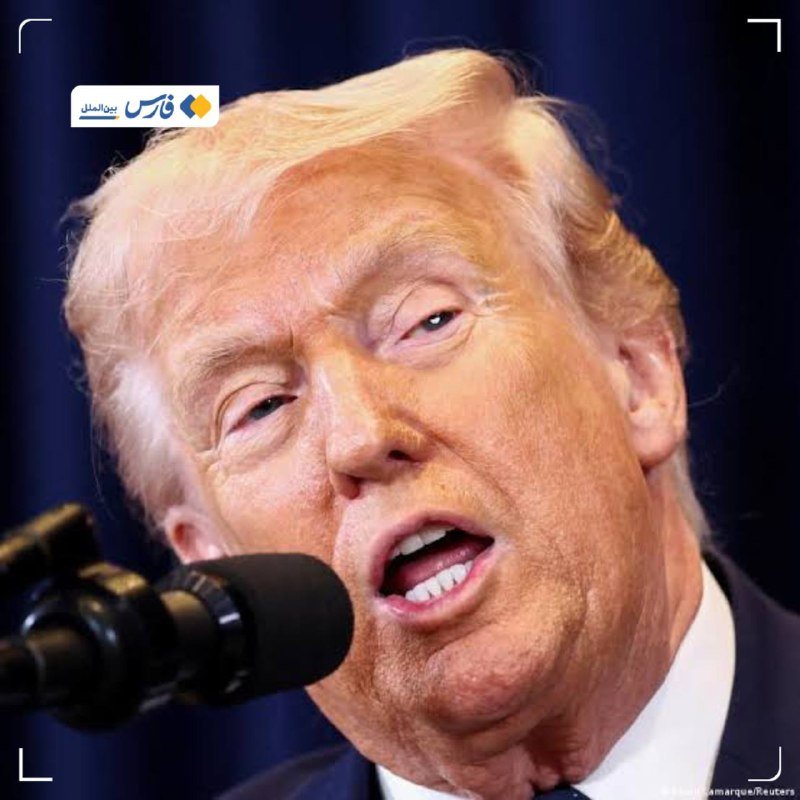
On 19 May 2026, Ayatollah Mojtaba Khamenei — the son of Supreme Leader Ali Khamenei who has increasingly served as a public voice for the Islamic Republic's strategic vision — issued a statement linking Iran's status as a major power directly to sustained population growth. The remarks, distributed via the official Arabic-language Telegram channel of the Supreme Leader's office and simultaneously carried by Iran's state news agency IRNA, landed amid mounting international pressure over Iran's nuclear programme and a domestic economy still absorbing the cumulative weight of years-long sanctions regimes.
The statement, addressed to a group of self-described popular activists working in the population field, described population expansion as essential to what Khamenei termed the "valuable achievements of the Third Sacred Defense" — a term the Islamic Republic has applied to its campaign of economic resistance against Western sanctions, positioning it as a successor to the military defence of the Iran-Iraq war (1980–1988) and the subsequent period of regional confrontation. Under this framing, demographic resilience is not merely a domestic policy variable but a strategic asset in an ongoing great-power contest.
The Demographic Calculus Behind the Claim
Iran's population stands at approximately 88 million, placing it among the twenty most populous countries globally and firmly atop the Persian Gulf and wider Middle Eastern rankings alongside Egypt and Turkey. The country experienced a dramatic fertility transition in the 1980s and 1990s — driven initially by war-related disruption and subsequently by a deliberate state-sponsored family planning campaign — before reversing course in the early 2010s as authorities grew concerned about aging demographics and a shrinking workforce. Birth rates have stabilised at roughly 1.7 children per woman, below replacement level, a trend that demographers inside and outside Iran have identified as structurally consistent with the income and urbanisation levels the country has reached.
The political instrumentalisation of these figures is not new. Khamenei's father, Supreme Leader Ali Khamenei, has previously called for policies encouraging higher birth rates, framing the demographic question as one of national resilience against external threats. The current statement extends that logic explicitly into great-power framing: a larger population, in the leadership's calculus, translates to greater strategic depth, a broader conscription base, a larger domestic market less dependent on external trade, and more human capital to project influence across the region.
Sanctions, Economic Constraints, and the Population Paradox
The timing of the statement is notable. Iran is currently navigating what analysts describe as the most sustained period of economic pressure since the JCPOA's partial collapse in 2018. American secondary sanctions targeting Iran's oil exports, shipping networks, and financial sector have compressed government revenues and driven persistent inflation, with the rial trading at levels that erode purchasing power for ordinary Iranians. The country's oil export revenues, while recovering somewhat from their 2019 lows, remain well below the levels needed to fund the state's ambitious regional posture — from support for Hezbollah in Lebanon to military cooperation with Iraqi militias to the deepening strategic partnership with Russia.
This creates an apparent paradox at the centre of Khamenei's framing: the economic conditions that population growth would intensify — more consumers, more job seekers, greater demand for housing and services — are precisely the conditions that the sanctions regime is designed to amplify. A larger population without a proportionally expanding economy risks magnifying social pressure at a moment when the state's capacity to manage discontent is already stretched. The Islamic Republic has historically managed this tension through patronage networks and subsidies, but the fiscal headroom for such mechanisms narrows with each cycle of sanctions intensification.
Regional Power Architecture and the Population Frame
The great-power framing in Khamenei's statement cannot be read in isolation from Iran's broader regional strategy. Tehran has invested heavily over two decades in building a so-called "arc of resistance" — a network of allied or aligned actors across Iraq, Syria, Lebanon, Yemen, and Gaza — that gives it regional leverage far beyond what its conventional military spending alone would purchase. This architecture requires human resources: operatives, administrators, political proxies, and the population base to absorb the costs of sustained confrontation with Israel, Saudi Arabia, and their Western backers.
The Third Sacred Defense framing — explicitly invoked in the statement — reinforces this connection. The first Sacred Defense was the Iran-Iraq war, which consumed an estimated half-million Iranian lives and left a generation-shaped trauma that continues to animate national identity. The second encompassed the post-war period of strategic confrontation and asymmetric build-up. The third, in the Islamic Republic's current self-understanding, is the economic and diplomatic campaign to survive and outlast the pressure of comprehensive sanctions while consolidating regional influence. Population growth, under this reading, is not merely demographic policy but a continuation of that defensive posture by other means.
What Remains Unresolved
The statement raises more questions than it answers. Iran's official birth rate, at below replacement level, suggests that whatever policy mechanisms the state deploys to encourage higher fertility have not yet reversed the structural shift toward smaller families. The economy's capacity to absorb a larger workforce is uncertain at best — youth unemployment already runs high by regional standards, and the private sector remains constrained by sanctions-related exclusion from international finance and trade. Whether Khamenei's framing signals a pending shift in domestic economic policy, a new wave of pronatalist incentives, or primarily serves as a public signal of strategic resolve to domestic and foreign audiences remains to be seen.
What is clear is that Iran's leadership has decided to draw an explicit line between demographic momentum and great-power status — a linkage that will shape both domestic policy debates and the calculations of regional rivals watching Tehran's next moves.
Wire provenance
This editorial synthesis draws on the following public wire/social posts:
- https://t.me/Irna_en/78432
- https://t.me/Khamenei_arabi/8921
- https://t.me/alalamarabic/14487