The limits of economic fury: why maximum pressure on Iran keeps failing
The Trump administration's latest Iran sanctions escalation may satisfy a political base, but the structural conditions that have hollowed out dollar-based pressure for a decade remain firmly in place.
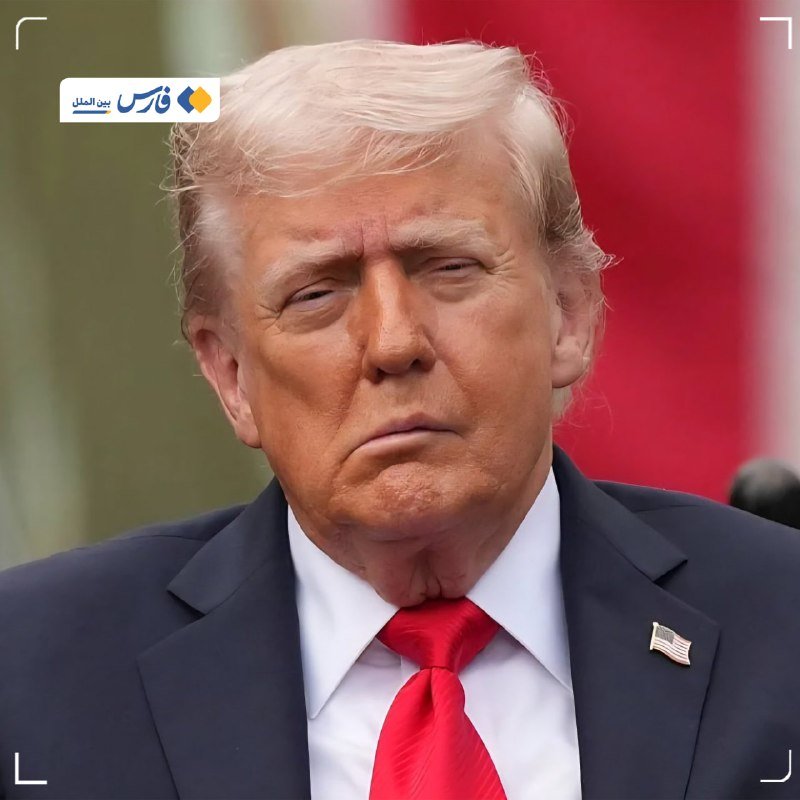
The Trump administration's maximum-pressure doctrine has found fresh expression. US Treasury Secretary Scott Bessent publicly called on American allies on 19 May 2026 to more aggressively enforce existing Iran sanctions, a demand that coincided with new US designations targeting dozens of companies, individuals, and oil tankers allegedly tied to Iranian oil exports. The move—framed by US officials as "Economic Fury"—signals renewed commitment to strangling an economy already operating under severe constraints. Whether it signals anything more consequential is another question.
The sanctions package itself is broad in scope. By targeting shipping networks, intermediary firms, and the individuals who keep Iran's crude flowing to market, the administration is attempting to close gaps that have widened during years of uneven enforcement. What is notably absent from the public framing is any acknowledgment that this approach has been tried before, refined repeatedly, and still produced a resilient Iranian economy rather than capitulation.
The partners Washington is now pressuring have heard this message before. China, the United Arab Emirates, and various Southeast Asian transit hubs have spent years developing the infrastructure to trade around dollar-denominated restrictions. Secondary sanctions—threatening non-US entities with exclusion from the American financial system—worked when the dollar was close to universal. That condition no longer holds in the same way. A growing share of global trade occurs in currencies and through financial channels that do not pass through New York or London. The enforcement burden has shifted from Washington, which retains the right to punish, to partners who absorb the commercial cost of compliance.
This is the central tension the administration has not resolved. Sanctions designed to compel behavioral change in Tehran require partners to sacrifice economic relationships they value. Theask from Bessent amounts to: enforce these measures more rigorously on our behalf, bearing the costs yourselves. It is not an unreasonable request from the perspective of US strategic interests. It is an unreasonable expectation given those same partners' commercial and diplomatic calculations.
The structural problem runs deeper than political will. Dollar hegemony remains formidable—but it is a lever that loses mechanical advantage the more it is applied. Each round of aggressive secondary sanctions prompts further diversification. Each designation of a shipping company accelerates the formation of fleet networks registered in jurisdictions beyond easy US reach. The architecture of evasion that the new package targets exists in part because prior packages created it. The response is more designations, which generates more adaptation, which generates more designations. The treadmill accelerates.
There is also an internal contradiction in the stated objectives. The administration frames economic pressure as leverage to force Iran to the negotiating table on nuclear matters. Yet the stated goals consistently expand beyond the nuclear file to include Iran's regional posture, its ballistic missile programme, and its support for proxy forces. If the objective is comprehensive behavioral change across every dimension of Iranian policy, economic strangulation is a blunt instrument for a task that requires either military coercion or genuine diplomatic give-and-take. Neither appears to be on offer.
The stakes of continued failure are asymmetric but significant. If sanctions produce no observable change in Iranian behavior, the administration faces a choice: escalate to military options, pivot to direct negotiations on terms it previously rejected, or accept a prolonged stalemate that normalizes Iran's current position. The first carries risks of regional war. The second requires admitting that pressure failed. The third requires explaining to domestic audiences why a central campaign promise remains unfulfilled. None of these outcomes is comfortable.
The credibility of US economic statecraft is not infinitely patient. Partners in Asia, the Middle East, and the Gulf watch how Washington treats countries that withstand sanctions pressure. The signal that maximum pressure can be survived—and that diversification away from dollar dependence is a survivable strategy—echoes well beyond Tehran. Other governments are drawing the same lessons. The next administration that wants to deploy financial weapons will find the arsenal somewhat emptier than the one this one inherited.
For now, the machinery of economic fury will continue to turn. More designations will follow. Iranian exports will face new friction. The political optics will be satisfying. Whether any of this changes the fundamental equation—that Iran remains economically constrained but structurally intact, that its nuclear programme advances incrementally, that its regional networks persist, and that dollar dominance erodes quietly in the background—remains the question the administration has yet to answer.
This publication has followed the US wire framing closely on this story. The dominant narrative positions the sanctions as a credible escalation that signals seriousness. We note that the wire framing gives limited space to the structural conditions—dollar diversification, partner enforcement fatigue, Iranian adaptive capacity—that have consistently softened the impact of each successive package. The analysis above reflects our assessment that maximum pressure is a policy in search of a theory of success it has never provided.
Wire provenance
This editorial synthesis draws on the following public wire/social posts:
- https://t.me/thecradlemedia/28458
- https://t.me/thecradlemedia/28458