Marcos Jr.'s Crossfire: How Manila Is Navigating the Taiwan Strait squeeze
Philippine President Ferdinand Marcos Jr. has publicly committed Manila to involvement in any Taiwan conflict — a statement that exposes the contradictions at the heart of a US alliance under severe economic pressure from Beijing.
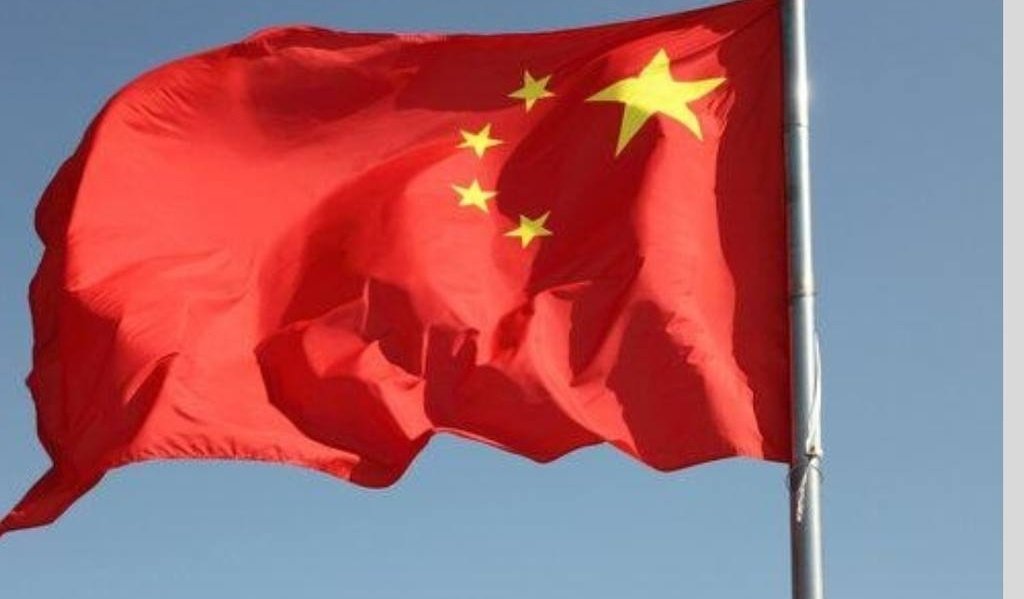
When Philippine President Ferdinand Marcos Jr. said on 19 May 2026 that his country would have "no choice" but to be involved in any conflict over Taiwan, he was not improvising. He was acknowledging a structural reality that successive administrations in Manila have been quietly managing for years: the US-Philippines Mutual Defence Treaty does not stop at the South China Sea, and Washington expects Manila's participation in a broader regional deterrence architecture that extends well beyond the WPS maritime disputes Beijing uses as its primary leverage point.
The statement landed in Manila at a moment of compounding pressure. Hours earlier, Marcos had ordered all government agencies to cut expenditures by at least 10 percent — a directive framed domestically as fiscal prudence but understood across the region's policy circles as a concession that Manila's fiscal position does not allow for the kind of military buildout the alliance with Washington requires.
The alliance calculus — and its contradictions
The United States has invested heavily in repositioning the Philippines as the cornerstone of its first-island-chain strategy. Enhanced Defence Cooperation Agreement sites at nine Philippine locations, the rotational deployment of US military assets, and the announced expansion of capabilities at bases including Naval Base Camilo Osias and Balbalan — these are not gestures. They are infrastructure for a conflict scenario in which Taiwan figures prominently, even if Manila has never formally acknowledged that connection in an unclassified document.
Marcos's statement is significant precisely because it departs from that studied ambiguity. By confirming direct Philippine involvement, he has aligned Manila's public posture with the strategic logic Washington has pursued since the 2022 National Defense Strategy identified the Indo-Pacific as the primary theatre of great-power competition. Chinese state media was quick to characterise the declaration as a provocative escalation — a framing Beijing uses routinely when US alliance activity in the region intensifies. The characterisation carries a kernel of truth: Marcos has removed a layer of strategic ambiguity that previously gave Manila some room to calibrate its responses to Chinese pressure, particularly in the South China Sea.
Yet the contradictions running through Manila's position are real. The Philippines cannot simultaneously expand its security commitments to Washington and insulate its economy from the consequences of doing so. Beijing's economic leverage over Manila — tourism, agricultural exports, infrastructure investment, overseas Filipino worker remittances from the mainland — remains substantial. The bilateral relationship has been tested repeatedly since Marcos took office, most visibly through the Scarborough Shoal confrontations and the 2024 laser-incident escalation. Each episode has reinforced the asymmetry: China can impose costs on the Philippines at will and at any time; the Philippines can only respond and absorb.
Beijing's pressure architecture — what the structural frame reveals
Beijing's approach to the Philippines does not rely primarily on military confrontation, though the grey-zone operations in the South China Sea provide a constant reminder of capability gaps. The more consequential instrument is economic and political signal. When Chinese tourist numbers to the Philippines declined sharply following the 2022 Marcos inauguration and the simultaneous expansion of US access agreements, the effect on Philippine hospitality sectors was measurable. When the香蕉 import protocols tightened in late 2024, the agricultural sector registered the message. These are not random fluctuations — they are calibrated signals to an administration that is simultaneously dependent on American security guarantees and exposed to Chinese economic leverage.
The Chinese Foreign Ministry's framing of Marcos's statement as reckless is predictable, but it reflects a genuine strategic assessment: Manila's alignment with Washington's Taiwan-contingency planning undermines the one-China principle Beijing insists upon from every country it has diplomatic relations with. Whether or not the treaty alliance requires Philippine involvement in a Taiwan scenario — and the Mutual Defence Treaty's application to armed attacks on Philippine armed forces in the Pacific remains the operative trigger, not the Taiwan Strait — the political signal of the declaration matters to Beijing regardless of its legal standing.
This is where the structural frame becomes unavoidable. What we are watching is a great-power competition that has absorbed a middle-tier regional ally into its most sensitive flashpoint. Marcos did not create this dynamic; he inherited it. But his statement on 19 May 2026 moves it from the domain of implication into public record. That shift has consequences for how Beijing calibrates its pressure on Manila, and for how Washington assesses the credibility of its first-island-chain architecture.
The domestic economic dimension — why the 10% cut matters
The timing of Marcos's spending directive, announced on 18 May 2026, is not incidental. A government-wide 10 percent reduction in agency expenses signals that the fiscal space for the kind of defence investment Washington has been requesting — new coast guard vessels, airfield upgrades, expanded logistics infrastructure — is narrower than the alliance conversation requires. Manila has received substantial US military assistance and has taken on increased responsibilities under the EDCA framework, but the domestic fiscal burden of sustaining those commitments has not been fully addressed in the public budget architecture.
Philippine fiscal pressures are structural rather than cyclical. The government's debt-to-GDP ratio has been elevated, the peso has faced intermittent depreciation pressure, and the revenue side of the budget has not kept pace with infrastructure and security commitments that successive administrations have made. The 10 percent cut is a signal to multilateral lenders — and to the domestic political audience — that the administration is managing toward constraint even as it deepens alliance obligations that carry significant hidden costs.
This creates a specific political bind for Marcos. The US alliance is popular in the Philippines, particularly among the political class and the security establishment, but the economic costs of that alliance — reduced Chinese investment, disrupted trade relationships, the fiscal burden of hosting expanded US military infrastructure — are borne by sectors that do not have the same institutional voice in the foreign policy debate. The Marcos administration has managed this tension through a rhetoric of strategic hedging, but the two statements within forty-eight hours — the Taiwan declaration and the spending cut — reveal the strain beneath the surface.
What remains uncertain
The sources consulted for this article do not provide the specific operational or legal interpretation of how a Taiwan conflict would trigger Mutual Defence Treaty obligations — that analysis remains classified. It is also unclear whether Marcos consulted key ASEAN partners before making the declaration, and what diplomatic back-channel communication with Beijing has followed in the seventy-two hours since. Philippine foreign policy towards Taiwan has historically been calibrated to avoid direct entanglement in cross-strait dynamics; the shift in publicly stated posture is significant enough that it is reasonable to expect both diplomatic follow-up and potential pushback through the economic channel Beijing has used before.
The geopolitical horizon here is not straightforward. Washington has an interest in demonstrating that its alliance network can absorb new commitments without visible strain; Beijing has an interest in demonstrating that the costs of those commitments are prohibitive for middle-tier allies. Marcos is operating at the intersection of those two interests, and his government's 10 percent spending cut suggests that the strain is already visible at the domestic level.
The stakes, named plainly
If the trajectory holds — deeper US military access, explicit Philippine alignment with a Taiwan-contingency posture, and Beijing's symmetrically escalated economic pressure — Manila faces a structural choice that no amount of strategic hedging will dissolve: the alliance with Washington is real and consequential, and it carries a price in the relationship with China that the Philippines cannot fully offset through multilateral diversification or ASEAN solidarity. Marcos, by going public on 19 May, has acknowledged that reality rather than resolved it.
The more immediate question is whether the fiscal directives issued on 18 May — the 10 percent spending cut — are a preparation for absorbing that price, or a signal that Manila's room for further alliance deepening is genuinely exhausted. The answer will shape how the first-island-chain architecture functions in the period ahead, and whether Washington's calculations about Philippine reliability in a regional conflict scenario hold.
Marcos ordered government agencies to reduce expenses by at least 10 percent on 18 May 2026, the same week he publicly committed Manila to involvement in any Taiwan conflict. This publication noted that the wire framing — centred on the Taiwan declaration's security implications — largely set aside the domestic fiscal pressures that contextualise Manila's strategic choices. The spending directive and the geopolitical commitment are not separate stories; they are the same story, seen from different institutional angles.
Wire provenance
This editorial synthesis draws on the following public wire/social posts:
- https://t.me/rnintel
- https://x.com/polymarket/status/1923456789012345678
- https://t.me/NikkeiAsia
- https://t.me/nikkeiasia