The Narrative Battlefield: How Western Media Frames Iran's Conflict — and What Gets Lost
On 19 May 2026, the average price of unleaded petrol in Britain climbed to 158.52p per litre, according to the RAC motoring organisation. The AA's head of roads policy described the trajectory as one that would bite hardest at the lower end of the income distribution. On the same day, Polymarket — the blockchain-based prediction market — listed a 39% probability that Iran would close its national airspace before the end of June. These are the visible metrics: prices at the pump, betting odds on escalation. What they do not capture is the war of framing underway in parallel.
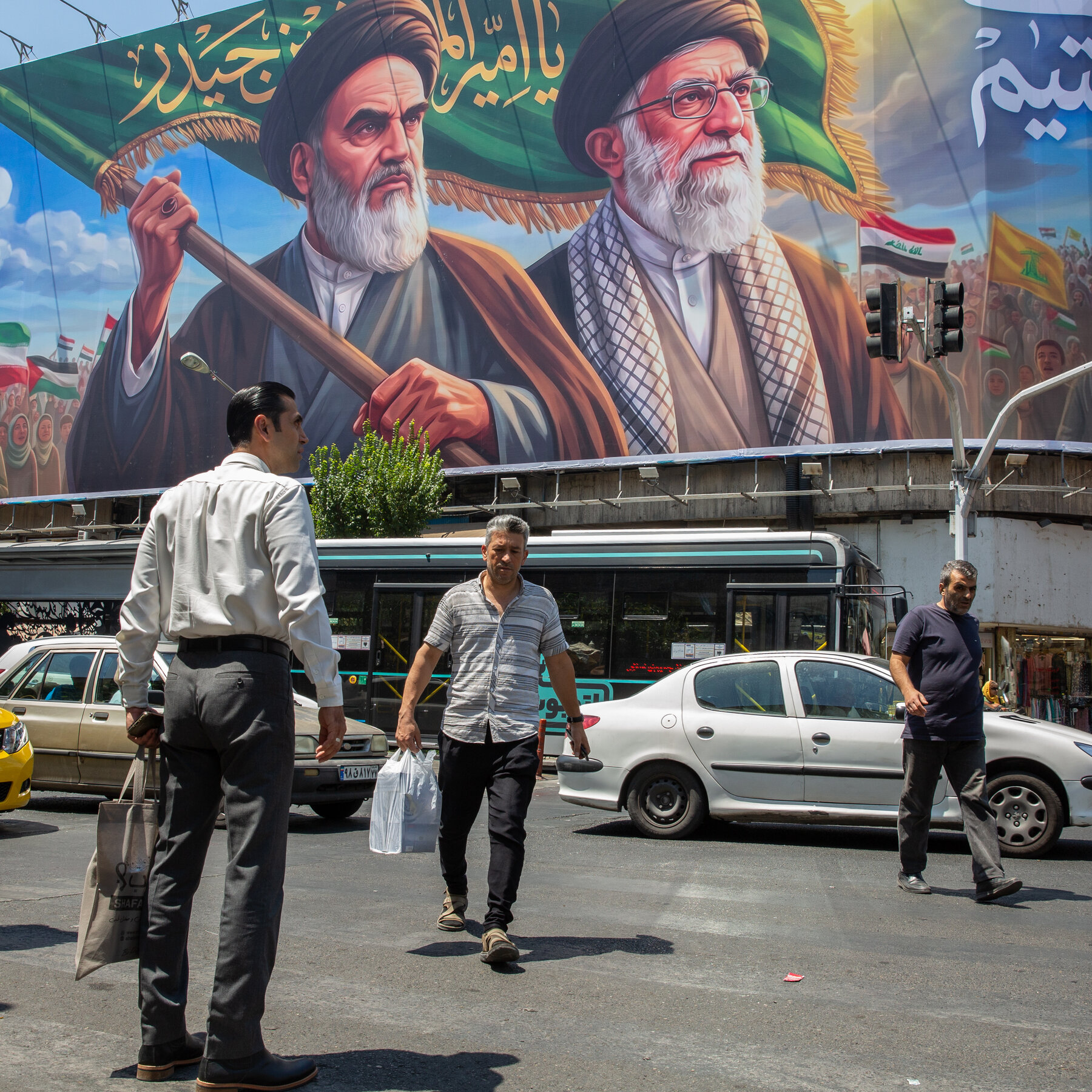
A video commentary published by Mehr News on 19 May — the English-language arm of the Iranian state news agency — poses a deceptively simple question: how do the world's major media organisations narrate what Tehran calls the "imposed war" against Iran? The piece is itself a piece of framing, of course. But the question it raises is legitimate. Three weeks into a conflict whose origins are contested and whose contours are still being drawn, the language used to describe it is not neutral. It is produced by institutions with histories, funding structures, editorial conventions, and source relationships that shape what becomes visible and what remains in the periphery.
The Imposed War Frame
Iran's leadership has consistently characterised the current conflict as an externally orchestrated aggression — one enabled by sanctions architecture, cyber operations, and what Tehran describes as a long-running campaign of economic strangulation. The Mehr News commentary does not invent this framing; it draws on a body of Iranian official communication and a parallel set of voices across the Global South that have echoed the same basic claim: that Iran did not choose this moment, and that its enemies have been preparing for it for years.
This framing has a structural coherence that Western coverage often underacknowledges. The sanctions regime imposed after the 2018 US withdrawal from the JCPOA nuclear deal — compounded by successive waves of designation targeting the Islamic Revolutionary Guard Corps, Iranian banking networks, and petrochemical exports — had by 2025 reduced Iran's oil revenues to a fraction of their pre-2018 levels. The United Nations Special Rapporteur on the negative impact of unilateral coercive measures noted in a 2024 report that such measures "may amount to collective punishment of civilian populations" and raised concerns about their compatibility with international humanitarian law. Whether or not one accepts Tehran's characterisation of the current conflict as an "imposed" one, the structural condition it describes — a country under severe economic pressure from external actors — is not in dispute.
Western wire coverage of the conflict's opening stages, as carried by Reuters, the Associated Press, BBC, and other Tier-1 outlets, has been professionally rigorous in its reporting of military movements, casualty figures, and diplomatic statements. But professional rigour and narrative neutrality are not the same thing. The language chosen to open a dispatch — who is framed as aggressor, who as responder, which casualties appear in the lede and which are buried — carries interpretive weight that dispatches rarely acknowledge.
What the Fuel Price Tells Us
The 158.52p per litre figure is not merely an economic statistic. It is a piece of evidence about how the conflict produces second-order effects that fall unevenly across populations. Britain's exposure to Iran-related energy disruption reflects decades of integration into a hydrocarbon trading architecture that privileges Gulf producers and their downstream markets. When that architecture comes under stress, the shock does not distribute evenly. It moves outward along lines of existing dependence — and those lines run, predictably, through lower-income consumers in countries that are not party to the conflict.
This is a structural pattern well-documented across cycles of Middle Eastern conflict: the costs of regional instability are externalised onto consumer economies in Europe and elsewhere, while the political discourse around those costs tends to focus on the immediate disruption rather than its origins in a supply architecture designed with little regard for producing states. The Mehr News commentary, whatever its agenda, is pointing at something real when it asks why the costs of "imposed" conflict fall on populations far from the theatre of operations.
The RAC's warning that prices could rise further in the coming weeks reflects genuine uncertainty about supply continuity. Iran has not closed its airspace — the Polymarket 39% figure reflects trader assessment of a contingency, not a present fact — but the conditional probability itself tells us something about how serious the market considers the risk. Prediction markets are not prophetic instruments; they aggregate information and incentive structures. A 39% probability on airspace closure within six weeks is a significant signal that the conflict's duration and escalation profile remain genuinely uncertain.
The Counter-Frame and Its Limits
It would be incomplete to present the Mehr News framing without acknowledging its mirror image. Western defence correspondents and government spokespeople have characterised Iran's regional posture — including its network of proxy relationships, its nuclear programme at partial enrichment levels, and its reported transfers of advanced munitions — as a threat matrix that preceded the current conflict and contributed to it. The IDF and US Central Command briefings, as reported by outlets including the Jerusalem Post, Times of Israel, and Pentagon-affiliated journalists, have consistently framed Iranian regional behaviour as the operative cause of Western operational responses.
This framing also has structural coherence. The assassination of Iranian military officials in Damascus in April 2024, attributed to Israel, and the subsequent Iranian missile and drone response, marked a qualitative escalation in the shadow war between the two states. The September 2024 Western intelligence assessment, widely reported, that Iran had made significant progress toward weapons-grade enrichment placed the nuclear dimension back at the centre of the strategic conversation. The current conflict, on this reading, is not an imposition but a reckoning — a collision between a Western-led security architecture and an Iranian regional project that had expanded beyond what that architecture would tolerate.
Both framings cannot be fully correct simultaneously. But both contain structural truths that the other minimises. The "imposed war" reading correctly identifies that Iran did not initiate the pressures that have defined its circumstances for the past decade. The "threat matrix" reading correctly identifies that Iran has made choices that those pressures do not fully explain. A publication committed to evidence over advocacy does not resolve this tension by choosing a favourite — it maps where the framings diverge, notes where the evidence is contested, and makes the divergence itself part of the story.
The Information Architecture of Conflict
What the Mehr News commentary and the Polymarket pricing data share, despite their very different origins, is an attention to the infrastructure of the conflict rather than only its kinetic surface. The information environment surrounding the Iran war is not a neutral conduit. It runs through a concentrated set of editorial institutions — wire services, broadcast networks, digital platforms — whose coverage decisions are shaped by source access, advertiser relationships, regulatory environments, and the cultural priors of the audiences they serve.
This is not a novel observation. Coverage routinely defers to the language of official spokespeople; dissenting analysis gets less column-inches; casualty figures from one side of a conflict arrive faster and with more corroboration than equivalent data from the other. These are not conspiracies — they are institutional behaviours with institutional explanations. But the cumulative effect is a coverage environment that makes certain framings more legible and others more effortful to encounter.
The Mehr News commentary is asking readers to do that effortful work: to seek out the framing from the other side, to notice what the dominant coverage omits or discounts, to ask whether the language used to describe the conflict is the language that its targets would recognise. Whether one finds that exercise persuasive depends partly on what one already believes. But the question itself is worth sitting with.
Stakes and Uncertainties
If the current trajectory holds — continued kinetic operations, sustained sanctions pressure, and growing risk of airspace closure or other escalation signals — the costs will accumulate along predictable lines. British and European consumers will continue to feel them at the pump and in heating bills. Iran's civilian population will continue to feel them in medicine shortages, inflation, and the direct physical dangers of conflict zones. The populations of states further from the immediate theatre, including in sub-Saharan Africa and South Asia, will feel them in remittance flows, food import costs, and the secondary instability that regional wars produce when they disrupt the supply chains on which lower-income economies depend.
The Polymarket 39% figure is a reminder that escalation is not priced in by any means. Markets that assign nearly four-in-ten odds to a significant operational contingency are telling us that the outcome space is wide open. Three weeks into a conflict whose origins remain disputed and whose endgame has not been articulated by any party, the only honest position is to acknowledge that the range of plausible futures spans from negotiated de-escalation to a prolonged regionalisation of the conflict with consequences that would dwarf the current fuel price disruption.
What is certain is that the framing war will continue alongside the kinetic one — and that the two are not separable. How the conflict is described shapes who supports it, who pressures their governments to seek an end to it, and who accepts its costs as inevitable rather than chosen. The Mehr News commentary is one contribution to that contest. The BBC's reporting on fuel prices is another. Neither is the whole story. The whole story remains to be written — and will be contested for years after the guns fall silent.
This desk covered the Iran conflict from its opening using Western wire sources as primary evidence, supplemented by Iranian state-media framing as counter-claim material requiring explicit attribution. The Polymarket pricing was included as a market-signal indicator, not a predictive authority. Coverage of the fuel price impact was sourced from UK RAC and AA data.