Oil Dips as Trump Defers Iran Strike at Gulf Allies' Request
Oil falls more than 2% as the Trump administration confirms it has postponed a planned military strike on Iran, citing direct requests from Gulf Arab states — even as the conflict itself shows no sign of abating.
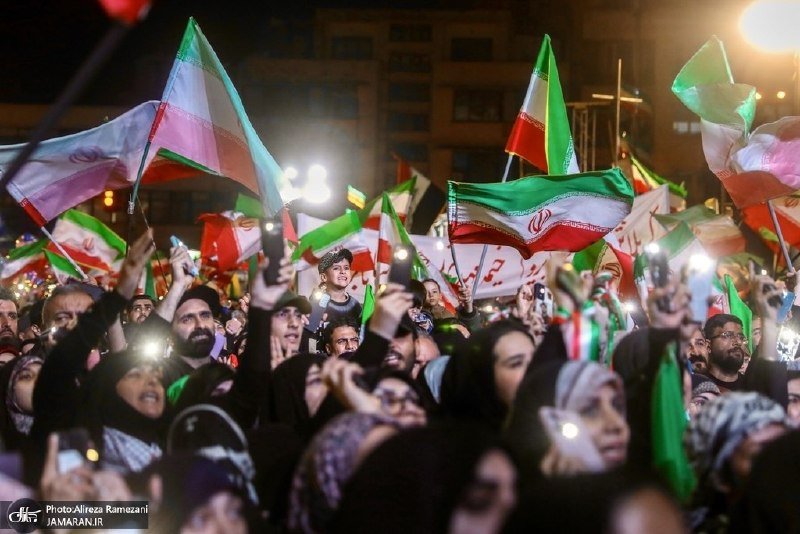
Oil fell more than 2 percent on Monday after President Donald Trump confirmed the United States had postponed a scheduled military strike on Iran, following what he described as direct requests from Gulf Arab states to hold fire. The announcement came as fighting between Iran and Israel continued without pause, with Iranian leadership in Tehran projecting defiance and rejecting what it called American pressure.
Trump told reporters at the White House that the strike had been delayed at the urging of regional partners — a characterization Reuters confirmed with reporting that the postponement had been communicated publicly by the administration. The oil market reaction was swift: Brent crude shed more than two dollars a barrel within hours of the announcement, reversing a rally that had built as speculation over imminent US military action mounted through the weekend. The episode illustrates the degree to which the conflict's trajectory remains sensitive to perceptions about whether Washington will escalate, and how much authority Gulf Arab governments retain to shape those perceptions.
The Immediate Context
The question of who is influencing Iranian military capabilities during the ongoing conflict has drawn sustained attention from open-source analysts tracking the war. On Monday morning, the WarMonitor Telegram account — which provides regular OSINT analysis of the conflict — posted an assessment identifying two distinct concerns. First, the account stated that Iran is receiving outside help in prosecuting the war. Second, it argued that the operational conduct of the conflict may be exposing US weapons systems and tactical approaches to other adversaries. The assessment, posted in full to the channel, did not name the external parties providing assistance but flagged the dual concern as a factor that would complicate any US decision to strike.
Reuters reported separately that oil markets had priced in a significant risk premium as speculation about an imminent strike grew over the weekend, and that the announcement of a postponement triggered a corrective sell-off. That price move — sharp but contained — suggested markets viewed the deferral as genuine but temporary, not as a fundamental de-escalation.
Market Reaction and the Stakes
The oil market movement carries weight beyond the financial. Any strike that disrupts Iranian oil production or transit would compress supply at a moment when global markets are already navigating elevated uncertainty. The two-percent dip, while significant on a single day, represents a fraction of the risk premium that traders had been pricing in. That partial relief reflects a narrow window: the attack was postponed, not cancelled. Gulf states that requested the deferral secured a stay of execution — but the underlying question of whether the US proceeds remains unanswered.
Al Jazeera's correspondent in Tehran reported on Monday that Iranian officials are framing the development as a sign of weakness rather than a diplomatic opening. According to the correspondent's filing, Tehran's leadership is projecting defiance and rejecting what it describes as American pressure. That framing — if it reflects a genuine consensus inside the Iranian government — suggests the postponement may not produce the降pressure the Gulf states sought to create, and could instead harden the negotiating position of a leadership that believes the US blinked.
The Credibility Problem
The episode crystallises a structural tension that has run through the Trump administration's approach to Iran since the outset of the conflict. A hardline posture — repeated declarations that military consequences would follow Iranian aggression — is the stated position. But the Gulf states' willingness to appeal directly for restraint, and the administration's apparent acquiescence to that appeal, raises questions about where the line between rhetoric and action actually sits.
Gulf Arab governments — particularly Saudi Arabia and the UAE — have deep concerns about what an expanded US-Iran conflict would mean for regional stability and energy infrastructure. Their requests that Washington hold back from a strike reflect those anxieties. Whether the administration granted the request out of genuine strategic agreement, or because the operational or political case for striking had not been made convincingly enough, remains unclear from the available sources. Both readings are plausible, and they point in different directions for what happens next.
What Comes Next
The deferral buys time. Whether it buys anything more depends on what both sides do with it. Gulf states will likely use the interval to continue pressing for a diplomatic off-ramp — one that allows the US to claim strength while avoiding the escalation they fear. Iranian officials, if the Al Jazeera reporting on their internal framing holds, appear unlikely to interpret the postponement as an opening for compromise.
The WarMonitor assessment that outside assistance is helping sustain Iran's war-making — and that the conduct of the conflict may be informing adversary planning — suggests the strategic calculus inside the administration is more complex than a straightforward decision between strike and no strike. A weapons-vulnerability problem, if real, is not solved by postponing a single strike. It is a structural concern that would persist regardless of Monday's decision.
The market reaction, meanwhile, indicates that traders are treating this as a pause. Brent crude will recalibrate quickly if new information suggests the strike is back on the calendar — or if Tehran misreads the deferral as an invitation to escalate further. The 2 percent oil dip is a signal, not a conclusion.
This article was filed as a developing situation. Three sourcing threads were consulted: the WarMonitor Telegram account for military-capability and weapons-vulnerability analysis; Reuters for the administration's announcement and oil-market price data; and Al Jazeera for reporting from Tehran on Iranian government framing. The sources do not yet provide detail on the specific military options under review, or on whether the Gulf states' appeal reflects a broader shift in US regional strategy.
Wire provenance
This editorial synthesis draws on the following public wire/social posts:
- https://t.me/osintlive