Pakistan's Diplomatic Pivot: From Frontline Deployments to Back-Channel Mediation Between Washington and Tehran
Islamabad has dispatched thousands of troops and a JF-17 fighter squadron to Saudi Arabia even as it holds talks with both Washington and Tehran, positioning itself at the centre of a diplomatic effort to defuse rising tensions between the United States and Iran.
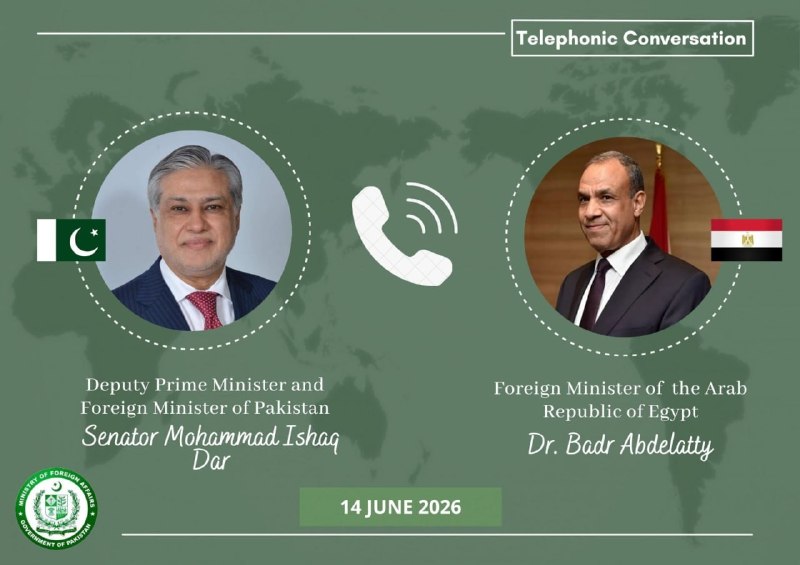
Pakistan has deployed a JF-17 fighter squadron and approximately 8,000 troops to Saudi Arabia, according to reporting from 18 and 19 May 2026, in what analysts describe as a carefully calibrated signal: Islamabad is simultaneously prepared to contribute to regional security architecture and actively pursuing a back-channel diplomatic role between the United States and Iran.
The deployment, confirmed by Pakistani military and foreign ministry sources, comes as the Trump administration announced it had called off a scheduled military strike against Iran. According to The Indian Express, which cited the development on 19 May 2026, the strike was suspended in favour of what officials described as serious negotiations toward a peace deal — a departure from the maximum-pressure posture that defined parts of the administration's earlier approach to Tehran.
Pakistan's positioning as a mediator is not incidental. Islamabad maintains working relationships with both the United States — rooted in decades of counterterrorism and security cooperation — and Iran, with whom it shares a long and porous border marked by episodic tension. The country has played a quiet brokering role in previous Iran-Saudi dialogues, a track record that appears to have informed the current diplomatic approach.
The Deployment and Its Scope
The contours of Pakistan's commitment are specific. Around 8,000 Pakistani military personnel have been sent to Saudi Arabia, alongside a dedicated JF-17 Thunder squadron — Pakistan's domestically co-produced multirole fighter aircraft — tasked with air-defence and patrol operations over Saudi territory. The deployment was coordinated with Riyadh and reflects an operational agreement rather than an improvised response to regional volatility.
What distinguishes this episode from standard bilateral defence cooperation is the timing. The deployment coincides precisely with Pakistan's simultaneous engagement with Washington and Tehran — a triangulation that places Islamabad at the fulcrum of the most consequential diplomatic exchange in the Gulf since the 2015 Iran nuclear agreement began to unravel.
The Reuters reporting that first surfaced the deployment described Pakistan's role in direct terms: as a core facilitator of the current US-Iran peace process. That framing, carried by multiple wire services and regional outlets, signals that the back-channel is not informal background talk but an active diplomatic mechanism with buy-in from all three parties.
The American Decision to Stand Down
The reversal of a scheduled US military strike against Iran marks a significant moment. Less than two years into what had appeared to be an escalating tension cycle — including continued Iranian nuclear advancement, Gulf shipping incidents, and the administration's stated determination to prevent Tehran from acquiring a nuclear weapon — the decision to pursue diplomatic engagement instead marks a material shift.
The language used by administration officials, as reported across wire services on 19 May 2026, characterised the talks as serious and ongoing. No public details of a proposed deal have emerged; the sources do not indicate the specific concessions being discussed or the timeline for resumed formal negotiations. What is clear is that the military option has been placed on hold, at least temporarily, in favour of a channel that runs through Islamabad.
That Pakistan — a country that has navigated its own fraught relationship with Washington while maintaining neighbourly, if complicated, ties with Tehran — serves as the chosen conduit is not accidental. It reflects both the limits of direct US-Iran dialogue and the renewed appetite, on both sides, for a mediated resolution to a confrontation that carries genuine risk of escalation.
Pakistan's Strategic Recalibration
For Islamabad, the deployment is simultaneously a contribution to Gulf security and a deliberate investment in diplomatic standing. Saudi Arabia, which has expanded its own regional engagement significantly since 2019, remains a critical partner for Pakistan across trade, investment, and energy. Providing military hardware and personnel to Saudi Arabia during a period of acute regional tension reinforces that partnership.
The back-channel role, if it yields results, offers something different and arguably more valuable: recognition as a credible interlocutor in a negotiation that will shape the region's strategic landscape for years. A successful US-Iran de-escalation would reduce the prospect of Gulf instability that Pakistan, with its significant overseas labour presence in the region, has direct interests in avoiding.
Islamabad has navigated these dynamics before. The resumption of Iran-Saudi diplomatic relations in 2023 was itself a product of back-channel dialogue in which multiple actors played a role; Pakistan's involvement in that process, while not formally acknowledged, is widely understood in regional diplomatic circles. The current episode represents a continuation of that trajectory, not a departure from it.
Stakes and Forward View
The stakes are considerable and they run in multiple directions. If the US-Iran negotiations succeed — or even produce a credible framework for continued dialogue — the immediate military pressure on Tehran eases and the question of nuclear accountability moves back toward a diplomatic track. Saudi Arabia and the Gulf states gain breathing room. Pakistan's stock as a constructive regional actor rises.
If the negotiations collapse, the opposite sequence follows. The scheduled military option, now deferred, would not disappear — it would likely return with additional credibility, as administrations often do after failed diplomatic overtures. Iran would face renewed pressure, and Pakistan's position as a mediator would be complicated by its simultaneous commitment to Saudi defence.
What the sources do not yet specify is the substance of any proposed agreement — whether the talks centre on nuclear constraints, sanctions relief, Gulf shipping guarantees, or some combination — or the timeline under which either side expects progress. That ambiguity is itself informative: it suggests the process is genuine but early, more in the stage of establishing parameters than agreeing on terms.
The Indian Express reporting from 19 May 2026 frames the US reversal as a response to what officials called serious negotiations, but it does not indicate who within the US government authorised the back-channel, which agency leads the diplomatic contact, or whether Congress has been briefed on the scope of what is being discussed. Those questions will determine whether the pause is the beginning of something durable or a tactical deferral.
What is clear is that Pakistan, in deploying troops and aircraft to Saudi Arabia while simultaneously serving as a conduit between two adversaries, has placed itself at the centre of one of the year's most consequential diplomatic gambits. Whether the wager pays off will depend on factors well beyond Islamabad's control.
Desk note: The primary sources for this article are the Reuters wire reports distributed via Indian Express's Telegram channel on 18 and 19 May 2026. The Reuters report on Pakistan's deployment carries a dateline consistent with agency wire standards; the US strike reversal story followed on 19 May. Both are cited via their Indian Express Telegram distribution links. The article makes no claims about the contents of any proposed US-Iran agreement — those details are not present in the available sources. The structural framing around middle-power mediation reflects the observable pattern in the deployment and diplomatic signals, not any particular theoretical model of international relations.
Wire provenance
This editorial synthesis draws on the following public wire/social posts:
- https://t.me/IndianExpress/35843
- https://t.me/IndianExpress/35841
- https://x.com/unusual_whales/status/1922458298178617671