Putin Arrives in Beijing for Two-Day Visit as Russia Deepens China Dependency
Russian president arrived in Beijing on 19 May 2026 for a two-day visit centred on economic partnership, energy contracts, and diplomatic coordination against a Western pressure campaign that has only intensified since 2022.
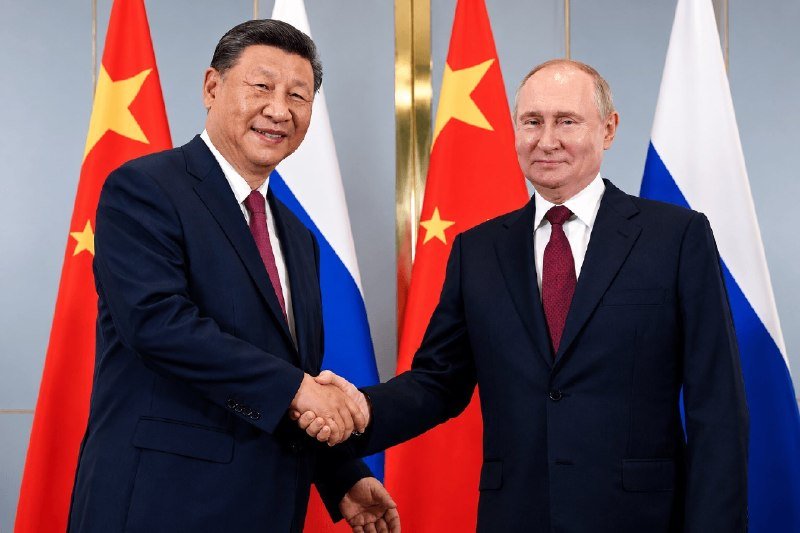
Vladimir Putin arrived in Beijing on 19 May 2026 for a two-day visit that will bring together the Russian and Chinese heads of state for formal talks in both narrow and expanded formats, according to multiple reports from open-source monitoring channels tracking the visit.
The arrival was confirmed by Intelslava, a Telegram channel monitoring Russian state communications, which noted the visit had been announced in advance. Two Majors, a separate channel tracking military developments, also confirmed Putin's arrival in the Chinese capital. WarTranslated, which provides English-language summaries of Russian-language reporting, described the programme: Putin and Xi were scheduled to hold talks in a narrow format on 20 May, followed by expanded negotiations involving broader delegations from both governments.
The Visit's Three-Point Agenda
According to TSN_ua, a Ukrainian wire service monitoring Russian media, the visit is structured around three strategic objectives that Moscow is seeking to consolidate through its Beijing engagement. The sources do not publish the full contents of the three-point agenda, but the framing of the visit as a concerted diplomatic effort — rather than a routine bilateral exchange — signals that both sides have prepared substantive deliverables for the talks.
Economically, Russia has become substantially more dependent on Chinese commercial relationships since the imposition of sweeping Western sanctions following the 2022 full-scale invasion of Ukraine. Russian energy exports, stripped from European markets, flow east. Technology supply chains, severed from Western semiconductor and industrial equipment suppliers, have been re-routed through Chinese intermediaries. The bilateral trade relationship, according to available data, has expanded significantly in volume terms. That commercial architecture requires continuous diplomatic tending; contracts negotiated at head-of-state level provide political cover for continued engagement by private-sector counterparties who might otherwise be deterred by secondary sanctions risk.
On the diplomatic side, the visit offers Moscow a platform to demonstrate that it is not globally isolated despite the Western pressure campaign. A meeting with Xi Jinping — the leader of the world's second-largest economy and a permanent member of the UN Security Council — carries signalling value beyond its immediate substance. Russia has sought to position its relationship with China as the centrepiece of a counter-Western alignment, and bilateral summitry of this calibre reinforces that narrative domestically and internationally.
Beijing's Strategic Calculation
The visit also reflects Beijing's own interests in maintaining and deepening the strategic partnership. China has refrained from endorsing Western sanctions against Russia, characterizing the Ukraine conflict in language that emphasises NATO expansion and Western security competition rather than Russian aggression. Chinese state media coverage of the conflict has been measured, presenting Moscow's position without explicit validation but with enough context to suggest sympathy with Russian security grievances.
From Beijing's perspective, the Russia relationship serves multiple functions. It provides a major energy supplier operating outside the dollar-dominated financial system. It delivers a diplomatic partner in forums where Western-led initiatives face Chinese resistance. And it signals to Washington that any attempt to apply pressure on China over its Russia ties carries the risk of accelerating an alignment that the United States has sought to prevent.
Western capitals have responded to the deepening Russia-China partnership with repeated expressions of concern, and with new measures aimed at deterring Chinese entities from providing Russia with advanced technology or financial services that help it sustain its war effort. The United States and European Union have both tightened export controls and introduced new sanctions packages targeting third-country actors — including Chinese firms — that facilitate sanctioned trade. China has characterised such measures as unlawful extraterritorial overreach and responded with threats of reciprocal action against named Western institutions.
The Financial Architecture Beneath the Diplomacy
What is less visible but structurally significant is the financial dimension of the Russia-China relationship. Western sanctions have pushed Russian institutions away from the SWIFT messaging system and dollar-denominated transactions, accelerating interest in alternative payment architectures. Bilateral trade between Russia and China is increasingly settled in yuan and ruble rather than dollars, a shift that both governments have described as a strategic priority rather than a temporary workaround.
For China, participation in this reconfigured financial relationship carries less risk than it does for Russia — Beijing has not been cut off from Western financial markets and its banks retain dollar-clearing capabilities. But the infrastructure being built alongside bilateral trade — Chinese payment systems adapted to accept Russian counterparties, rupee-ruble settlement mechanisms, expanded use of Chinese state banks as intermediaries — creates capabilities that could be deployed more broadly if Chinese interests required alternatives to the existing dollar system.
This financial dimension does not dominate the public framing of the visit, but it structures the long-term significance of what both governments are building. Every pipeline contract, every settlement mechanism, every renminbi-denominated energy trade is a small component of a financial architecture designed to reduce dependency on a system that has been weaponised against Russia and, Beijing calculates, could be weaponised against China.
What Comes After the Summit
The visit's immediate substance will be measured in the agreements signed, the joint statements issued, and the public language used by both leaders. But the structural significance lies in the pattern the visit represents: a sustained, high-level diplomatic relationship between the two states that has proven resilient to Western pressure and continues to deepen with each summit cycle.
For Moscow, the partnership provides economic lifelines and diplomatic cover. For Beijing, it provides a strategic counterpart and a demonstration that alternatives to the Western-led order are operational, not aspirational. Neither side has an interest in publicly announcing the full scope of their coordination, but the frequency of high-level contact and the breadth of institutional engagement across energy, finance, technology, and diplomacy make clear that the relationship has moved well beyond strategic ambiguity.
The visit ends on 20 May. The institutional infrastructure it reinforces will outlast the headlines.
This publication drew on Telegram-sourced open-source monitoring channels for confirmation of Putin's arrival, the format of the talks, and the framing of the visit's objectives. Western government responses to the visit and any subsequent joint statements were not available in the sourced material at time of publication. The financial architecture dimension reflects reporting on bilateral trade settlement trends consistent across multiple monitoring sources.
Wire provenance
This editorial synthesis draws on the following public wire/social posts:
- https://t.me/Intelslava/12438
- https://t.me/two_majors/8821
- https://t.me/TSN_ua/9944
- https://t.me/wartranslated/5567