Putin's Beijing Gambit: What's Behind Xi's Calculated Diplomatic Dilemma
As Putin lands in Beijing for talks on a major gas project, reports that Xi privately told Trump Moscow may regret the Ukraine invasion expose the gap between public postures and private calculations in the Russia-China relationship.
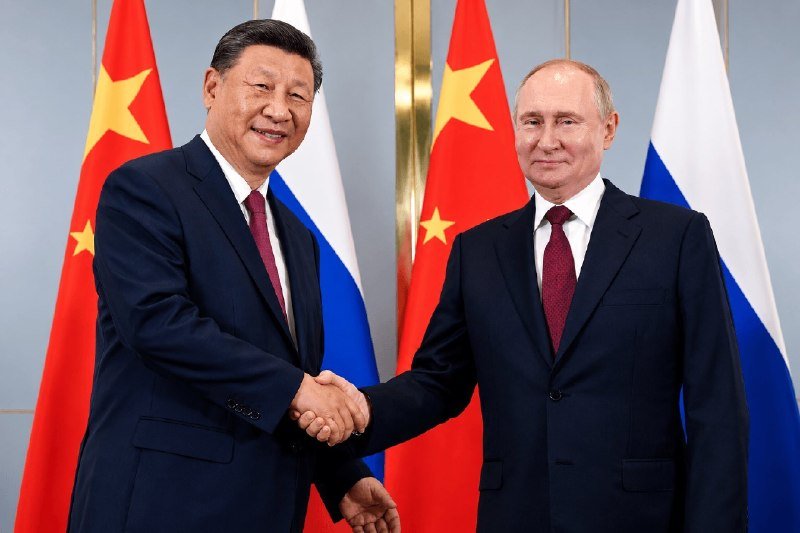
On the morning of 19 May 2026, Vladimir Putin arrived in Beijing for a two-day visit that had been billed in advance as a showcase of strategic alignment. Within hours, the Russian president and his Chinese counterpart Xi Jinping were discussing what sources described as a new large-scale gas project — a bilateral energy deal that would deepen Moscow's economic dependence on Beijing at a moment when Russia's Western markets have been severed by sanctions. Putin's public remarks ahead of the talks were unambiguous in their framing: Russia and China were working together to bring "peace and universal prosperity" to the world.
Yet the same day, reporting surfaced that Xi had privately told United States President Donald Trump something rather different. According to accounts carried by ClashReport, Xi told Trump that Putin might "end up regretting" his invasion of Ukraine — a private assessment that went further than any of Xi's public statements on the conflict to date. The revelation, landing as Putin's motorcade entered the Chinese capital, exposed the gap between Beijing's public posture and the private signal it is willing to send to Washington. It is a dissonance that this visit has done nothing to resolve.
The Nuclear Signal and the Diplomatic Stage
On the same day Putin touched down in Beijing, Russia's Defence Ministry announced a three-day round of nuclear drills — a scheduled exercise, according to the official framing, but one that arrives with geopolitical weight. Russia conducts nuclear exercises with some regularity, and the Defence Ministry has framed this as a routine training cycle. Context matters here: the drills began hours before Putin's arrival, when the world was already watching the Beijing visit as a barometer of Russia's international standing. Whatever their technical justification, they carry a signal — to Western capitals, to NATO, to anyone watching the choreography of great-power competition. Moscow wants the world to notice.
Beijing, for its part, has made no public comment on the nuclear drills. The Chinese foreign ministry has not issued a statement either endorsing or distancing itself from the exercises. This is consistent with a pattern that has held throughout the Ukraine conflict: China does not publicly object to Russian military behaviour, but it has also stopped short of explicit endorsement. The gap between what Russia does and what Beijing says publicly has become a structural feature of the relationship, and one that Western analysts have found difficult to parse.
The Private Line and the Public One
The ClashReport disclosure about Xi's private message to Trump is the most significant development in this story, even if its implications remain contested. Xi, by this account, told the US president that Putin may regret the invasion — a formulation that is notable for what it is not. It is not a demand that Russia cease hostilities. It is not a public call for territorial restoration. It is a private, qualified, personal assessment that implies concern without committing Beijing to any specific course of action. That restraint is instructive.
China's position on Ukraine has been consistent in its ambiguity: sovereignty and territorial integrity are principles it endorses in the abstract, but it has refused to name Russia as the aggressor or to endorse the Western sanctions regime. It has also deepened economic ties with Moscow throughout the conflict — trade has surged, energy flows have increased, and financial infrastructure has been adapted to reduce reliance on dollar systems. Beijing has been a beneficiary of Russia's isolation. That does not mean Xi endorses the war.
The private message to Trump suggests that Xi recognises the invasion as a strategic liability — that a prolonged conflict serves neither Moscow's nor Beijing's long-term interests. China needs stability to pursue its economic modernisation agenda. A frozen or escalating European conflict is an economic headwind and a diplomatic complication. Xi may believe, in private, that Putin overplayed his hand. That does not translate into pressure on Russia to change course. China has been too careful, for too long, to burn a relationship that remains strategically useful.
The Gas Deal and the Asymmetry Beneath It
The large-scale gas project under discussion in Beijing is the concrete substance of this visit, and it illuminates the nature of the Russia-China relationship more clearly than any diplomatic phrasing. Russia, cut off from European energy markets, has turned to China as the buyer of last resort for its hydrocarbon exports. China's energy demand is real, and its willingness to absorb Russian gas at competitive prices is genuine. But the deal-making reflects an asymmetry that has grown since 2022: Russia needs China more than China needs Russia. Moscow's desperation to find alternative customers has given Beijing leverage in pricing and terms.
This asymmetry is the structural reality beneath the diplomatic choreography. Russia arrives in Beijing as a junior partner in an economic relationship that has deepened precisely because Moscow's other options have collapsed. China benefits from Russian energy, from a counterbalance to US pressure, and from the maintenance of a relationship it can point to as evidence of multipolarity in the international system. But Beijing is not ideologically aligned with Moscow's invasion. It is not committed to supporting it. It is managing a relationship for its own benefit, and the private message to Trump is consistent with that posture.
What Would Actually Change the Dynamic
The fundamental constraint on Chinese policy is that Beijing has no credible lever to move Russia, short of withdrawing economic cooperation — a step it has shown no willingness to take. China could reduce energy purchases or slow investment, but that would damage its own interests and remove leverage it uses to extract concessions from Moscow. The relationship is transactional at its core: Russia provides energy and a strategic buffer, China provides economic depth and diplomatic cover. Neither side is willing to sacrifice that arrangement for the other's benefit.
What could shift that calculus is a change in the conflict's trajectory — a decisive Ukrainian battlefield success, a fracture in the Russian domestic consensus, a significant escalation that forces China to choose sides more explicitly. None of those scenarios is present in the current reporting. What is present is a carefully managed diplomatic performance that obscures a more complicated set of private calculations. Xi has told Trump something he has not told Putin. Putin has arrived in Beijing to speak of peace and prosperity while his military conducts nuclear exercises. The gap between the two is where the real story lives.
The sources do not specify the precise context or format of Xi's private message to Trump, nor whether any US commitment was extracted in return. It is possible — and consistent with standard diplomatic practice — that such remarks are calibrated to test the other party's response, not to prefigure a shift in policy. What is observable is that Beijing is managing multiple audiences simultaneously: a public posture of multipolarity and strategic partnership with Moscow, and a private posture of scepticism about the wisdom of the war that Western capitals have now been made aware of. Whether that scepticism ever becomes policy is the unresolved question hanging over this visit. Until it does, the nuclear drills continue, the gas deal proceeds, and the gap between the public line and the private one remains the defining feature of the China-Russia relationship.
Wire provenance
This editorial synthesis draws on the following public wire/social posts:
- https://t.me/ClashReport/1842
- https://t.me/ClashReport/1841
- https://t.me/bricsnews/8923
- https://t.me/bricsnews/8921
- https://t.me/bricsnews/8919