Putin's Beijing Gambit: What the 'Old Friends' Meeting Tells Us About the New World Disorder
Putin's arrival in Beijing, days after Trump's visit to China, is more than a photo opportunity. It is a deliberate signal that the scaffolding of a post-Western world order is being assembled in real time.
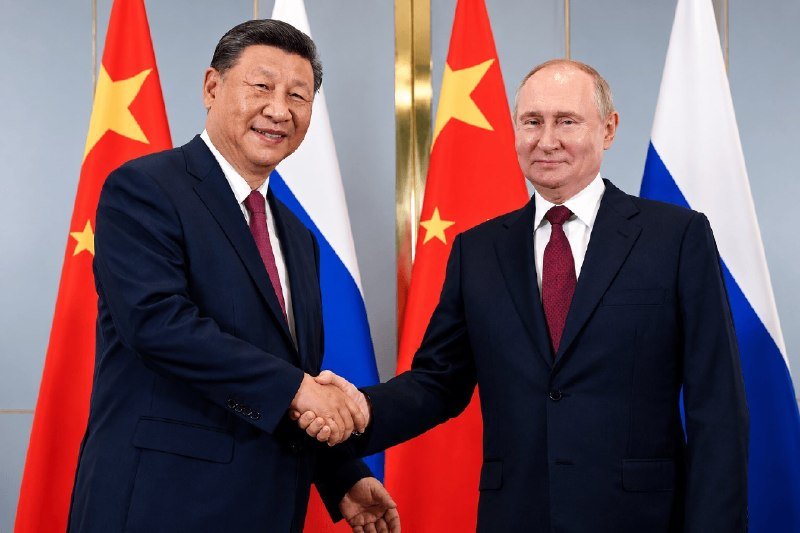
When Vladimir Putin's plane touched down in Beijing on May 19, 2026, the choreography was unmistakable. The Kremlin released footage of the arrival. Chinese state media called Putin "old friend" — a designation Xi Jinping has used for the Russian leader since at least 2019, and one that carries deliberate weight in diplomatic lexicography. Twenty-four hours earlier, Polymarket's feed was already carrying the headline: Xi to host Putin less than a week after Trump's China visit. The sequencing was not incidental.
Here is what the Western wire is making of this: a dictator shaking hands with an authoritarian ally while the world watches the war in Ukraine grind into its fourth year, while Russian forces hold Ukrainian territory by force, while sanctions regimes strain at their seams. That framing is accurate as far as it goes. What it misses is what Beijing is doing with that framing — and why the timing matters more than the optics.
The Diplomacy of the Detour
Trump's visit to China happened on roughly May 12-13. By May 19, Putin was on the tarmac in Beijing. The turnaround is remarkable not because diplomatic back-and-forth is unusual, but because it compresses a pivot in great-power positioning into a single week. The United States sends its president; Russia sends its pariah-in-chief. And Xi receives both, in sequence, as though the contradiction between Washington's worldview and Moscow's does not exist — or, more precisely, as though that contradiction is Beijing's opportunity, not its burden.
Chinese foreign policy, over the past decade, has cultivated a reputation for strategic patience that Western commentary routinely underestimates. Beijing does not announce its strategic calculations. It builds infrastructure — literal and diplomatic — that renders the question of its intentions moot. The Belt and Road Initiative, the BRICS expansion, the Shanghai Cooperation Organisation, the quiet accumulation of energy partnerships across Central Asia and the Gulf: each is a thread. The Putin visit is another stitch in a pattern that is becoming legible only in retrospect.
The official readout from Beijing, per Nikkei Asia's reporting, emphasizes energy cooperation and the reaffirmation of bilateral ties. That is both true and insufficient as an explanation. Energy is the connective tissue of the Russia-China relationship — Russian gas flowing east, Chinese capital and manufactured goods flowing west. Since 2022 and the imposition of sweeping Western sanctions on Moscow, that trade axis has deepened measurably. Chinese banks, Chinese logistics firms, and Chinese state enterprises have become the plumbing through which Russian oil reaches markets that Western buyers no longer serve. Beijing has never acknowledged this as a deliberate strategy; it has simply not refused to do business.
The 'Old Friend' Problem
Western observers tend to treat the Putin-Xi relationship as a liability for China — evidence of complicity that invites secondary sanctions, that poisons Beijing's relations with Europe, that makes China look like the senior partner in a morally bankrupt enterprise. This reading has merit. It also misreads Beijing's utility calculation.
China needs Russian energy and Russian diplomatic support on issues where Washington's preferences conflict with Beijing's — Taiwan, the South China Sea, the legitimacy of Western-led international institutions. Russia, isolated from Western capital markets and technology, needs China's economic oxygen. This is not friendship in any normative sense. It is the oldest logic in international relations: the alignment of convenience, sustained by structural necessity.
The "old friend" language serves a specific function. It signals continuity to domestic audiences — both Chinese and Russian — and it signals to Washington that whatever talks happened during Trump's visit have not altered Beijing's baseline orientation. Xi is not choosing Russia over the United States. He is keeping both relationships in play, calibrated against each other, with maximum optionality preserved.
The Sanctions Question Nobody Wants to Answer
The war in Ukraine has generated an elaborate architecture of Western sanctions targeting Russian oil exports, financial institutions, elite wealth, and defense-sector supply chains. The stated goal is to degrade Moscow's capacity to wage war and to create enough economic pain to alter Russian decision-making. After three years, the results are mixed at best.
Russian oil continues to flow. Russian weapons continue to be manufactured. Russian generals continue to command occupied territory in eastern and southern Ukraine. The sanctions have caused economic disruption — that is real — but they have not produced the strategic inflection that their architects promised.
Beijing's position on this is coherent, if inconvenient for Western policymakers: China does not recognise the legitimacy of unilateral Western sanctions regimes imposed outside the framework of the United Nations Security Council. This is not merely a convenient talking point. It is a consistent position that China applies symmetrically — it would object equally to unilateral sanctions imposed on it by Russia or any other power. The principle matters to Beijing because the alternative — accepting that any coalition of Western states can freeze sovereign assets, sever financial channels, and criminalise trade relationships — is fundamentally incompatible with how China understands its own sovereignty and its aspirations to a multipolar world.
This is the structural context in which the Putin visit sits. It is not sentiment. It is not ideological solidarity. It is the assertion of a principle that, if accepted, constrains the reach of Western economic statecraft — and that is, in Beijing's view, worth a handshake with a man the International Criminal Court has indicted for war crimes.
What This Week Signals
The sequencing of Trump's visit followed by Putin's arrival is a data point, not a verdict. But it is a data point worth sitting with. It suggests that Beijing is operating on its own timeline, with its own hierarchy of interests, and that the diplomatic choreography of great-power relations is no longer arranged around Washington's preferences as its default organizing principle.
The stakes are concrete. If the Russia-China energy and financial axis continues to deepen, the effectiveness of Western sanctions architecture erodes further — not because China is defying the West openly, but because it is building alternative infrastructure that renders the architecture incomplete. European energy consumers who pivoted away from Russian gas after 2022 will find Chinese technology filling gaps in their own industrial supply chains. Russian oil that once flowed to Rotterdam now flows through intermediaries to Indian, Turkish, and Chinese customers, often priced in currencies other than the dollar.
None of this means the Western order is collapsing. It means the Western order is sharing the stage — reluctantly, reactively, and on terms it did not set. The handshake in Beijing on May 19 is a snapshot of that transition. Whether it marks a turning point or simply another increment in a long realignment depends on what comes next. But the idea that Xi Jinping owes Donald Trump a conversation that supersedes his conversation with Vladimir Putin — that premise did not survive contact with reality this week.
Monexus covered this visit as a diplomatic signal first, a geopolitical spectacle second. The wire framed it as a Putin story; we treated it as a China story with a Russian footnote — because the agency, the timing, and the strategic logic belong to Beijing.
Wire provenance
This editorial synthesis draws on the following public wire/social posts:
- https://t.me/Tsaplienko
- https://t.me/ClashReport
- https://t.me/nikkeiasia