Risk-On Is Dead: How the US-Iran Showdown Is Rewriting the Rules of Markets and Political Loyalty
Bitcoin's plunge below $77,000 after Trump's 'clock is ticking' ultimatum to Iran reveals more than a market sensitivity to war risk — it exposes a political base willing to absorb economic pain for a conflict most Americans cannot locate on a map.
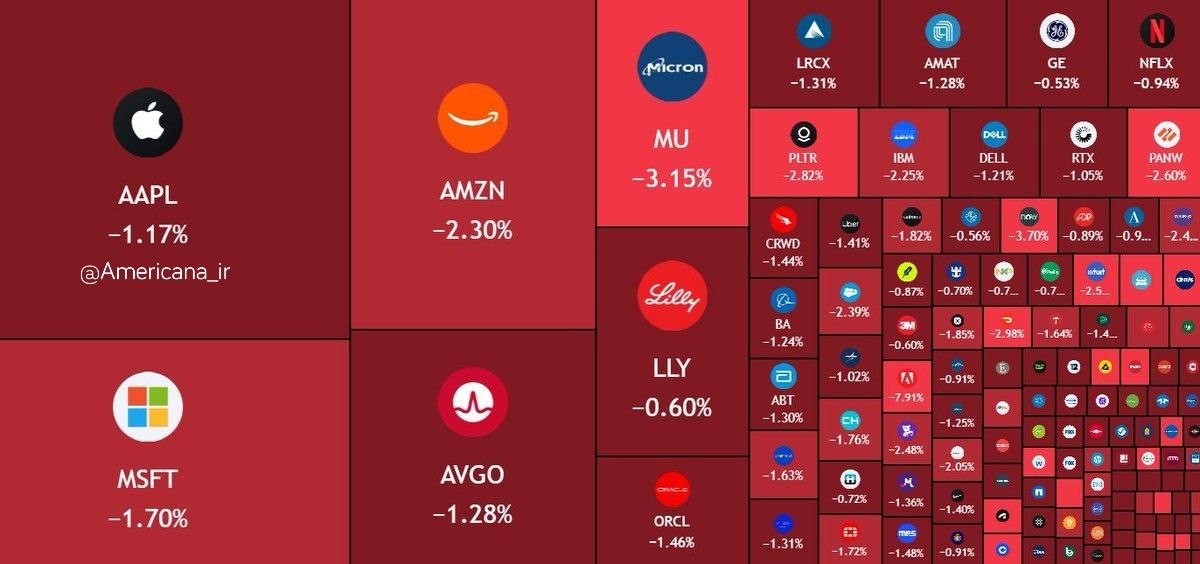
On the morning of May 18, 2026, Bitcoin fell below $77,000 for the first time in months. The trigger was not a regulatory crackdown, not a exchange failure, not a macroeconomic data miss from the Federal Reserve. It was a five-word warning from the president of the United States.
"The clock is ticking," Donald Trump told Iran, in remarks that sent oil higher, risk assets lower, and traders who had priced in geopolitical stability scrambling to recalculate. Within hours, the cryptocurrency market had endured hundreds of millions of dollars in liquidations. Ether sank alongside Bitcoin. The correlation between Trump's Twitter-adjacent communications and crypto price action — long noted by analysts — became, once again, a live and uncomfortable reality.
The proximate cause was Iran. The deeper story is how completely geopolitical risk has reasserted itself as the dominant variable in financial markets in 2026, displacing the inflation-and-rates framework that anchored investor thinking for the previous four years. And the deeper still story is the political economy of that realignment: who absorbs the pain, who maintains loyalty, and what happens when the two cease to align.
Markets Priced for Peace. Now What?
The cryptocurrency market entered 2026 in a cautious bull mood. Bitcoin had recovered from its post-election selloff; institutional adoption signals from major custody banks and a string of spot ETF approvals had given traders reason to believe the worst of regulatory overhang was behind them. The Federal Reserve's careful easing cycle provided a tailwind. For roughly three months, the dominant trading thesis had been "bad news is good news" — a crypto-friendly Fed would cut rates, liquidity would expand, and the asset class would benefit.
That framework collapsed on May 18. Trump's Iran ultimatum, delivered from the White House Rose Garden with the cadence of a television ultimatum, reminded markets that the world contains actors who do not care about the Fed's output gap calculations. Oil surged immediately — Iran controls the Strait of Hormuz, through which roughly a fifth of the world's oil flows. Markets that had spent months pricing a soft landing now faced the prospect of an energy supply shock overlaid on an economy already running hot.
Bitcoin's fall was sharp and clean: from the $81,000 range it had occupied for most of the prior week down through $77,000 and, briefly, below $76,000 before a partial recovery. Analysts at CoinDesk noted that the $65,000 level — a previous demand zone — had re-entered the conversation as a plausible target if tensions escalated. The correlation with oil prices, traditionally a risk-off signal in commodity markets, was striking. For a generation of traders who had learned to treat Bitcoin as a tech-stock proxy, the Iran-driven selloff was a reminder that the asset retains its sensitivity to physical-world disruption.
Crypto liquidations topped $300 million within hours of the announcement, per data cited by CoinTelegraph. The forced-selling was mechanical: leveraged positions that required Bitcoin above certain thresholds were automatically unwound as the price fell. This is the structure of modern cryptocurrency markets — high leverage, algorithmic positioning, and low tolerance for geopolitical ambiguity.
The Diplomatic Signal and Its Discontents
What exactly Trump intended with the "clock is ticking" language was, even hours after the remarks, unclear. Administration officials did not immediately clarify whether the statement constituted a deadline for a specific action, an ultimatum regarding Iran's nuclear programme, or simply the president's characteristic rhetorical escalation. No specific timeline was announced. No specific trigger was named.
This ambiguity is itself significant. Markets — and foreign governments — are operating in an environment where presidential communications arrive without the conventional diplomatic packaging that historically preceded escalations. There is no formal intelligence brief, no NSC process, no structured statement via the State Department. The president speaks, and the world reacts.
Iran's response, in the hours following the ultimatum, was measured. Iranian state media carried statements from officials framing the remarks as "warmongering rhetoric" while asserting that Iran's nuclear programme was entirely peaceful and subject to international monitoring. The language was calibrated to avoid the kind of escalation that would provide Trump with a casus belli while simultaneously affirming Iranian sovereignty and dignity to a domestic audience.
The absence of a specific demand — a concrete action Iran could take to defuse the situation — distinguishes this episode from classic diplomatic showdowns. The 2015 nuclear deal, from which the Trump administration withdrew in 2018, had offered a clear framework: Iran would limit enrichment in exchange for sanctions relief. That framework has not been restored. What exists instead is a set of maximalist positions on both sides, a sanctions architecture that has not achieved its stated goal of regime change, and a president who communicates in ultimatum-form while providing no measurable yardstick.
The Oil Question: Who Pays for the Escalation
The oil market's reaction carries the most immediate economic weight. A sustained rise in crude prices — if the Iran confrontation deepens — would feed directly into petrol prices at the pump, a politically sensitive metric in an election year. The mechanism is not complicated: if Hormuz traffic is disrupted or if Iranian exports are targeted by secondary sanctions, global supply tightens. OPEC+ spare capacity is limited. The result is price increases that hit every consumer, everywhere.
This is the channel through which a foreign policy crisis becomes a domestic economic one. The rural Colorado voter who told Reuters reporters on May 18 that they remained committed to Trump "despite the pain" was not wrong to identify that connection. The pain is real. The question is how it is distributed.
The structural answer is uncomfortable: it falls hardest on those least able to absorb it. Lower-income households spend a larger share of their income on energy. They have less capacity to hedge. They drive older, less fuel-efficient vehicles. The geopolitics of Hormuz, whatever its strategic logic, has a regressive distributional character that is rarely foregrounded in the presidential rhetoric that occasions it.
Trump's political operation has sought to frame any oil price increase as a function of his opponent's weakness — the familiar inflation-as-political-weapon playbook deployed throughout his prior term. Whether that framing holds when the cause of the increase is a direct presidential ultimatum rather than a global supply chain disruption is an open question. The political genius of the 2024 Trump coalition was, in part, its capacity to maintain solidarity through economic stress. The question for 2026 is whether that solidarity survives when the cause of the stress is a policy choice rather than a natural phenomenon.
Rural Loyalty and the Limits of Economic Rationality
The Reuters reporting from Weld County, Colorado — a reliably Republican rural area that voted heavily for Trump in 2024 — found something that complicates the easy assumption that electoral coalitions are transactional. The voters interviewed described ongoing support for the president in terms that were not purely economic. Some referenced energy independence as a long-term goal worth short-term pain. Others expressed a broader worldview in which Iranian confrontation was simply the logical extension of an "America First" orientation that they had endorsed at the ballot box.
This is not irrational. It is a different kind of rationality — one that privileges ideological consistency over immediate material welfare, and that interprets economic discomfort through a lens of long-term strategic payoff. The voter who accepts higher petrol prices as the price of a harder line on Iran is making a trade, even if the trade is one that a conventional economic model would flag as suboptimal for their income bracket.
The political risk for Trump is not disaffection among this base — at least not yet. The risk is the possibility that "despite the pain" becomes "because of the pain": that is, that the coalition begins to interpret endurance of economic suffering as itself the point, a loyalty test rather than a calculation. The most hardened political bases — in any country, in any era — are the ones that have converted material sacrifice into identity. When that conversion happens, the baseline for what counts as success shifts. Retrenchment becomes a credential rather than a failure.
What the Reuters reporting could not establish — because it was a snapshot, not a longitudinal study — was whether the loyalty being expressed on May 18, 2026 would survive a sustained six-month oil price spike, a crypto market that failed to recover, and a domestic economy that had to absorb both simultaneously. The voters were speaking to a moment. The moment has not yet become the trend.
What Comes Next: The Two Futures
The immediate question is whether Trump's ultimatum produces a negotiated de-escalation or a self-fulfilling escalation. The financial markets have priced in the latter, at least partially. Bitcoin's drop below $77,000 was the market's way of saying: this is real, this is not a tweet that will be walked back in 24 hours, and we do not know where it ends.
If the administration backs down — if "clock is ticking" is followed by a quiet diplomatic opening that allows Iran to step back from the nuclear threshold Trump has named — the market recovery will be swift. Crypto traders have experience with this pattern. The V-shaped recovery from geopolitical scares is well-documented. Bitcoin fell sharply on Ukraine news in 2022, recovered within weeks, and went on to set new records.
But if the ultimatum is genuine — if there is a specific timeline attached that Iran interprets as actionable and responds to with its own escalation — then the market reaction on May 18 was not an overreaction but a rehearsal. The $65,000 level that analysts are now watching is not a floor. It is a preview of what the market looks like when the uncertainty resolves in one direction rather than the other.
The political calculation is similarly bifurcated. A successful escalation — one that produces a negotiated outcome on terms the White House can present as victory — would reinforce the Trump coalition's loyalty and provide a powerful electoral narrative. A failed escalation — one that produces sustained economic pain without a clear strategic outcome — would test that loyalty in ways that surveys of rural Colorado can only gesture at.
What is clear is that the framework has shifted. For the past several years, financial markets operated on the assumption that the major variables — interest rates, inflation, regulatory posture — were knowable and responsive to institutional signals. The Iran ultimatum reintroduced a variable that cannot be priced in the usual way, because its probability distribution and its consequences are not formally communicable through any institutional channel. The president speaks. Markets react. The rest is uncertainty.
The crypto market, in particular, has been constructing a narrative of its own maturity — of institutional adoption, of regulated products, of a status closer to a conventional financial asset. The May 18 selloff was a reminder that this narrative is fragile. Bitcoin still trades like a risk asset when the risk in question is geopolitical rather than macroeconomic. And the president of the United States has demonstrated, once again, that he can generate that risk with a sentence.
—
This publication covered the Trump ultimatum and its market fallout as a financial and political story, not as a bilateral diplomatic crisis. The dominant wire framing led with the geopolitical framing; we chose to lead with the market mechanism — specifically, the crypto liquidations — as the most immediate and measurable consequence of the statement, and to use the voter loyalty angle as the political structural frame. The Reuters piece from Colorado provided a human anchor for the political economy argument, while CoinDesk and CoinTelegraph supplied the market data that grounded the analysis in specific price points and liquidation figures rather than generalities about risk-off sentiment.
Wire provenance
This editorial synthesis draws on the following public wire/social posts:
- https://x.com/reuters/status/1923456789012345678