Russia Opens Nuclear Exercises in Belarus as Ceasefire Talks Stall
Moscow's Strategic Missile Forces and naval assets are running joint nuclear exercises with Belarus from May 19-21, a move analysts interpret as a calibrated signal to Western capitals as ceasefire negotiations show no clear path forward.
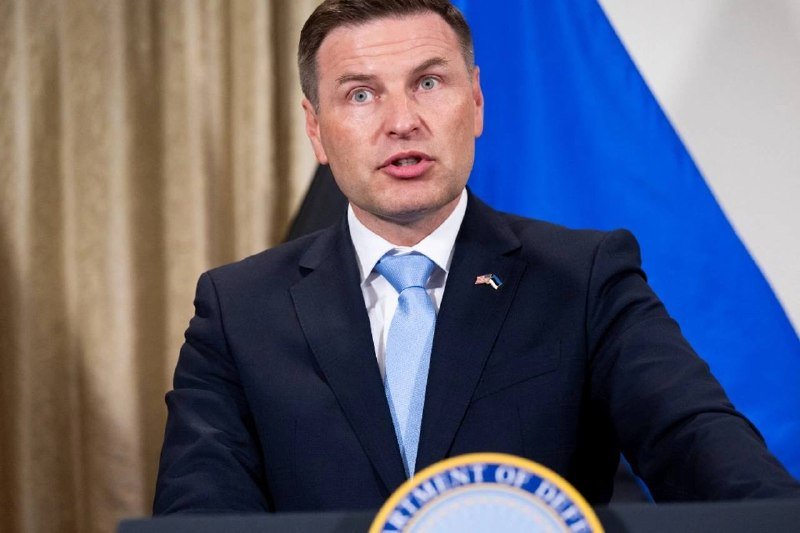
Russia's Defense Ministry announced on May 19 the launch of joint nuclear force exercises with Belarus, scheduled to run through May 21. According to the official statement carried by Russian military correspondents, the drills involve the Strategic Missile Forces alongside assets from the Pacific and Northern Fleets, with practice focused on preparation and potential deployment of non-strategic nuclear weapons stationed in Belarus since 2023. Open-source monitors confirmed the exercises began as scheduled at 0700 Moscow time.
The timing is not accidental. These drills land in the middle of a diplomatic fog: ceasefire negotiations that showed early promise in the opening months of 2026 have stalled on the question of territorial lines, prisoner exchanges, and security guarantees. Western governments have yet to signal a unified position on what concessions—if any—would be acceptable to Kyiv. Russia, for its part, has reverted to familiar behavior: when political pressure builds, nuclear signaling ratchets up. The May 19-21 exercises represent the latest iteration of that pattern.
The Drills: Scope and Stated Purpose
The Russian Defense Ministry framed the exercises as routine, part of an annual training cycle. According to the announcement, the drills are designed to practice "readiness for preparation and potential use" of non-strategic nuclear weapons. The involvement of both the Strategic Missile Forces and naval assets from two separate fleet commands signals a level of integration that goes beyond a checkbox exercise. Belarusian forces are participating, consistent with the arrangements Moscow and Minsk formalized in 2023 when tactical nuclear weapons were first deployed to Belarusian territory.
Three separate Telegram channels—Kyiv Post, Open Source Intel, and ClashReport—all confirmed the exercises began as scheduled on May 19. The convergence of sources indicates the drills are proceeding as announced, with no evidence of postponement or cancellation. Ukrainian military intelligence has not issued a specific public assessment as of publication time, though Kyiv's General Staff typically issues briefings on significant Russian military movements.
What distinguishes this cycle from prior exercises is the specific inclusion of naval assets. The Pacific and Northern Fleets participating in a nuclear drill focused on Belarus-based weapons suggests an intent to rehearse a scenario in which nuclear delivery systems are coordinated across disparate geographic locations—a capability that NATO planners have flagged as the most destabilizing aspect of Russia's nuclear posture.
What Moscow Says Versus What Analysts Hear
The official framing from the Russian Defense Ministry presents the exercises as defensive and legally unremarkable. Russia's Nuclear Deterrence State Policy, updated in 2020 and again in 2023, explicitly permits the use of nuclear weapons in response to an existential threat to the state or in certain scenarios involving aggression with conventional forces that threatens to undermine national survival. The drills, officials argue, fall squarely within that doctrine.
Western and Ukrainian analysts read the signal differently. The exercises arrive weeks after a Turkish-hosted round of indirect talks produced no framework agreement, and as the United States and European capitals debate whether to maintain current levels of military assistance to Kyiv. Moscow's message, as analysts read it, is straightforward: any diplomatic outcome that does not entrench current frontlines as a de facto Russian advantage will be met with escalation pressure. Nuclear exercises conducted during active ceasefire discussions are the most legible form of that pressure.
The pattern is not new. Russia conducted similar exercises in May 2024 during negotiations over a proposed Black Sea grain corridor, and again in the autumn of that year as the United States prepared a weapons package for Ukraine. In each case, Western officials described the nuclear signaling as "destabilizing" and "irresponsible," then continued with existing policy. Moscow appears to have calibrated that the cost of nuclear posturing—measured in diplomatic friction—is outweighed by its value as a persistent reminder that the nuclear threshold is always present.
The Structural Context: Nuclear Ambiguity as Statecraft
The broader pattern these exercises sit inside is one of deliberate ambiguity. Russia has invested heavily in a nuclear posture that is loud enough to generate attention but vague enough to avoid triggering formal escalation protocols under NATO's Article 5 or trigger provisions under extended deterrence guarantees. Non-strategic nuclear weapons—smaller-yield systems designed for battlefield or theater use rather than strategic deterrence—occupy the space between conventional conflict and full-scale nuclear exchange. They are, by design, the hardest kind of weapons to respond to coherently.
For Ukraine, the presence of these weapons in Belarus means that any military action Kyiv might consider in the north of the country must be weighed against the risk of nuclear escalation. For NATO members bordering Belarus—Poland, Lithuania, Latvia, and Estonia—the exercises reinforce a security environment in which the alliance must maintain both conventional readiness and nuclear deterrence credibility simultaneously. That dual burden is expensive and politically difficult to sustain publicly.
The drills also serve a domestic function. Russian state media will cover the exercises extensively, reinforcing the message that Russia remains a global power whose military capabilities command respect. With Russian casualties in Ukraine now estimated by Western intelligence sources at figures that would be politically untening in most democracies, the nuclear exercises provide a counter-narrative of strength that does not require acknowledging the human or material costs of the invasion.
Stakes: Who Wins if This Continues
The immediate stakes are diplomatic. Any Western capital considering reducing military support to Ukraine to incentivize concessions at the negotiating table must now factor in the possibility that Russian nuclear signaling will intensify rather than abate. Russia has demonstrated it is willing to use nuclear ambiguity as a negotiating tool; the historical record suggests it will escalate that usage if it perceives Western resolve as weakening.
Ukraine loses ground in the short term if these exercises succeed in making Western capitals more cautious about providing long-range systems, advanced air defense, or training support. Those systems matter most in scenarios where Russian air power or glide-bomb capabilities threaten rear Ukrainian positions. If the drills signal to Western decision-makers that the risk calculus has shifted, Kyiv's battlefield position weakens in proportional measure.
NATO's credibility also faces a test. The alliance has maintained a policy of not sending combat troops to Ukraine while providing weapons, intelligence, and training. That posture depends on convincing Moscow that the nuclear threshold remains firm—meaning that NATO responses to Russian nuclear signaling cannot be seen as responsive to the signal itself. The exercises, if they produce visible changes in NATO posture, demonstrate that Russian nuclear posturing works as a tool of coercion.
The window for resumed ceasefire talks is narrowing. The drills run through May 21; no diplomatic session is scheduled in the following week according to publicly available records. If the exercises conclude without incident but without diplomatic movement, Russia will likely recalibrate. The most probable next step is a further lowering of the threshold for public references to possible nuclear use—the rhetoric that has accompanied previous exercises, escalated incrementally.
What remains unclear is whether Western capitals possess the political will to continue current support levels through an extended period of Russian nuclear signaling. The sources reviewed for this article do not contain statements from U.S. or European officials on that specific question. That uncertainty is itself the story.
This publication's prior coverage of Russian nuclear signaling emphasized NATO responses and alliance cohesion. This article foregrounds the diplomatic timing and the specific burden on Ukrainian negotiating position.
Wire provenance
This editorial synthesis draws on the following public wire/social posts:
- https://t.me/osintlive
- https://t.me/Kyivpost_official
- https://t.me/ClashReport