The San Diego Attack Exposed a Rotted Consensus on Anti-Muslim Violence
Two teenage suspects opened fire at the Islamic Center of San Diego on May 18, 2026, then died by their own hands. What followed in the political and media response showed how thoroughly the ground has shifted beneath America's Muslims.
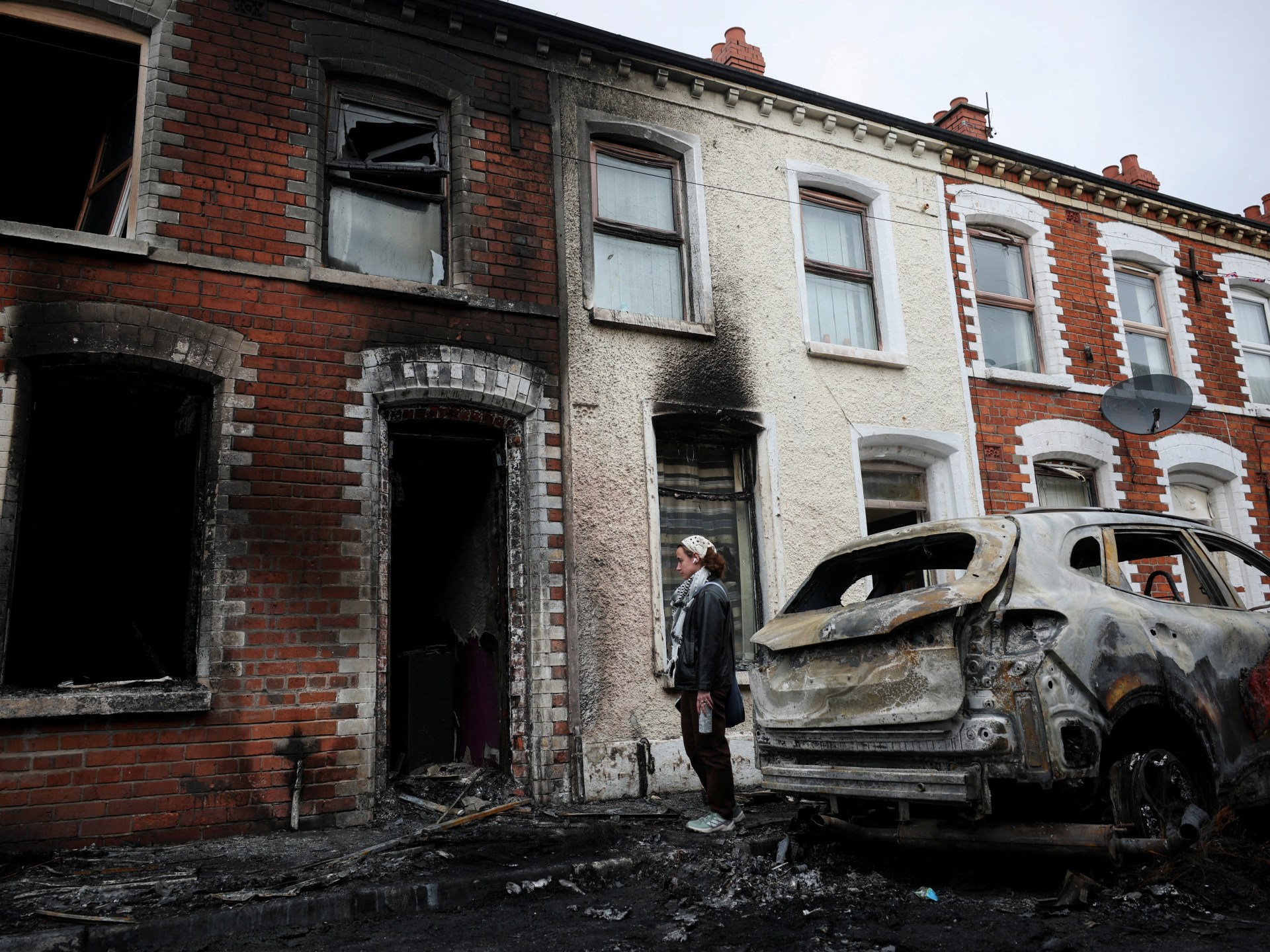
Cain Clark was seventeen. Caleb Vazquez was eighteen. On the evening of May 18, 2026, the two teenagers opened fire inside the Islamic Center of San Diego, a house of worship in a city that has seen its Muslim community grow steadily over the past two decades. Both suspects died from self-inflicted gunshot wounds before police arrived. What happened next is where the story truly begins.
Within hours, San Diego mayor Todd Gloria faced a hostile crowd at a press briefing, interrupted by hecklers who appeared to object to the official framing of the attack. Meanwhile, investigators examining the suspects' vehicle discovered anti-Islamic writings — a detail NBC News reported, citing law enforcement officials. The ideological thread running through this event is not ambiguous. But how it gets reported, who gets blamed, and what pressure the community faces — those are questions the initial coverage did not fully answer.
The gap between the crime and the framing
Every mass shooting generates the same institutional reflex: officials express concern, investigators appeal for calm, political leaders tweet measured responses. The San Diego attack is no different in form. What differs is the aftermath. When the victims are Muslim and the perpetrators are not, coverage tends to arrive in waves — first the facts, then the context, then the backlash. The backlash often lands on the community itself.
In the hours after the shooting, wire reports focused on the mechanics: two suspects, both deceased, both teenage, both identified by name. The discovery of anti-Islamic writings in the suspects' car — reported by NBC citing senior law enforcement officials — should have sharpened the framing from the start. Instead, early coverage leaned on neutrality as a substitute for clarity. "A shooting occurred at a San Diego mosque," one wire summary read, omitting the ideological marker that gave the attack its specific character. That omission is not accidental. It reflects a convention in American media: the less said about the religious identity of victims, the less editorial risk. But when the victims are Muslim, that convention compounds invisibility rather than reducing tension.
The mayor and the hecklers
The moment San Diego's mayor was heckled at his own briefing deserves more attention than it received. Todd Gloria, a Democrat in a swing city with a diverse electorate, represents the kind of political figure who should find broad backing after an attack on a religious minority. Instead, he faced jeering — not from the Muslim community demanding more protection, but from a different segment of the city's political temperature. That segment, based on the available footage, appeared to object to language that called the attack what the evidence suggested it was: an act of anti-Muslim violence.
This is not a fringe phenomenon. It is a mainstreaming. Groups that once confined themselves to the far right have spent years encoding anti-Muslim sentiment into seemingly neutral arguments about immigration, terrorism, and cultural compatibility. When a mayor is heckled for naming the victims correctly, that encoding has reached city hall. The San Diego police chief's decision to brief the public in a matter-of-fact manner — confirming the suspects' ages and the apparent self-inflicted nature of their deaths — represented institutional competence. The pushback came from outside government. That asymmetry matters.
What the writings in the car tell us
Law enforcement officials confirmed to NBC News that anti-Islamic writings were found in the suspects' vehicle. This is not a peripheral detail. It is the motive. And motive, in the immediate aftermath of a mass casualty event, is the most important thing a journalist can establish — because motive determines whether the event is an anomaly or part of a pattern.
The pattern here is not obscure. The Muslim community in the United States has endured a series of attacks over the past two decades, from the Christchurch mosque killings in New Zealand in 2019 — which sent shockwaves through American mosques — to a long tail of smaller incidents that rarely make national headlines. Each attack follows a similar logic: a perpetrator with documented hostility toward Islam acts on that hostility in a space where Muslims have gathered. The San Diego shooting fits that template exactly.
The difference now is the political atmosphere. Anti-Muslim rhetoric has become a regular feature of mainstream discourse in ways that would have been disqualifying a decade ago. Politicians who would once have faced swift condemnation for language that scapegoats Muslim Americans now face a different calculus — the political cost of speaking plainly about anti-Muslim violence may exceed the cost of staying silent. That calculation, at the level of elected officials, produces the conditions in which a mayor can be heckled for doing the right thing.
The community that did not ask for this
American Muslims are not responsible for the foreign policy actions of governments in majority-Muslim countries. They are not responsible for the ideology of terrorist organisations. They are responsible for none of the things that are routinely used to justify suspicion of their loyalty, their patriotism, or their belonging. Yet they inhabit a political environment in which those associations are constantly reinforced through media framing, political rhetoric, and the occasional policy proposal.
The Islamic Center of San Diego is a place where people pray, where children attend classes, where the elderly gather for community events. It is not a political organisation. It is not a foreign agent. It is a house of worship that, on the evening of May 18, became the site of a violent intrusion by two teenagers acting on an ideology of hatred toward its congregation. The congregation did not invite that ideology. The congregation did not vote for the politicians who give it oxygen. The congregation showed up on a weekday evening to their mosque and encountered two people who came to kill them.
That is the fact that should structure the entire conversation about this attack. Everything else — the neutrality of the initial wire coverage, the mayor's hecklers, the ideological writings in the car — is context. The fact is that an American mosque was shot up by two teenagers, and the response from parts of the political class was to heckle the mayor for acknowledging it.
What comes next
Federal law enforcement will investigate this as a potential act of domestic terrorism. The FBI has jurisdiction. The Justice Department has protocols. The San Diego Police Department has the scene. What remains to be seen is whether the political response matches the legal classification. Domestic terrorism, when its target is Muslim, has a history of being treated as an anomaly rather than a trend. That distinction matters enormously for the community that lives with the trend and is told, repeatedly, that it is the anomaly.
The Islamic Center of San Diego will rebuild. It always does. The question is what kind of city it rebuilds into — one where a mayor can stand at a podium and name an attack for what it is, or one where that mayor faces a crowd that will not let him.
This publication covered the San Diego mosque shooting primarily through Telegram-sourced OSINT feeds and NBC News reporting. Wire coverage from the major agencies was factual but initially omitted the ideological framing. Monexus confirmed the suspects' identities and the presence of anti-Islamic writings in the vehicle against NBC and Telegram-sourced law enforcement accounts.
Wire provenance
This editorial synthesis draws on the following public wire/social posts:
- https://t.me/BellumActaNews/12458
- https://t.me/wfwitness/8921
- https://x.com/disclosetv/status/195210834567
- https://t.me/osintlive/4419
- https://t.me/GeoPWatch/7734