The Signal and the Noise: What One Sourcing Cluster Tells Us About Conflict Reporting
When a single Telegram channel becomes the entire evidentiary basis for a round of international reporting, the incident offers a window into how conflict narratives calcify before independent verification is even attempted.
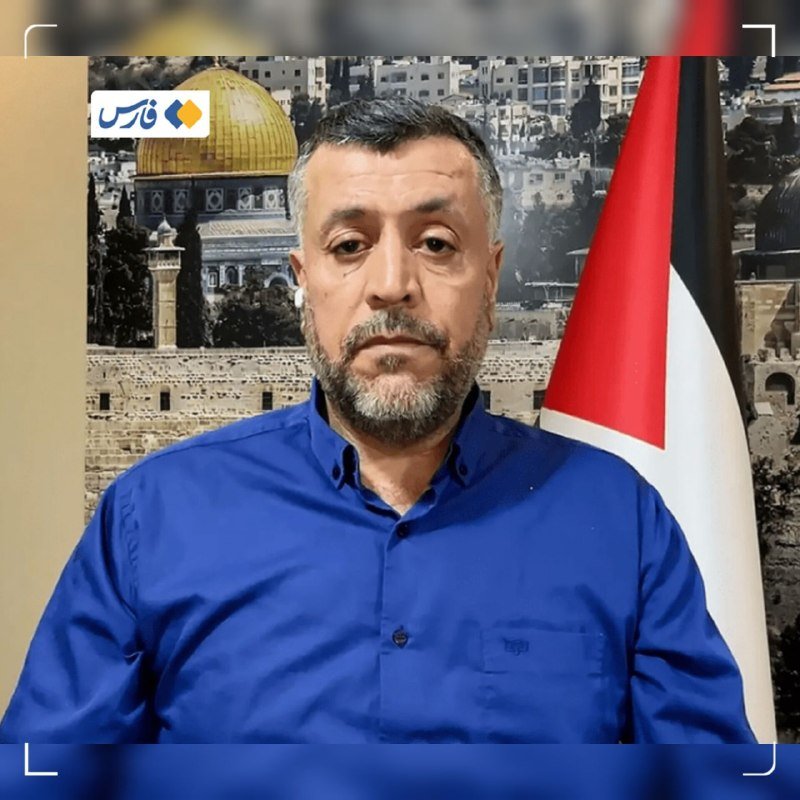
On the evening of 19 May 2026, a series of posts appeared on the English-language Telegram channel of Tasnim News Agency, an outlet affiliated with Iran's Islamic Revolutionary Guard Corps Quds Force. The posts, carrying timestamps between 20:54 and 21:30 UTC, reported that Hezbollah had conducted twenty-six separate operations against Israeli positions within the preceding twenty-four hours, including an ambush that destroyed an Israeli tank on an infantry advancement route. By the time Monexus pulled the thread for review, the claims had been aggregated and redistributed by several regional-facing news aggregators. The underlying source, however, remained the same: a single Iranian state-adjacent Telegram channel, relaying Hezbollah's own operational statements.
This is not an unusual pattern. It is, in fact, the default setting for a significant portion of conflict reporting when the underlying event is geographically inaccessible, the information environment is opaque, and the primary actors have strong incentives to shape the narrative in real time. The question the thread raises is not whether Hezbollah's claims are true or false — that determination requires evidence the thread does not provide — but how quickly and how credulously a single sourcing node can become the basis for international news production.
The Mechanics of Premature Certainty
When a claim circulates from a single source, especially a source with identifiable ideological commitments, the critical editorial function is calibration. Tasnim News Agency operates within Iran's state media ecosystem; its framing of Hezbollah operations is, at minimum, filtered through Tehran's strategic interests. The posts use language — "Islamic resistance fighters," "Zionist positions," "devastating operations" — that is characteristic of Iranian state media framing and distinct from the neutral operational language of a Western wire service. A reader encountering these posts unaccompanied by alternative sourcing has no external benchmark against which to assess the claims.
The twenty-six-operation figure is a case in point. It is a round number, reported in near-identical language across multiple posts in the same cluster, which is consistent with the mass reproduction of a single Hezbollah statement rather than independent corroboration of discrete incidents. Without a second source — a Western wire service correspondent, an Israeli military statement, satellite imagery, or a neutral third-party monitor — there is no mechanism to verify that the figure is accurate, inflated, or a composite of incidents of varying significance.
The Israeli Defence Forces have not, as of the timestamp of this article, issued a public statement responding to the specific claims in the Tasnim thread. Reuters and Associated Press have not published independent reporting on the incidents described. That absence is not proof that nothing occurred; border-area exchanges between Hezbollah and Israeli forces have been ongoing since October 2023. But it is a significant data point about the evidentiary state of the claim.
What the Thread Reveals About the Information Ecosystem
The cluster raises structural questions about how conflict reporting operates under conditions of informational asymmetry. Hezbollah and its Iranian patrons understand that modern media cycles reward specificity and volume — twenty-six operations sounds more significant than "several exchanges of fire" — and they have developed the capacity to produce content calibrated to those incentives. The posts are designed for screenshot virality, formatted for Telegram's visual interface, and annotated with emoji designed to draw attention in a crowded feed.
This is not unique to Iranian state-adjacent channels. Western wire services, when operating without independent on-the-ground access, are often reduced to reproducing the claims of official spokespeople from one or more parties to a conflict. The difference is not intent but epistemic scaffolding: Reuters and AP have editorial protocols requiring corroboration or explicit attribution to a single source when independence cannot be achieved. An outlet that transparently labels a claim as coming from "Hezbollah's media office" is doing something fundamentally different from an aggregator that treats the claim as reported fact.
The Telegram posts in this thread do not carry those editorial markers. They present Hezbollah's statements as direct operational fact. A reader without context about the source's institutional affiliations would have no way to know that the posts originate from a state-adjacent channel with an identifiable interest in the outcome being described.
The Verification Gap and Its Consequences
There is a broader dynamic at work here. Conflict reporting from inaccessible or semi-accessible zones — whether Gaza, the Lebanon-Israel border, eastern Ukraine, or disputed territory in the South China Sea — is structurally vulnerable to sourcing capture. When journalists cannot independently verify events on the ground, they become dependent on whatever parties to the conflict choose to release. Those parties have institutional communications operations designed to shape coverage. The result is a systematic bias toward the most professional and most motivated narrator, regardless of the accuracy of their account.
In this specific case, the verification gap is compounded by the timing. The posts appeared in a compressed window on the evening of 19 May 2026 — late in the Western news cycle, early in the Middle Eastern one — which is precisely when wire services are most likely to carry preliminary reports without full editorial review. The claims may yet be corroborated by independent reporting. They may be partially validated, partially contradicted, by subsequent Israeli military statements or Western media reporting. The point is that the thread, as it exists in the Monexus research environment, has not been independently verified, and the sourcing is insufficient to establish the facts on its own terms.
What This Publication Did With the Thread
Monexus is running this piece not as a report of Hezbollah's claimed operations — we cannot independently verify those claims from the available sources — but as a case study in how conflict narratives are constructed from single sourcing nodes. The thread is real. The posts are real. The claims require independent corroboration that the sourcing does not provide, and this article does not claim to supply it.
This approach is not evasive. It is the correct editorial response to a sourcing cluster of this kind: acknowledge what the sources say, identify the structural characteristics that limit their evidentiary value, and explain the broader dynamics those limitations illustrate. Readers who want to follow this story should do so through wire-service reporting that has been subject to editorial review and, where possible, independent verification against satellite imagery, official military statements from both sides, and neutral third-party monitors.
The twenty-six operations claimed by Hezbollah on 19 May 2026 may or may not have occurred as described. The more reliable observation is that the information ecosystem processed those claims as fact before the question of factuality had been settled — and that this is a predictable feature of conflict reporting that deserves to be examined rather than naturalized.
Wire provenance
This editorial synthesis draws on the following public wire/social posts:
- https://t.me/tasnimnews_en/58241
- https://t.me/tasnimnews_en/58244
- https://t.me/JahanTasnim/98423