Somalia's Famine Economy: What the End of Aid Looks Like on the Ground
As Washington and its allies scale back humanitarian commitments, Somalia's most vulnerable populations are bearing the cost of a geopolitical reorientation that has arrived before any durable替代方案 exists.
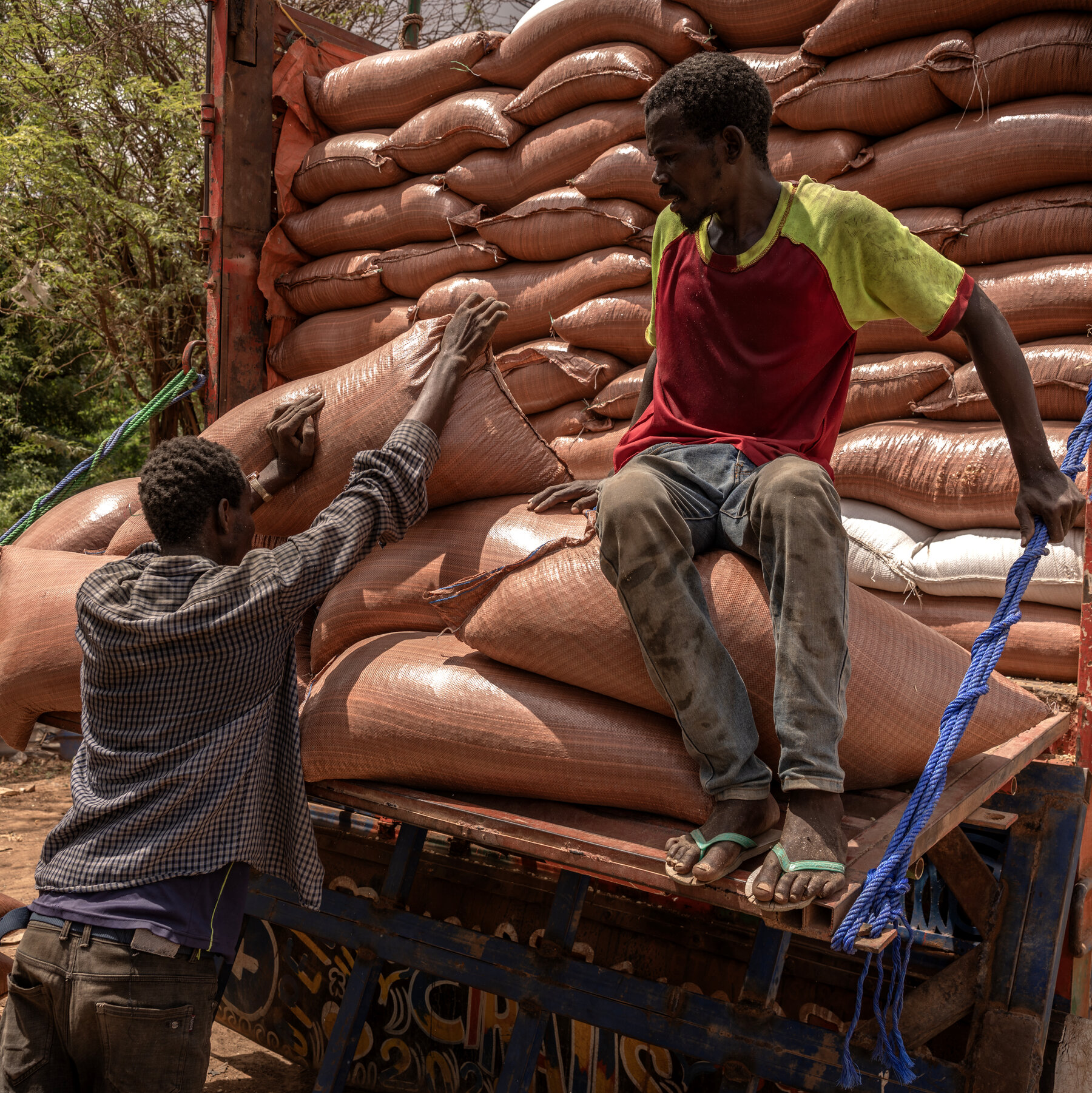
For the families packed into the mud-brick shelters outside Mogadishu, the arithmetic of hunger is simple and merciless. A cup of sorghum, divided among four children, was already barely enough before the American food trucks stopped arriving. Now it is not enough at all. On a Wednesday afternoon in mid-May, a distribution worker told a New York Times reporter that the weekly ration had been cut by half — not because supply chains had collapsed, but because the orders had come down from donors who had decided, somewhere in Washington or Brussels, that the political cost of writing another cheque had become too high.
That decision, filtering through the bureaucratic machinery of United Nations agencies and their implementing partners, has reshaped daily life inside Somalia's displacement camps in ways that will not show up in any strategic review or congressional hearing. The New York Times dispatch from 19 May 2026, based on reporting from Mogadishu and the surrounding regions, provides the most detailed ground-level account yet of what the withdrawal of Western humanitarian financing actually looks like when it lands in a place where the state cannot step in to fill the gap. The report documented families who had reduced meals to one per day, health workers warning of a spike in acute malnutrition among children under five, and aid workers explaining that they were being asked to ration assistance across a population that had no way to substitute for what the international community had been providing.
The United States has not been alone in tightening the tap. Several European governments have reduced their humanitarian allocations to the Horn of Africa over the past eighteen months, citing competing domestic pressures and a broader reassessment of aid effectiveness in contexts where instability appears structural rather than transitional. The cumulative effect has been a shortfall in the World Food Programme's Somalia operations that the agency itself has described in internal briefings as significant enough to force hard choices about which populations receive assistance and which are deprioritized. Those deprioritized populations, by default, are those furthest from the main corridors of conflict — the women and children in the rural interior whose names do not appear in the reports that donors read when they are deciding whether to fund the next cycle of programming.
The structural logic here is not complicated, but it is worth stating plainly. Somalia has been sustained, in material terms, by a humanitarian architecture that was built over three decades of crisis response. That architecture was never designed to be permanent. Donor governments funded it on the assumption that eventually, state institutions would develop enough capacity to manage their own social risks. That assumption never materialized. The federal government in Mogadishu has made genuine progress since Hassan Sheikh Mohamud's administration, but it remains dependent on foreign budgetary support and lacks the administrative reach to deliver services in the country's southern and central regions, where famine risk remains highest during each season of poor rainfall. When the outside money slows, there is no domestic system to compensate. The vulnerability is structural, and it is the product of decades of state collapse and the international community's preference for managing the crisis rather than resolving it.
What makes the current moment different from earlier aid contractions is the geopolitical context in which it is occurring. The reorientation of American diplomatic and development resources toward what officials describe as great-power competition has meant that humanitarian assistance — which does not produce strategic returns in the way that military basing agreements or technology partnerships do — has become easier to cut without producing an immediate political cost. Somalia does not vote in American elections. Its diaspora communities are small and politically unorganized. The members of Congress who represent districts where agricultural commodities are subsidized are not the same members who would be contacted by Somali-Americans worried about famine. The political economy of the aid cut is, in this sense, entirely conventional — and entirely invisible to the decision-makers who made it.
There is a counter-narrative, and it deserves a hearing. Some officials within the Trump administration and among its Republican allies in Congress have argued that long-term dependency on food aid is itself a form of fragility — that continuing to deliver free grain to a population without simultaneously investing in the agricultural capacity and market infrastructure that would reduce that dependency is not humanitarianism but a perpetuation of crisis. The argument has a surface logic. Sustainable development, the theory goes, requires exit strategies, not permanent relief operations. Somalia has been on emergency rations for thirty years. At some point, the donors have to stop.
The problem with that argument, in the specific context of 2026, is timing. You cannot impose an exit strategy on a population that has no alternative supply of calories and call it development policy. The conditions for a managed transition — functional local markets, functioning credit systems, agricultural extension services, weather-indexed insurance for farmers — are precisely what does not exist in the regions where famine risk is highest. What exists is a humanitarian pipeline that is now, at the margin, running on fumes. The choice is not between dependency and sustainability. It is between feeding people today and not feeding them. The argument for structural reform becomes coherent only when there is something to transition toward. Right now, there is not.
The regional dimension matters as well. Somalia is not the only country experiencing the contraction of Western humanitarian space. Sudan, Yemen, and parts of the Sahel are all facing similar dynamics — aid agencies reporting funding shortfalls, ration cuts, and populations with no fallback. The coincidence suggests that what is happening in Mogadishu is not a response to conditions specific to Somalia but a systemic reorientation of how wealthy countries — particularly the United States — calculate the value of humanitarian investment. That calculation has shifted, and the shift is being felt most acutely in places with the least capacity to absorb it.
For now, the practical question is who fills the gap. The United Arab Emirates has expanded its engagement with the Somali federal government, including infrastructure and development programming that carries less conditionality than Western aid. Qatar's humanitarian agencies have maintained their operations in the country. China, which has historically had limited humanitarian development presence in Somalia compared to its infrastructure footprint elsewhere in Africa, has signaled interest in expanding its aid programming — though specifics of what form that would take remain unclear from publicly available sources. None of these actors, individually or collectively, are positioned to replace the scale of the American contribution that is now being reduced. The gap is real, and it is not being closed by the multipolar reordering that many analysts predicted would provide alternative channels when the Western ones contracted.
What the New York Times reporting captures is the granular texture of that gap — not as an abstraction but as a lived reality for families who do not know where the next meal is coming from. That texture is often missing from the policy discussions that determine whether the aid flows continue or stop. The decision is made in committee rooms and appropriations subcommittees. Its consequences are measured in the weight of children too weak to stand, in lines at distribution points that close early, in aid workers who know what the cut means and cannot say so loudly because their funding comes from the same governments that are making the cuts. The discrepancy between the scale of the decision and the scale of its impact is, perhaps, the most important thing this story illustrates.
The sources do not specify exactly how much funding has been cut or which specific programs have been reduced first. The New York Times article provides qualitative detail about ration cuts and health outcomes but does not include precise numbers for the funding shortfall. That ambiguity is worth noting — it reflects the difficulty of tracking humanitarian funding flows in real time, and it means that any quantitative claim about the scale of the contraction would require additional reporting that is not available from the single source used here. What is clear is the direction: fewer trucks, smaller rations, longer lines. The numbers will be reconstructed later, when the damage is being counted. For now, the story is in the waiting.
This publication framed the story around the structural dependency that makes Somalia uniquely vulnerable to donor retrenchment — a dimension that did not appear in the wire's framing, which focused more on the immediate humanitarian outcomes. The desk's view is that context is not optional.