The Strait and the Bluff: Iran's Gambit, America's Ultimatum, and the Workers Paying the Price
With the Strait of Hormuz under threat and UK hiring slowing to a crawl, the human cost of Washington's gamble with Tehran is already rippling through global labour markets long before a single additional bomb falls.
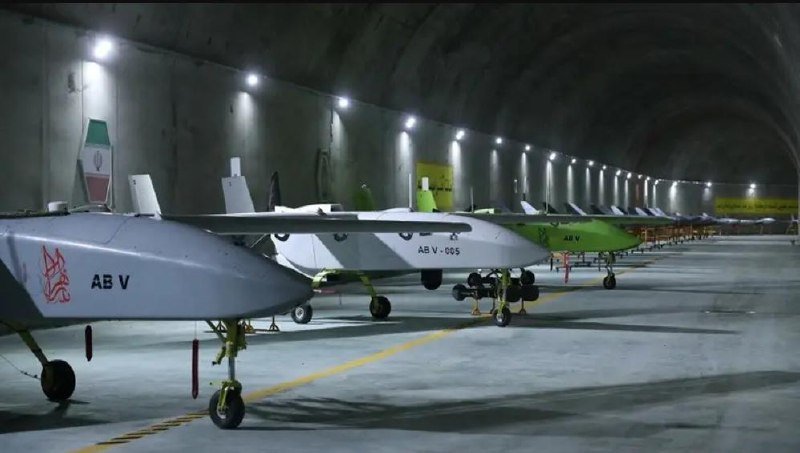
Something strange is happening in British hiring halls. Employers across the United Kingdom are quietly pulling job postings, scaling back interviews, and postponing expansion decisions — not because of a domestic recession or a banking crisis, but because of a body of water roughly 4,000 miles away. The Strait of Hormuz has become the gravitational centre of a confrontation that began, by most accounts, with a US strike on Iranian nuclear facilities in April. And long before any shots are fired near the strait's narrow shipping channel, the economic consequences are already landing on the desks of HR departments in Birmingham, Manchester, and Cardiff.
The data, reported by Reuters on 19 May 2026, tells a story of pre-emptive contraction. Companies that had been hiring are holding back. New vacancies are not appearing at the rate they were six weeks ago. Recruiters speak of clients requesting longer cooling-off periods before confirming offers. It is not panic — it is something more insidious: a rational response to uncertainty, a collective decision by employers to wait and see whether the channel through which roughly a fifth of the world's oil flows daily will remain open. When the world's most critical chokepoint becomes the subject of open-ended military threats, businesses do not wait for the bombs to fall. They adjust.
The Geography of Coercion
The Strait of Hormuz is not a metaphor. It is a 34-kilometre-wide channel between Oman and Iran through which approximately 21 million barrels of oil pass on an average day — roughly a fifth of global consumption. The Trump administration understands this arithmetic intimately. When the President declared on 19 May that "the Strait of Hormuz is not Iran's. It's international waters," the statement was not a legal lecture. It was a threat: an assertion of the right to keep that corridor open by force if necessary.
The framing — "international waters" — carries an implicit promise to the global shipping industry and to oil markets: Washington will fight to maintain the flow. But the same statement, read from Tehran, is an existential provocation. Iran has historically treated its proximity to the strait as a strategic asset — not a claim of sovereignty over the waterway itself, but a reminder that the surrounding airspace and waters can be monitored, and potentially disrupted, from positions on the Iranian coast. The distinction between "international waters" in a legal sense and a militarily contestable waterway is one that has sustained Iranian deterrence posture for decades. Trump's declaration is designed to collapse that distinction — to signal that Washington will not observe the old rules of engagement.
Tehran's Human-Wave Response
If Washington's instrument is the carrier strike group, Tehran's counter-instrument is something altogether more unsettling: mass mobilisation of its own population. Reporting by the South China Morning Post on 19 May detailed how Iran has begun hosting mass wedding ceremonies for couples who volunteer for wartime sacrifice. The ceremonies carry a deliberate message: the Islamic Republic is not preparing for a conventional military defence. It is preparing for a long, popular attrition.
The framing of these mass weddings — described by Iranian state media as celebrations of couples willing to prioritise national sacrifice over personal ambition — is a specific kind of political communication. It is not directed at Western governments, which have largely discounted Iranian resolve before and may do so again. It is directed at the region's other powers, at China, and at the broader non-aligned world: Iran will absorb punishment, will sustain domestic mobilisation, and will not fold quickly. The photographs of newly-married couples accepting the language of martyrdom are meant to be read as a commitment device — a signal that the regime has bought itself time by binding its population into the conflict's logic.
The China Variable
No factor complicates this standoff more than Beijing's position. According to Telegram channel DDGeopolitics, which posted on 19 May, Trump has claimed that Chinese President Xi Jinping gave him a personal assurance that China would not send weapons to Iran. The claim is extraordinary on its face — a sitting US President disclosing, in effect, that he has received a private diplomatic commitment from the leader of the world's second-largest economy regarding a conflict in which Washington is actively escalating.
Whether the commitment is genuine, whether Xi has the capacity to enforce it, and whether it represents a quid pro quo with Washington on trade, Taiwan, or something else entirely — these questions are unanswerable from public sources alone. What is clear is that the framing benefits all parties in different ways. Trump gets to suggest that China is caving to US pressure, that the multipolar counterweight is choosing sides, and that Tehran is increasingly isolated. Beijing gets to appear as a responsible great power quietly working to prevent escalation while maintaining its formal neutrality. Iran, presumably, receives the message that the promised Chinese military lifeline is not coming — at least not openly.
But China not sending weapons is not the same as China applying economic pressure on Iran. Beijing has significant leverage over Tehran — a large chunk of Iranian oil exports flow to Chinese refineries, and Chinese infrastructure investment in Iran has been a quiet but consistent feature of bilateral relations. If Xi has indeed promised no weapons, it is worth asking what Beijing expects in return — and whether that price will be paid by the Iranian population through economic strangulation rather than military hardware.
What the Data Is Already Telling Us
The UK hiring slowdown is not unique to the United Kingdom. It is a precursor — an early signal that financial markets and corporate planners are beginning to price in a non-trivial probability of sustained disruption to global energy logistics. When companies begin deferring hiring decisions, they are making a probabilistic calculation: the cost of uncertainty is higher than the cost of inaction. If the strait becomes a contested zone, even briefly, the ripple effects on shipping insurance, fuel prices, and supply chains will be felt within weeks, not months.
Trump's stated position — that "if I left today, it would take them 25 years to rebuild" — is the language of a man who believes time is on his side. The implication is that Iran will capitulate under sustained pressure, that the regime will fold before its population does, and that the cost of conflict will be borne by someone else. That someone else, in the meantime, is already in a hiring hall in Birmingham, watching the vacancy count tick downward because of a strait he has probably never seen on a map.
There is a pattern here that is familiar from previous episodes of US coercive pressure on oil-dependent states: the political leadership in Washington absorbs no visible cost from escalation, the economic pain is distributed downstream to consumers and workers, and the domestic political calculus of the target state is presumed to break before the external one does. Whether Iran conforms to that expectation this time is a genuine unknown. What is not unknown is that the first casualties of a Hormuz crisis will not appear in casualty lists. They will appear in unemployment statistics — and they are already being counted.
The workers of Birmingham, and Lagos, and Mumbai are not party to the ultimatum. They are its collateral.
This publication's Iran coverage leads with Western-wire reporting and Israeli security context. The economic-fallout angle — specifically the labour-market signal from the UK — received limited play in initial wire summaries, which focused on the military dimension. Monexus prioritises the human-consequence beat.
Wire provenance
This editorial synthesis draws on the following public wire/social posts:
- http://reut.rs/4fvaYLe
- https://twitter.com/disclosetv/status/2056748689155117247/video/1