Tehran Commemorates Second Anniversary of President Raisi's Death
Iranian officials marked the second anniversary of President Ebrahim Raisi's death on 19 May 2026, with Tehran's mayor leading commemorations that cast the late president as a loyal servant of the Islamic Republic system.
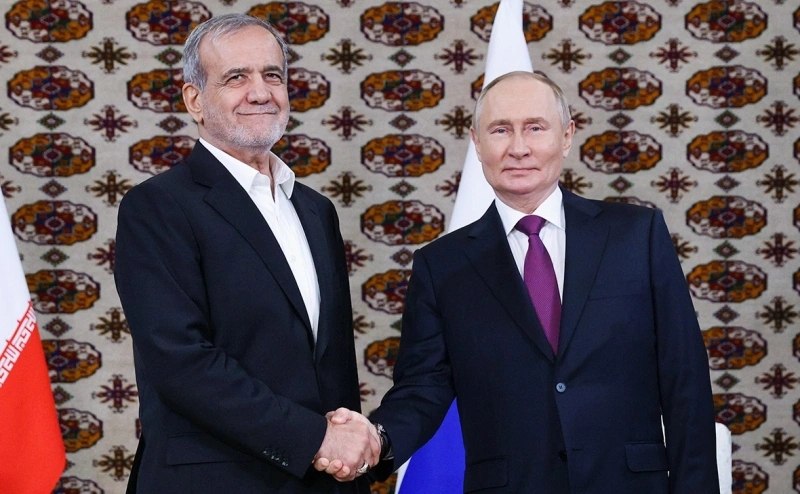
Tehran's mayor led official commemorations on 19 May 2026 marking the second anniversary of President Ebrahim Raisi's death, with state-affiliated media carrying extended coverage of the ceremony honoring the late president who died in a helicopter crash in May 2023.
The commemorations, carried by Iranian state media including Tasnim News, positioned Raisi as a figure defined by loyalty to the Islamic Republic's governing structure. Mayor of Tehran Alireza Zakani described Raisi as considering himself "a loyal soldier of the system" and characterized the late president as viewing the government as "the main executor of leadership measures," according to remarks reported by Tasnim. Actor Dariush Arjamand, speaking at a separate ceremony honoring Ayatollah Raisi—Ebrahim Raisi's father—a traditional figure in the clerical establishment, described the younger Raisi as "exemplary in management."
A President Cast as System Loyalist
Raisi's death on 19 May 2023 removed a figure who had occupied the presidency for two years and had been widely discussed as a potential future Supreme Leader. His career path—from head of the judiciary to the presidency—reflected a trajectory through the Islamic Republic's most powerful institutions. The commemorative framing that emerged on this second anniversary emphasized continuity and obedience to clerical authority rather than any distinctive policy legacy.
The language deployed by officials at these ceremonies follows a pattern well-documented in coverage of Iranian state commemorations: the deceased is cast as exemplifying devotion to the system, with adjectives like "martyr" and "loyal soldier" serving to integrate the individual into a broader narrative of institutional permanence. What remains absent from such framing is any substantive accounting of policy outcomes or the domestic and international circumstances of the presidency itself.
The Limits of State-Source Framing
The sources available for this reporting consist entirely of Iranian state-affiliated media—Tasnim News is closely linked to the Islamic Republic's conservative establishment. Those sources provide the official characterizations of Raisi and the ceremony but offer no independent assessment of his presidency or the circumstances surrounding his death. The helicopter crash that killed Raisi, Foreign Minister Hossein Amirabdollahian, and others was initially attributed to weather conditions; no comprehensive international investigation has produced findings that would alter the Iranian account.
The absence of corroborating sources from outside the Iranian state-media ecosystem means that claims about Raisi's personal qualities, management style, or standing within the leadership structure cannot be independently verified. What can be stated with confidence is that the commemorations occurred as described, that Zakani made the attributed remarks, and that the ceremony followed the official protocols typical of such events in Tehran.
The Political Context Two Years On
Raisi's death triggered a snap presidential election in June 2023, won by Masoud Pezeshkian, a figure associated with the reformist wing of Iran's political spectrum. Pezeshkian's victory was notable given the tight controls on candidacy in Iranian elections, and his subsequent presidency has operated within the constraints of a system where ultimate authority rests with Supreme Leader Ayatollah Khamenei. The Raisi commemoration arrives at a moment when Iran continues to navigate regional tensions, including its network of allied forces across the Middle East, and ongoing negotiations over its nuclear programme with Western powers.
The question of what Raisi's death means for succession dynamics within the Islamic Republic—where the Supreme Leader position carries incomparably more power than the presidency—remains largely theoretical in the official framing. Iranian state media did not address succession implications on this anniversary, focusing instead on the hagiographic register appropriate to martyrology.
What Remains Outside the Official Frame
The official commemorations provide no insight into how ordinary Iranians—outside the state-organized ceremonies—view the Raisi presidency or its aftermath. Iran's political system severely constrains independent polling and public expression of dissent, making authentic popular sentiment difficult to assess from available sources. Similarly, the international dimensions of Raisi's presidency—including Western sanctions reimposed during his term and Iran's deepening ties with Russia and China—are not addressed in the state-media coverage of the anniversary.
The ceremony's language was resolutely backward-looking, casting Raisi as a model of submission to existing institutions. What it did not address is what, if any, distinctive imprint his two-year presidency left on Iranian governance or foreign policy, beyond the role he played in maintaining clerical authority over the executive branch.
The second anniversary passes with official Iran presenting a portrait of the deceased as a loyal functionary of the system. Whether that characterization survives in the longer historical record depends on sources and perspectives not represented in Tuesday's commemorations.
This publication's coverage of Iranian state commemorations relies on state-affiliated sources for factual reporting on the events themselves, while maintaining appropriate distance from ideological framing in source material. Independent verification of characterization claims is noted where applicable.
Wire provenance
This editorial synthesis draws on the following public wire/social posts:
- https://t.me/tasnimnews_en/45432
- https://t.me/tasnimnews_en/45431
- https://t.me/tasnimnews_en/45430