Tehran's Hormuz Calculus: What the Strait Means for Global Oil Markets in 2026
The Strait of Hormuz handles roughly a fifth of the world's oil shipments. Iranian officials have signalled renewed pressure on transits through the waterway — and the energy market is watching closely for what that means in practice.
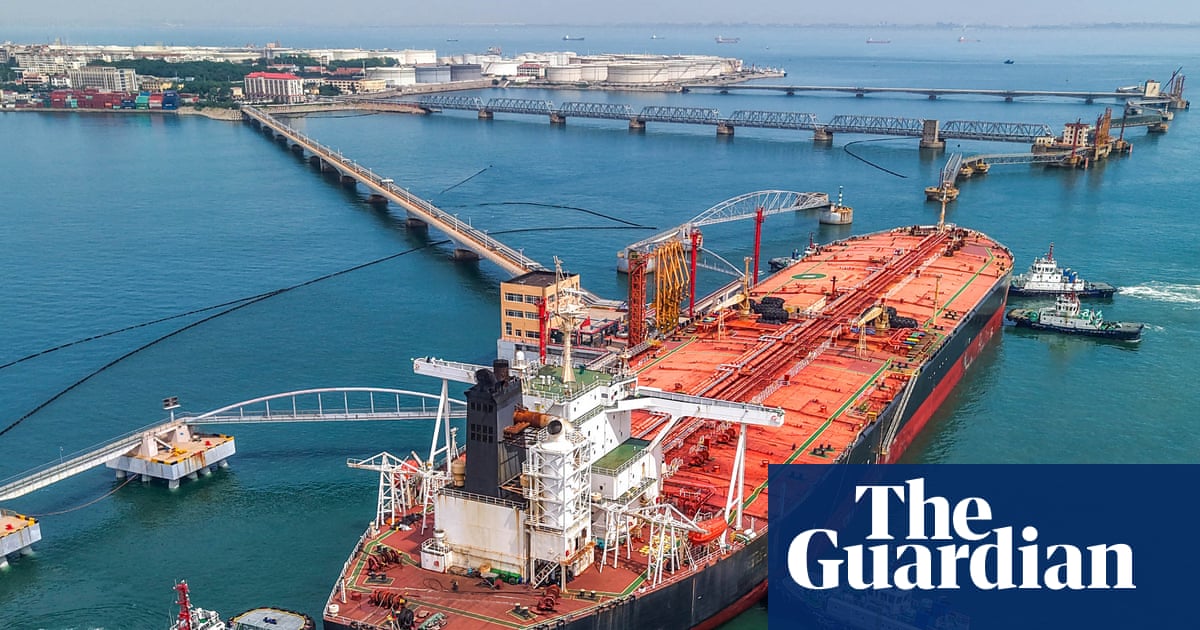
The Strait of Hormuz handles approximately 21 million barrels of oil per day — roughly a fifth of global consumption. For decades, Iranian officials have treated the waterway as a lever of last resort, a geopolitical pressure point that sits uneasily with the world's dependence on Gulf crude. As of May 2026, that lever is being tested again.
Analysis of recent public statements and commentary tracked by regional monitoring channels shows Iranian officials restating long-standing claims about the Islamic Republic's right to control or restrict passage through the strait. The language used mirrors historical patterns of nationalist signalling, drawing explicit comparisons to the era of the Pahlavi monarchy — a period often invoked in Iranian state rhetoric as a benchmark for the costs of foreign alignment. One widely circulated commentary drew a direct parallel between signs restricting entry during the 1960s monarchy and current posturing around Hormuz. The framing presents the Islamic Republic's posture as a form of sovereignty assertion, contrasting it with the perceived subordination of earlier governments to Western interests.
The Strategic Logic of a Chokepoint
Understanding why Hormuz occupies the centre of Iran's geopolitical posture requires nothing more than a map. The strait is the only maritime passage connecting the Persian Gulf to the open ocean. Every barrel of crude from Saudi Arabia, Iraq, Kuwait, and the UAE that travels by sea to international markets must pass through it. Tankers routinely transit in convoys, and the narrowest point — the shipping channel itself — is less than two nautical miles wide in places. An actor controlling one shore has obvious geographic advantages.
Iranian military doctrine has long incorporated the strait as a potential asymmetric counterweight to superior conventional forces. Revolutionary Guard naval assets, mines, and anti-ship missiles give Tehran options short of full closure that could disrupt traffic significantly. The practical effect of even temporary disruption would be immediate: a 2019 incident involving attacks on tankers in the Gulf drove a brief but sharp spike in Brent crude prices. The market has not forgotten that sensitivity.
What the Rhetoric Does and Doesn't Mean
The question analysts are wrestling with is whether current statements represent genuine preparation for coercive action or are primarily diplomatic theatre directed at domestic and regional audiences.
Those who argue for a hard reading point to the accumulation of pressure: sanctions tightening under successive US administrations, stalled nuclear negotiations, and an escalation in the broader regional contest with Israel and Gulf allies. The Hormuz card, in this reading, is being held closer to the centre of the table precisely because other levers have not produced results. Iranian officials have been unambiguous in their public framing that the strait's status is a matter of sovereign right, not a negotiable concession.
Those who read the signals as more restrained note that total closure would be catastrophically self-harmful. Iran depends on its own oil exports — revenue that flows through the same chokepoint. A sustained blockade would crater the government's own finances while guaranteeing a military response the Islamic Republic cannot match. The more plausible scenario is intermittent interference: harassment of commercial traffic, inspections of vessels perceived as non-compliant, or the use of proxies to signal capability without triggering direct confrontation.
Both readings have merit. The truth is that Tehran has historically calibrated its Hormuz posture to the intensity of external pressure. When negotiations are active, the rhetoric cools. When sanctions bite and diplomatic channels narrow, the strait re-emerges as a theme. In 2026, with nuclear talks stalled and sanctions architecture still intact, the pattern appears to be running again.
The Market Response and Its Limits
The energy market has absorbed these signals with a caution born of experience. Oil prices have remained relatively stable despite the rhetoric, suggesting traders are pricing in the distinction between sabre-rattling and action. Hedge funds and sovereign wealth funds with exposure to Gulf transit routes have, according to market intelligence from commodities desks, modestly increased hedging activity — a pattern consistent with elevated but not extreme risk pricing.
The structural vulnerability remains, however. Global spare production capacity is tighter than it was a decade ago, and the diversification of supply chains away from Middle Gulf sources has been slower than many Western policymakers anticipated. A sustained disruption lasting more than two to three weeks would, by most models, push Brent crude above $100 per barrel and likely higher. The downstream effects on inflation, central bank policy, and consumer sentiment in energy-importing economies would be substantial.
Stakes: Who Wins and Who Loses
The calculus is asymmetric but not simple. Iran gains leverage from the mere existence of the chokepoint problem — its existence as a threat forces Western governments to factor Tehran into any broader regional planning. A successful disruption, even partial, would demonstrate that the Islamic Republic retains capacity to impose costs despite sanctions. It would also complicate the strategic positioning of Saudi Arabia and the UAE, whose Vision 2030 economic diversification plans depend on stable energy infrastructure.
Western consumers and import-dependent economies bear the downside risk directly. China, as the largest importer of Gulf crude, has a structural interest in Hormuz stability that is not always aligned with US policy preferences — a tension Beijing has exploited diplomatically in the past.
What the sources do not clarify is whether any specific operational planning has shifted. Iranian military exercises in the Gulf region have been periodic and not necessarily tied to heightened political signals. Without corroborating evidence of asset repositioning or naval activity beyond routine patterns, the current posture reads as pressure tactic rather than imminent action.
What Remains Uncertain
The sources reviewed for this article do not provide evidence of specific orders given to Revolutionary Guard naval units or changes in patrol patterns in the strait. The commentary captured reflects official framing and social-media amplification within Iran's information ecosystem, which often runs ahead of operational reality. Whether the renewed focus on Hormuz represents a genuine decision point in Tehran or a managed signal to multiple audiences simultaneously remains the central analytical gap.
What is clear is that the strait will remain the most potent single piece of geographic leverage Iran holds. As long as global oil markets depend on passage through those narrow waters, the Islamic Republic's posturing will command attention from capitals and trading desks alike. The question is not whether Tehran can disrupt Hormuz — it demonstrably can. The question is under what conditions it decides the cost is worth paying.
Desk note: Wire coverage of this story by Reuters and Bloomberg has focused primarily on the nuclear negotiations and sanctions architecture. This piece foregrounds the energy-chokepoint dimension and the structural logic of Iran's Hormuz posture, an angle the wire services have treated as background context rather than the lead frame. The comparison drawn in Iranian state-adjacent commentary between the Pahlavi-era restrictions and current policy has not been reported by mainstream Western outlets — Monexus flags it as a framing device worth examining on its own terms, separate from whether the underlying threat assessment is new.
Wire provenance
This editorial synthesis draws on the following public wire/social posts:
- https://t.me/Middle_East_Spectator
- https://t.me/DDGeopolitics
- https://t.me/FotrosResistancee
- https://en.wikipedia.org/wiki/Strait_of_Hormuz
- https://www.eia.gov/todayinenergy/detail.php?id=44896