The Theology of Brinksmanship: Washington, Tehran, and the Spectacle of Threat Inflation
As Iran stages mass weddings for couples pledging wartime sacrifice, the Trump administration offers a parallel theatre of its own: a president who claims Xi Jinping promised to curb Iranian arms transfers, while simultaneously announcing military facilities beneath the White House ballroom.
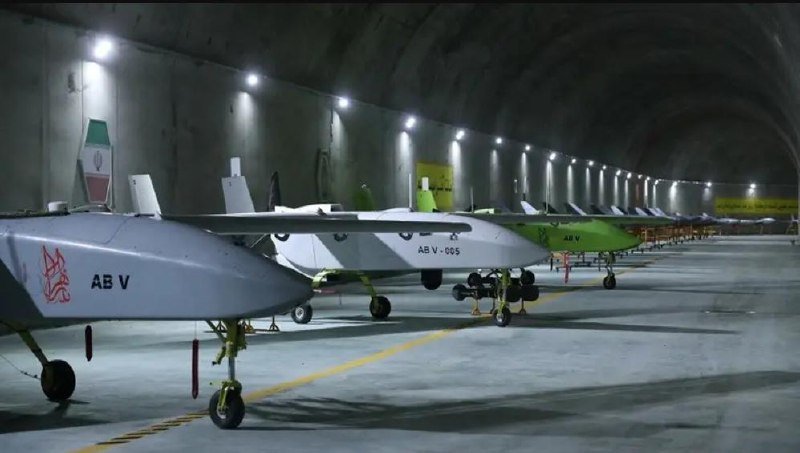
The Islamic Republic of Iran held mass weddings on 19 May 2026 for couples volunteering to serve in wartime roles — ceremonies framed by state media as acts of collective sacrifice and national mobilisation. The South China Morning Post documented couples exchanging vows before an audience of hundreds, with officials casting the ritual as both spiritual commitment and practical preparation for a conflict the regime says is imminent. Hours later, in Washington, the Trump administration offered a parallel theatre of its own: a president who told reporters that Chinese President Xi Jinping had personally promised him Beijing would not send weapons to Iran, while simultaneously announcing, without corroboration, that a military hospital and research facilities were being constructed beneath the White House ballroom.
That juxtaposition is not incidental. It tells us something about how two very different governments communicate existential stakes to their own populations — and how the gap between the two performances has become a gap between serious strategic communication and something closer to political performance art.
What Iran's Mass Weddings Actually Signal
The ceremonies documented by the South China Morning Post are not spontaneous expressions of popular conviction. They are state-scripted events, coordinated through Revolutionary Guard-affiliated organisations and promoted through state-aligned media. The regime has used mass weddings before as instruments of social cohesion and political signalling — events that simultaneously reward loyalty, normalise martial sacrifice as a civic virtue, and project an image of unified national purpose. That Iran feels compelled to stage them now, on the cusp of what Tehran describes as a regional confrontation with the United States, is a meaningful data point about the government's own assessment of its political footing at home.
This publication has previously noted that the Islamic Republic's domestic legitimacy rests heavily on its ability to present itself as the front line of resistance against external pressure. Mass weddings serve that narrative directly. They also serve a practical purpose: they normalise the prospect of sacrifice, civilian and military, in a way that regular military conscription announcements do not. The ceremony wraps the coercive in the emotional. Whether it translates into actual battlefield willingness is a different question — but the regime clearly believes it helps.
What it does not do is resolve the underlying structural problem: an economy still labouring under extensive sanctions, a population with decades of experience navigating regime propaganda, and a leadership that must simultaneously project strength and manage the discontent that comes from chronic economic deprivation. The weddings are a communication tool aimed at a domestic audience that has heard this particular music before.
The White House Underground and the Architecture of Misdirection
The claim that a military hospital, research facilities, and command rooms are being built beneath the White House ballroom appeared on 19 May 2026 via social media channels and Polymarket, attributed to President Trump. The story was reported without independent corroboration from institutional outlets at time of publication. No architectural plans, congressional notifications, or defence department filings were cited in the source material available to this desk.
Whether or not the construction claim has any basis in fact — and there is currently no verifiable evidence to confirm it — its publication by the president himself serves a clear communicative function: it signals that the executive is preparing for a conflict that extends beyond conventional theatres. A buried command facility beneath the seat of American democracy is not a military logistics item. It is a symbol. Its symbolic weight is the point.
This matters because it belongs to the same register as the Iran statements: the deliberate cultivation of a narrative in which the president is simultaneously the architect of conflict and its sole guarantor of safety. The underground facility, if it exists, would be classified. Announcing it publicly is therefore a communication, not a briefing. The question for analysts is not whether the construction is underway but what function the announcement serves in the broader information environment.
Beijing's Position and the Problem of Third-Party Assurances
Trump stated that Xi promised him China would not supply weapons to Iran. This claim deserves scrutiny in both directions.
From Beijing's perspective, the statement presents a China that is willing to make bilateral commitments to contain a third-party relationship — in this case, China's economic and diplomatic ties with Tehran — in exchange for accommodation from Washington. Chinese state media and diplomatic briefings have consistently framed China-Iran relations within the language of sovereignty and non-interference, presenting trade and infrastructure cooperation as parallel to, not conditional upon, American preferences. A private assurance to Washington that constrains Tehran would cut against that framing.
That does not mean the assurance was not made. Great powers routinely say different things to different audiences. What it means is that the announcement should be read as a communication to a domestic American audience about the president's personal diplomatic effectiveness — a claim whose verification lies entirely in the hands of the party making it. This publication does not independently confirm private diplomatic conversations of this kind; the record reflects the public statement only.
If Xi did make such a promise, it would represent a significant diplomatic concession with real-world consequences for Iranian procurement. Tehran's weapons development programmes depend on external supply chains that are not easily diversified. A Chinese commitment to restrict those chains would constrain Iran's options substantially. That outcome, if genuine, would be a meaningful shift in the regional balance — and one that no amount of theatrical White House construction announcements should be allowed to obscure.
The Real Stakes
The danger in treating this moment purely as theatre is that it risks normalising both performances equally. Iran's mass weddings are a serious instrument of domestic mobilisation in a regime that has shown willingness to pursue nuclear capability despite economic catastrophe. Whatever the sincerity of individual participants, the ceremonies serve a state function: they prepare populations psychologically for sacrifice. That is not a game.
The American performance is different in kind but not entirely dissimilar in function. Announcements of secret underground facilities and personal assurances from foreign leaders serve an internal audience — they project the image of a president who controls events even as the rhetoric escalates. The risk is that when crisis management requires actual communication, the credibility of the messenger has already been spent on the spectacle.
Diplomacy with Iran has historically required something that is currently absent from public discourse: a credible channel of communication, a clear set of demands, and a plausible sequence of concessions that both sides can present to their own populations as defensible. What is on display instead is two governments talking at, not to, their own people — and hoping the other side flinches first.
The mass weddings continue. The digging beneath the ballroom continues. What is not continuing is the patient, unglamorous work of finding out whether a negotiated settlement is possible — or whether the theatre has become the point entirely.
—
This desk noted that while Western wire coverage of Iran emphasises regime rhetoric and military posture, it has given relatively little space to the economic deterioration driving Tehran's negotiating posture — a gap that shapes how readers understand both the incentives and the constraints on all parties.
Wire provenance
This editorial synthesis draws on the following public wire/social posts:
- https://t.me/DDGeopolitics/19438
- https://t.me/DDGeopolitics/19440
- https://x.com/PolymarketNews/status/20567452306411234
- https://t.me/osintlive/28451