Tottenham's fate hangs by a thread as De Zerbi's men fall to Chelsea
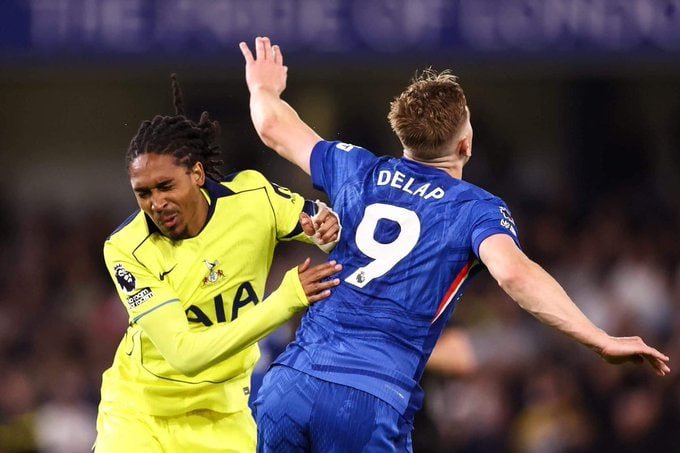
Tottenham's Premier League survival fight will be decided on the final day of the season after a 2-1 defeat at Stamford Bridge on 19 May 2026 left Roberto De Zerbi's side in grave danger of the drop. The result, which saw Chelsea's captain open the scoring before half-time, denied Spurs the opportunity to secure safety with a game to spare. De Zerbi, speaking after the match, insisted his side could still reach their target — though the arithmetic now demands a favourable result on the season's concluding day.
The defeat at Chelsea's home ground leaves Tottenham needing results elsewhere to escape the bottom three. Their fate is no longer entirely in their own hands. De Zerbi, appointed with ambitions of rebuilding a fractured club, now faces the prospect of a first top-flight campaign in his managerial career ending not just without European football, but without top-flight football entirely.
Defiance from the dugout
De Zerbi was measured after the final whistle. "We can reach our target," he said, according to BBC Sport's match report. The Italian's public composure masked what will have been a tense evening in the away technical area — a dugout he occupied for the first time in a relegation-ending fixture. Tottenham's performance at Chelsea was not without merit; they equalised after the interval and created openings that a season-defining afternoon did not allow them to take. But the cold arithmetic is unforgiving: two points from safety with one match remaining.
The question now is not whether De Zerbi's philosophy can rebuild Tottenham — it is whether he will get the chance to try. A club that has not won a trophy since 2008 and has cycled through managers at a pace that defeats sustained project-building may find itself in the Championship next season with no obvious candidate willing to oversee another restart.
What the scoreline conceals
Context matters here. A 2-1 away defeat to Chelsea — who finished the season with European qualification in their sights — is not inherently catastrophic. Chelsea fielded a strong side, controlled large spells, and the scoreline flattered an away team that lacked the clinical edge a night this consequential demanded. But the problem with context in a relegation fight is that context does not earn points. Tottenham knew before kick-off that a win would almost certainly end the anxiety. They left with none.
Chelsea's captain — named in The Athletic's live thread covering the match — was the decisive figure, converting in the first half to give the home side a lead they protected through to the interval. The equaliser came after half-time, but the inability to sustain pressure or find a second goal that would have shifted the psychological weight of the evening proved costly. When the decisive moment arrived, Tottenham's response was insufficient. That is the brutal currency of a survival battle.
The structural problem beneath the result
Tottenham's precarious position is not the product of a single bad evening. The club's slide toward the bottom three reflects deeper instability — managerial churn, recruitment decisions that have failed to build a coherent squad, and an identity that has oscillated between Champions League aspiration and mid-table resignation. The stadium is world-class. The wage bill is not that of a club in this position. Yet here they are, requiring results from others on the final day.
What makes this particularly stark is the contrast with Chelsea, whose own turbulent recent years have produced something tangible: a side capable of finishing above Tottenham comfortably, with European football ahead and financial firepower that insulates them from existential panic. Chelsea's owner cohort has invested heavily and, crucially, coherently — the model has its critics, but on the field, results are moving in the right direction. Tottenham's approach has been far less stable. Multiple managers, multiple philosophical shifts, and a recruitment strategy that has not consistently addressed squad deficiencies have converged into this: a final-day reckoning.
What happens next
Tottenham must now await results elsewhere. The scenario is simple in the abstract but brutal in execution: they need to match or better the result of the side above them in the final round of matches. The mathematics are not impossible — but they are not comfortable, and they are not in Tottenham's hands alone.
De Zerbi's defiance on the night was admirable. Whether it survives contact with the realities of the next seven days depends entirely on what happens on the season's final afternoon. One of English football's historically prestigious clubs — a side that once considered itself part of the established elite — could drop out of the top flight. The irony is that it would not be a surprise. It would be the logical consequence of years of decisions made and unmade in the absence of a coherent plan.
Tottenham travel to face their fate on the final day of the Premier League season with their top-flight status hanging by the thinnest of margins.
Wire provenance
This editorial synthesis draws on the following public wire/social posts:
- https://t.me/TheAthletic
- https://t.me/TheAthletic