Trump Defers Iran Strike as Gulf States Intervene and Tehran Submits New Peace Terms
President Trump announced late on 18 May 2026 that a planned US strike on Iran had been postponed at the request of Gulf Arab states, hours after Tehran reportedly submitted fresh peace terms to Washington — a development that underscores the limits of military signalling in a conflict shaped by regional interdependency.
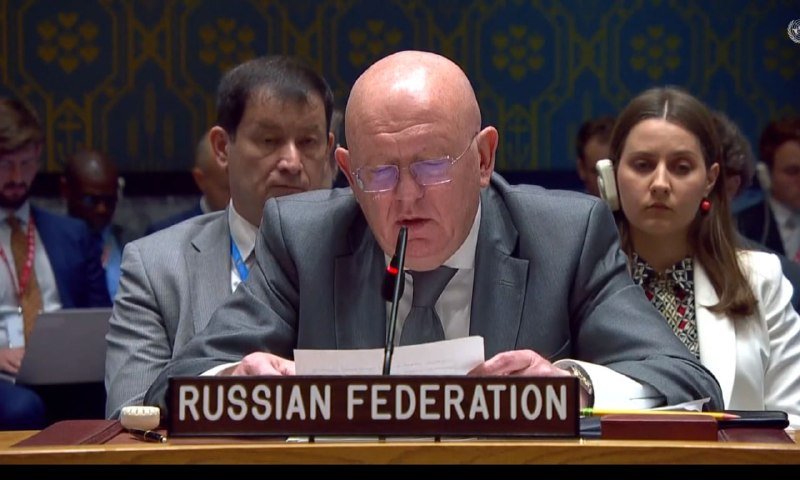
President Donald Trump announced on 18 May 2026 that a planned American military strike against Iran had been suspended, describing the deferral as a response to appeals from Gulf Arab governments. The announcement, made via social media late in the evening UTC, came hours after Iranian officials transmitted what were described as new peace terms to the United States government — a development that complicated the already crowded signalling environment surrounding the renewed US-Iran confrontation.
The sequence of events offers a rare window into the decision-making calculus that governs great-power crises in a region where energy infrastructure,航运 security, and alliance obligations intersect in ways that make unilateral military action genuinely costly. That the White House listened to Gulf capitals — rather than proceed regardless — tells us something structural about the limits of coercion without accompanying diplomacy.
The Postponement and Its Framing
Trump stated on the evening of 18 May that the strike operation had been put back by what he described as "two or three days," at the direct request of unnamed Gulf states. The South China Morning Post, citing its own reporting, confirmed the broad contours of the announcement: Washington had agreed to hold off on resuming hostilities following interventions from regional partners who flagged both economic and security risks associated with an immediate strike.
The Al Jazeera correspondent reporting from Tehran offered a markedly different register from the White House's framing. Iranian officials, the correspondent noted on the evening of 18 May, were "projecting defiance" and explicitly rejecting what was characterised as American "pressure." The gap between Washington's presentation of the postponement as a diplomatic concession granted to allies and Tehran's framing of the same moment as a victory of pressure over the United States illustrates how comprehensively each side attempts to script the narrative around military gestures.
The Pentagon's own reasoning, as reported separately, adds a third layer to the picture. American military planners, according to intelligence reporting cited by rnintel citing the New York Times, had grown concerned that Iran had substantially upgraded its monitoring systems for US air operations as well as its integrated air-defence architecture. That calculus — a target environment less permissive than anticipated — is a standard military consideration, but one that, if accurately reported, would have provided the President's national security team with a factual basis for recommending delay that sits entirely apart from the diplomatic framing of Gulf-state requests.
Tehran's Peace Overture
The other significant development running parallel to the strike saga is Tehran's submission of what were described as new peace terms to Washington. The Telegram channel TSN_ua, monitoring the situation closely, reported on the evening of 18 May that Iran had delivered a revised negotiating position to the American side. The content of those terms was not available in the source material reviewed for this article.
What is significant is the timing: Iran chose to transmit a diplomatic communication at the precise moment when Washington was contemplating military action. Whether this represents a genuine de-escalation signal, a tactical delay designed to fracture the American coalition, or simply the standard choreography of crisis diplomacy — where talks and threats run simultaneously — cannot be determined from the available reporting.
What the reporting does confirm is that the channel between the two governments remains open, and that Tehran is capable of moving at speed when it perceives the political moment requires it. That alone distinguishes the current phase of the US-Iran confrontation from periods of complete diplomatic rupture.
The Gulf States' Calculated Intervention
The decision by Gulf Arab governments to intercede directly with Washington is notable not merely as a diplomatic gesture but as an indicator of how the region's primary energy exporters perceive their exposure to a US-Iranian military exchange. The Persian Gulf is the arterial route for roughly a fifth of global oil shipments. Any strike that degraded Iranian naval or anti-ship capabilities — or triggered retaliation against Gulf infrastructure — would carry consequences that extend well beyond the bilateral US-Iran relationship.
That the intervention was framed explicitly as a request rather than a demand reflects the hierarchy of the alliance relationship: the Gulf states sought to shape American behaviour, not veto it. But the fact that the White House acceded, at least temporarily, signals that the costs of proceeding unilaterally — without at minimum the passive acquiescence of the regional powers whose territory and waters host the conflict — were deemed politically or operationally significant enough to warrant delay.
There is a structural irony embedded here. American strategy toward Iran has rested, for years, on the premise that sanctions and pressure would fracture the regime's regional network and eventually force capitulation. The very allies whose cooperation that strategy requires — Saudi Arabia, the UAE, Qatar — are also the states with the most immediate interest in preventing a conflict from becoming an oil-market shock. Their intervention on 18 May illustrates that the architecture of maximum-pressure has not produced the diplomatic isolation of Tehran that its architects anticipated.
Forward View: What Comes Next
The immediate question is whether the two-to-three-day pause announced by Trump represents a genuine window for diplomacy or a brief intermission before a strike that proceeds once the Pentagon has refined its targeting assessments. The submission of Iranian peace terms suggests that Tehran, at minimum, wants to test whether the American side is serious about a negotiated outcome — or whether Washington is using talks as cover for preparing a more carefully planned military operation.
The Pentagon's reported concerns about Iranian air-defence upgrades point toward the latter interpretation. Modernised air-defence networks take time to locate, map, and plan suppression routes around — time that a short pause may not provide. If the strike is genuinely suspended pending diplomatic channels, the pause may extend significantly beyond "two or three days." If the pause is operational — designed to let planners work — then the diplomacy may be a secondary track, not a primary one.
Gulf markets and energy traders will be watching closely. The Strait of Hormuz remains the single most consequential chokepoint in global oil markets. Any credible threat to interrupt航运 through the Persian Gulf — whether from direct Iranian retaliation or from the broader regional instability that follows a US strike — would register immediately in Brent crude prices. The intervention by Gulf states on 18 May was, in part, a market signal: regional actors with skin in the game are actively working to reduce the probability of that outcome.
What remains genuinely uncertain is whether Tehran's peace terms represent a substantive basis for negotiation or a procedural delaying tactic. The source material does not include the content of those terms, and there is no independent confirmation of what Tehran is actually proposing. Until that picture clarifies, the most accurate description of where things stand on the evening of 18 May 2026 is that both sides have moved from pure escalation toward something more complicated — a contest in which military preparation and diplomatic communication occur simultaneously, each designed to improve the other's negotiating position.
This article was updated to reflect developments as they were reported on the evening of 18 May 2026 UTC. Monexus will continue to monitor the situation as further reporting becomes available.
Wire provenance
This editorial synthesis draws on the following public wire/social posts:
- https://t.me/tsn_ua/78432
- https://t.me/rnintel/12847
- https://t.me/sprinterpress/4561