Trump halts Iran strike after Gulf appeal, oil markets retreat
The president confirmed he called off a planned military strike following direct appeals from Gulf leaders, signaling that negotiations with Tehran remain the preferred channel — at least for now.
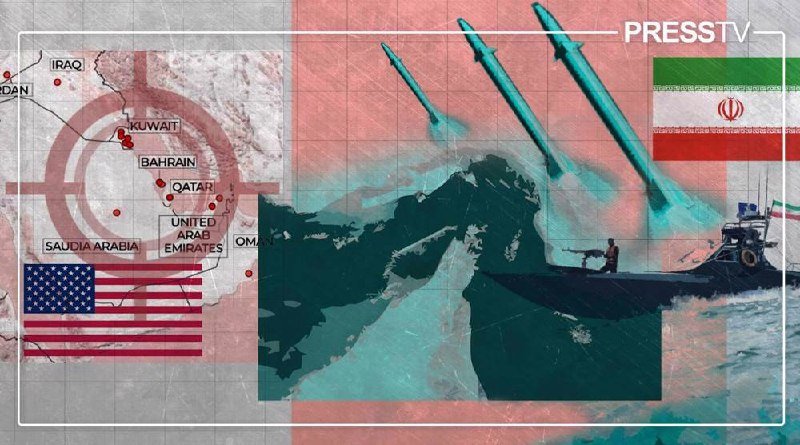
President Donald Trump confirmed on 19 May 2026 that he had called off a planned military strike against Iran, citing direct appeals from Gulf state leaders as the reason for the suspension. Speaking through his preferred medium, the president stated that the United States military should remain ready while serious negotiations with Tehran continue. The announcement sent oil prices falling more than 2 percent, as markets recalibrated the near-term risk of supply disruption.
The reversal is notable precisely because it came without the diplomatic cover of a concluded agreement or a visible concession from Iran. Trump framed the decision not as a withdrawal of pressure but as a deliberate choice to let negotiations run their course — a posture that keeps the military option open while avoiding the economic and political costs of actually using it. Whether that posture is sustainable, or whether it amounts to strategic communication rather than genuine restraint, is the central question this episode raises.
The reversal and its immediate context
The administration has maintained consistent public pressure on Iran since resuming maximum-pressure campaigning in early 2026, reimposing and expanding sanctions that had been eased under the 2023 nuclear deal. Israeli officials had publicly called for a credible military threat against Iran's nuclear facilities, and reporting from regional outlets suggested that strike planning had progressed beyond contingency thinking into operational preparation. The Gulf state appeal, therefore, arrived at a moment when the situation was more acute than rhetorical posture alone would suggest.
Gulf monarchies — particularly Saudi Arabia, the United Arab Emirates, and Qatar — have invested heavily in regional de-escalation over the past three years, building diplomatic and economic relationships with Tehran that their governments are unwilling to sacrifice for an American military campaign they did not request and may not have endorsed. That investment creates a genuine conflict of interest: Gulf states depend on American security guarantees, but they also depend on regional stability to attract foreign capital and maintain their own strategic autonomy. An Israeli-American strike on Iran threatened both.
Oil markets responded immediately and predictably. Brent crude dropped more than 2 percent on the news that the strike had been called off — a reaction that reflects not relief but the market's prior assessment that military action was genuinely possible. The price move suggests traders had been pricing in meaningful tail risk; when that risk receded, even temporarily, the correction was sharp. How long that correction holds depends entirely on whether the next news cycle restores the threat premium.
The counter-narrative
Not every reading of this episode is charitable to the administration. Critics on the right will note that suspending a strike in response to Gulf pressure — rather than in exchange for a verifiable Iranian concession — looks less like strategic patience and more like an inability to follow through on stated intentions. The president has built considerable political capital on displays of decisiveness; a reversal of this kind, however framed, carries reputational costs that the market for credibility does not ignore.
Those same critics will argue that telegraphing restraint — even deliberately, even with diplomatic intent — erodes the deterrent value of the threatened strike. Deterrence depends on uncertainty about whether the threatened action will be taken; an announcement that a strike was planned and then called off removes that uncertainty in a way that is structurally difficult to reverse. The administration may find that its negotiating leverage diminishes precisely because it demonstrated, publicly, that it can be talked out of using it.
There is, however, a more sympathetic reading. The president explicitly stated that negotiations are ongoing and that military readiness must be maintained. That framing is not inconsistent with a strategy of coercive diplomacy — combining credible threats with genuine offers to negotiate — provided the threats remain credible. Whether the Gulf state intervention complicates that strategy by introducing a visible veto player is a separate question from whether the strategy itself is coherent.
Structural dynamics: who shapes American Middle East policy
The episode reveals a structural reality that gets insufficient attention in Washington-centered coverage of Iran policy: Gulf states have acquired sufficient economic and geopolitical weight to shape American military decisions in ways that the formal alliance architecture does not fully capture. The United States maintains extensive military presences in the Gulf, sells advanced weapons to Gulf monarchies, and depends on those same monarchies to manage global oil supply in ways that serve American economic interests. That interdependence creates mutual leverage that is not easily reduced to a hierarchy of allies and protégé states.
Iran has long understood this dynamic, which is partly why it has pursued nuclear capabilities and regional influence through proxies — to create a cost to American military action that is borne by American partners as well as American forces. When Gulf leaders ask Washington to hold off, they are exercising leverage that Iran has helped construct over decades of asymmetric competition with American-backed regional order.
The negotiations the administration references exist within this framework of competing interests and mutual constraint. Iran wants sanctions relief and security guarantees; the United States wants verifiable limits on nuclear activity and an end to regional proxy behavior; Gulf states want stability above all and are willing to accept a deal that provides it, even if that deal falls short of the maximalist positions Washington sometimes signals publicly. The question is whether the current round of talks is capable of producing an outcome that satisfies those overlapping but not identical demands.
Stakes and forward view
The near-term stakes are clear. A strike would have driven oil prices sharply higher, with knock-on effects for inflation and economic confidence in major consuming markets at a moment when recession risks are already elevated in several advanced economies. The diplomatic costs would have been borne disproportionately by Gulf states, who would have faced pressure — both from their own populations and from regional competitors — to respond to an American strike they had not been consulted on and might not have supported.
Iran would almost certainly have accelerated its nuclear program in response to an attack, as it did after the Soleimani strike in 2020 and after the unilateral American withdrawal from the Joint Comprehensive Plan of Action in 2018. That outcome would be worse for regional stability than a negotiated standstill, even an imperfect one. The longer-term risk is that each episode of apparent restraint — whether genuine or performative — nudges regional actors toward hedging strategies that collectively erode the American-led security architecture the Gulf states still nominally support.
What remains genuinely uncertain is whether the planned strike was operationally imminent or whether it was threatened to create negotiating leverage, and whether the Gulf appeal was a genuine intervention or a coordinated signal designed to give the administration an exit it had already chosen. The sources do not establish which scenario is correct. What they confirm is that the decision to suspend the strike was real, that it was attributed in part to Gulf state appeals, and that the market reaction treated the underlying threat as credible enough that its removal moved prices meaningfully.
This publication covered the Trump-Gulf-Iran story as a bilateral diplomatic development involving oil market consequences. Most wire coverage led with the president's social media announcement; this piece foregrounds the structural role of Gulf state leverage in constraining American military options.
Wire provenance
This editorial synthesis draws on the following public wire/social posts:
- https://www.sbs.com.au/news/article/trump-says-he-held-off-new-attack-on-iran-after-gulf-countries-request/scjymn4ft
- https://t.me/OSINTdefender/5678
- https://t.me/OSINTdefender/5677
- https://x.com/reuters/status/1924578912345678901