Trump says US was within an hour of striking Iran — and could still act within days
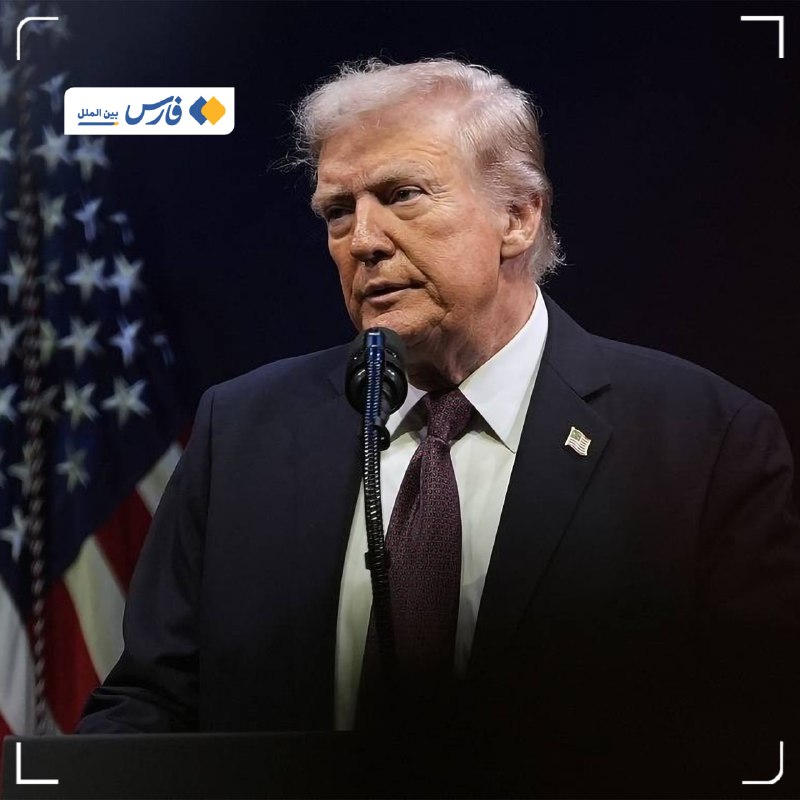
The White House came within an hour of launching a second military strike against Iran on May 19, before President Donald Trump reversed course to allow space for diplomatic talks, his administration confirmed on Tuesday. The near-miss attack — ordered and then countermanded within a single hour — marks the most acute moment of escalation since the United States and Israel began their joint military operation against Iranian nuclear and military infrastructure in late April.
Trump told reporters later that same day that a fresh American attack remained possible within days if negotiations over Iran's nuclear programme and regional behaviour do not produce what he described as an acceptable agreement. "We can do it in a short period of time," the president said, without specifying a date. "We were an hour away. We pulled back. We gave it a chance."
The disclosure followed reports from Middle East Eye — citing two people with direct knowledge of the deliberation — that senior administration officials had been briefed on an imminent strike order before the operation was suspended. The timing of the reversal appeared to coincide with back-channel communications involving at least one third-party intermediary, though the White House declined to identify which government had facilitated the contact.
The operational window
The sequence of events on May 19 represents a distinct shift from the earlier phase of the US-Israeli campaign, which began with strikes targeting Iranian nuclear facilities and Revolutionary Guard Corps command infrastructure. Those initial strikes, launched on April 26, caused significant damage to enrichment sites at Natanz and Fordow, according to Western intelligence assessments cited by wire services. Iranian officials confirmed that damage had occurred but insisted the programme's core capabilities remained intact.
The near-attack this week appears to have been triggered by intelligence suggesting a specific threat rather than by the ongoing campaign's operational tempo. Two US officials, speaking on condition of anonymity to multiple wire outlets, described the threat assessment as credible enough to warrant escalation protocols normally reserved for imminentenemy action. That the order was issued and then withdrawn suggests the threat assessment was either incomplete or was mitigated by the diplomatic intervention before the window closed.
The Strait of Hormuz featured in the administration's public framing. Trump referenced the waterway directly, noting that its significance to global energy markets gave the United States leverage that Iran had sought to undermine. The strait carries roughly one-fifth of the world's oil shipments, and its partial or temporary disruption has been a recurring concern throughout the escalation. Iranian state media, in a separate filing carried by Fars News International on May 19, said Trump was "reacting to new realities" created by the closure — language that stopped short of confirming or denying the strait's operational status but signalled that Tehran understood the stakes had changed.
The deal argument
The White House has presented the withdrawal of the strike order as evidence that its strategy of combining military pressure with diplomatic inducement remains coherent. National Security Council spokesperson Brian Hughes said on May 19 that the administration "would not telegraph our movements" but had "demonstrated willingness to use overwhelming force" while still leaving room for negotiation. "We came close. We chose to give diplomacy one more chance," Hughes told a press briefing.
That framing has found some purchase in allied capitals. British and French officials, who have been briefed on the sequence of events, expressed cautious support for continued negotiations while stopping short of endorsing the administration's broader campaign. Germany's foreign ministry issued a statement on May 19 calling for "restraint and direct communication" and said Berlin stood ready to participate in a renewed European-led mediation effort.
But the conditions the administration has attached to a ceasefire remain demanding. The initial US demands, circulated to allies in late April, included the complete dismantling of Iran's uranium enrichment programme above 3.67 percent purity, the surrender of all stockpiles enriched above that threshold, and the permanent expulsion of the Islamic Revolutionary Guard Corps from Syrian territory. Iranian officials have consistently rejected all three as non-starters. Iran's foreign minister said in a statement on May 18 that any agreement would need to recognise "Iran's sovereign right to peaceful nuclear technology" — language that effectively preserves the enrichment programme.
The escalation logic
What the May 19 near-miss reveals is not simply a diplomatic moment but a structural problem with the campaign's own momentum. Military operations that begin with defined objectives — degradation of nuclear infrastructure — tend to generate their own justifications for continuation. Each strike produces residual threats that can be characterised as unfinished business; each withdrawal can be framed either as restraint or as capitulation, depending on the political needs of the moment.
The administration is navigating competing pressures. Domestically, the strikes have enjoyed broad Republican support and have been characterised by the White House as a decisive assertion of American power after years of perceived retrenchment. Vice President JD Vance, in remarks on May 18, said the campaign had "restored deterrence" in the Middle East and warned that any Iranian escalation would be met with "disproportionate response." That kind of rhetoric creates its own gravitational pull. Pulling back from a strike that has been ordered — even quietly, even temporarily — risks appearing to validate Iranian defiance.
On the other side of the ledger, international energy markets have responded sharply to the escalation. Brent crude moved above $110 per barrel on May 18, with the Strait of Hormuz's operational status cited as a key factor in trading desks. Asian refiners, particularly in South Korea and Japan, have publicly flagged concern about supply disruption. Those economic pressures create incentives for the administration to find an off-ramp, even a temporary one.
What comes next
The near-attack on May 19 does not resolve the underlying tensions — it sharpens them. Iran has lost significant nuclear infrastructure but retains enrichment capability and has signalled its willingness to continue the conflict through regional proxy forces. The United States has demonstrated willingness to strike but has shown equal willingness to pause, creating an oscillation between kinetic and diplomatic modes that may itself be a strategic posture: pressure without a defined endpoint.
The diplomatic channel remains active. Qatar and Oman have both been mentioned in Western reporting as potential intermediaries, though neither government has confirmed its involvement. European officials said on May 19 that a call between the US secretary of state and Iran's foreign minister remained possible within the next 72 hours, though no date had been set.
Whether that call produces anything will depend on whether both sides can accept language that each has so far rejected. The United States has demanded irreversible concessions; Iran has demanded recognition of rights it believes are non-negotiable. The hour-long reversal on May 19 suggests the White House understands that military force alone cannot close that gap. Whether the administration is willing to accept the diplomatic costs of a deal — or prepared to restart the strike clock once it becomes politically necessary — remains the central unanswered question.
The article was filed from Washington. The wire picture of Trump at the podium was distributed via Middle East Eye's Telegram channel at 16:08 UTC on May 19; the BRICS News Telegram post confirming the "hour away" claim was filed at 15:53 UTC the same day. The Strait of Hormuz reference appeared in a Fars News International telegram at 15:32 UTC. Monexus tracked the live feed throughout the afternoon.
Wire provenance
This editorial synthesis draws on the following public wire/social posts:
- https://t.me/BRICSNews/24782
- https://t.me/FarsNewsInt/31847
- https://t.me/BRICSNews/24781