Trump's Iran Calculus: Market Risk, Nuclear Dust, and the Diplomacy Window
President Trump on May 19 defended accepting a potential 25% market correction as an acceptable cost to eliminate what he framed as a nuclear threat from Iran, while claiming Tehran's missile capacity has been reduced by 82% and warning of further military action if no deal is reached by Sunday.
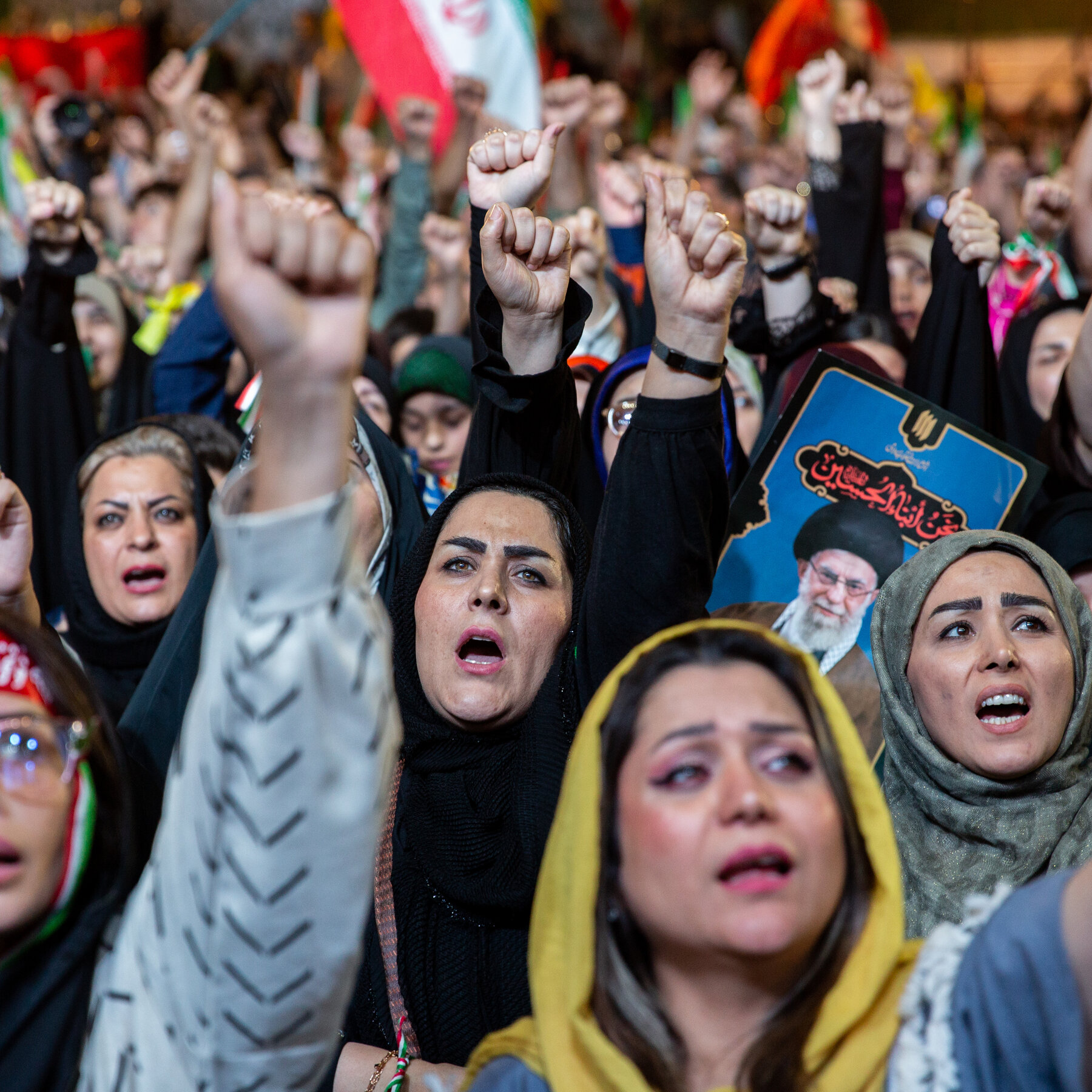
President Donald Trump declared on May 19, 2026, that he was prepared to absorb a potential 25% decline in equity markets if that was the price of eliminating what he characterised as an imminent nuclear threat from Iran. The statement, delivered during a press exchange in Washington, crystallised the administration's core argument: economic volatility is a manageable variable in a cost-benefit calculation where the alternative — a nuclear-armed adversary in the Middle East — is not. Hours later, Trump said his administration had received a deferral request from military planners citing progress toward a diplomatic settlement, and that he had agreed to wait, potentially until Sunday, before ordering what he described as another major strike.
The sequence of statements from the White House on May 19 encapsulates the administration's dual-track posture toward Tehran. Publicly, the President has framed the military campaign as near-complete in its disabling of Iran's missile infrastructure — a claim quantified in specific terms. Privately, his aides have signalled that the door to a negotiated outcome remains open, contingent on Iranian concessions that diplomats in several capitals are still attempting to define. The question is not whether the Trump administration can destroy Iran's nuclear programme. It is whether destroying it militarily — versus negotiated surrender of enrichment capacity — serves the administration's broader strategic interests, and at what cost.
The Military Scorecard the Administration Is Selling
The President's assertion that Iran's missiles are "82% gone" is the most specific operational claim his administration has made about the campaign's progress. It is also, by design, the hardest to independently verify. Satellite imagery analysed by open-source intelligence groups has shown impacts at known missile production and storage facilities, but a systematic accounting of Iran's dispersed, hardened, and mobile missile infrastructure has not been made available in unclassified form. What is documented is that Iranian state media has acknowledged strikes against several military installations, and that regional monitoring groups have recorded a significant reduction in missile fire from Iranian-backed proxy forces — a drop that could reflect either destruction of launch capability, a deliberate tactical pause, or both.
Trump was explicit that he views the psychological dimension of the strikes as significant. "I think it's important to get the nuclear dust, maybe psychologically more than anything else," he said. The phrasing is notable: nuclear dust is not a technical term. It appears to describe the visual and symbolic impact of strikes against nuclear-related sites — a deliberate effort to produce a legible, televised demonstration of capability that functions as both military action and communication. That communication is aimed at multiple audiences simultaneously. At Tehran, it signals that further nuclear work will be destroyed. At regional partners in the Gulf, it reaffirms the American security guarantee. At domestic political constituencies, it delivers the impression of decisive action without requiring the full exposition of a coherent post-war architecture.
The economic concession — accepting a 25% market correction — is framed as evidence of seriousness rather than recklessness. It is a bid to reframe the cost-benefit conversation: the market, in this framing, is a manageable input, not a ceiling on presidential action. Whether that framing holds depends entirely on whether the correction actually materialises and whether it proves temporary or sustained. Equity markets have been volatile throughout the year; a sharp drawdown followed by recovery would validate the President's framing. A prolonged downturn would sharpen the political question of whether the nuclear objective justified the economic damage.
The Diplomatic Interruption and Its Ambiguities
Trump confirmed on May 19 that military planners had contacted him approximately an hour before a scheduled major strike, requesting a deferral on the grounds that negotiators were close to a deal. The President's account carries an implication — that the deferral was granted not out of strategic caution but as a matter of administrative convenience, accepted without pressure. "I got a call yesterday: 'Sir, could you wait? We think we are close to a deal.' That's okay," he said. The phrasing "we think" is doing considerable work in that sentence. It does not specify which negotiating channel produced the assessment, what specific concessions were under discussion, or what verification mechanisms would apply to any agreement reached.
That ambiguity is not accidental. The administration has consistently resisted detailing the diplomatic back-channel, citing operational security. The result is that outside observers — including allied governments with direct stakes in the outcome — are forced to evaluate the credibility of a deal in progress without access to its terms. This creates a structural information asymmetry: the President controls the military timeline, the negotiating team controls the diplomatic timeline, and neither timeline is publicly legible.
The deadline Trump extended — described variously as two to three days and as running until Sunday — is itself a communication tool. A fixed window forces urgency onto a negotiating counterpart that may prefer delay. It signals to markets and allied governments that the decision point is imminent. And it allows the administration to claim, regardless of outcome, that it gave diplomacy a genuine opportunity before returning to kinetic action.
The Claim That Iran Is Begging
The President's Polymarket post asserting that Iran is "begging" to make a deal is the sharpest rhetorical move in the sequence. It reframes the negotiation from a mutual process between parties with legitimate interests — the standard diplomatic characterisation — to a submission by a defeated adversary. That framing serves domestic audiences in the United States, where it reinforces the narrative of successful coercion. It also complicates the position of any Iranian official who might want to negotiate, by making concessions appear to result from desperation rather than strategic calculation.
The geopolitical consequences of that framing matter beyond the bilateral relationship. Gulf Cooperation Council states, particularly Saudi Arabia and the UAE, have significant economic and security interests in the shape of any Iranian settlement. A deal that appears to reward coercion may accelerate a regional arms dynamic — countries that perceive themselves as exposed to Iranian pressure will seek additional deterrent capability, potentially from the United States or other suppliers. A deal that is seen as humiliating for Tehran may, conversely, destabilise whatever moderate political factions inside Iran might benefit from a negotiated outcome.
The uncertainty here is not trivial. Western intelligence assessments of Iranian decision-making have historically underestimated the regime's tolerance for economic pressure and its ability to externalise internal contradictions. The gap between the President's characterisation of Iranian desperation and the actual negotiating posture of the Iranian delegation — which has publicly insisted on sanctions relief as a precondition for any agreement — remains a meaningful unknown.
Structural Pattern: Coercive Diplomacy and Market Signal Risk
What the administration is executing bears the hallmarks of a coercive diplomacy strategy — the systematic application of military pressure to compel concessions, calibrated by public statements that define the acceptable outcome in advance. The logic is that visible, credible force reduces the cost of negotiation for the adversary by eliminating alternative strategies. The risk is that overcredible force — the impression that military action is inevitable regardless of diplomatic outcome — reduces the incentive to negotiate at all, and may instead consolidate Iranian political unity behind a posture of resistance.
The market dimension adds a layer that is specific to this administration's framing. Previous administrations have justified military action in terms of security objectives without explicitly quantifying the acceptable economic cost. Trump's 25% figure is a rhetorical gamble: it makes the economic sacrifice legible and, in his framing, rational. If markets hold or recover quickly, the bet looks shrewd. If they do not, the domestic political price may be steep and may arrive faster than the security benefits.
The broader structural pattern is the familiar tension between a maximalist public posture and a pragmatic private one. Presidents who campaign and govern on the premise that adversary governments will crumble under pressure face a consistent dilemma: the rhetoric that builds domestic support also builds adversary resolve. Tehran has not issued public statements acknowledging military defeat or agreeing to pre-agreed terms. Its official position, as reflected in state media, continues to insist on verification of sanctions removal before any enrichment concessions.
What Remains Contested
Several things remain genuinely unclear. First, the 82% missile destruction figure has not been independently verified; open-source analysts have confirmed impacts at specific sites but not a comprehensive accounting of Iran's dispersed arsenal. Second, the terms of the deal under discussion — assuming one exists in substantive form — have not been disclosed by any party, leaving the specific concessions and timelines that would constitute success or failure entirely opaque. Third, the domestic Iranian political calculus is difficult to assess from external sources; whether pressure is building internal consensus for concessions or consolidating a nationalist resistance posture is a question the available evidence does not resolve. Fourth, the 25% market figure is an assertion of acceptable cost, not a prediction; whether equities would actually fall by that magnitude in response to sustained conflict, and whether any such fall would be self-reinforcing, depends on factors the administration cannot fully control.
What is clear is that the administration has decided to make the public case for continued pressure on its own terms, in its own language, and at a moment of its own choosing. Whether that case is empirically grounded, strategically coherent, and politically durable is a question that will be answered not in Washington press rooms but in the weeks and months ahead — in Tehran's negotiating position, in market reaction functions, and in the calculus of allied governments whose own security architectures are increasingly shaped by the answer.
This publication's coverage of the Iran file has prioritised statements from the administration and regional open-source reporting over claims from Iranian state media, which have not been independently corroborated. The analysis does not treat the 82% figure as confirmed pending further verification.
Wire provenance
This editorial synthesis draws on the following public wire/social posts:
- https://t.me/ClashReport/18442
- https://t.me/ClashReport/18440
- https://t.me/ClashReport/18438
- https://t.me/disclosetv/11234
- https://x.com/disclosetv/status/1923456789012345678
- https://t.me/amitsegal/5567
- https://t.me/amitsegal/5566
- https://t.me/ClashReport/18437
- https://t.me/ClashReport/18436
- https://t.me/ClashReport/18435
- https://x.com/polymarket/status/1923456790123456789