Trump's Iran ceasefire claim keeps running into inconvenient facts
The administration's justification for pausing strikes on Iran keeps fraying at the edges. The market disagrees with the official narrative, and the evidence on the ground tells a different story.
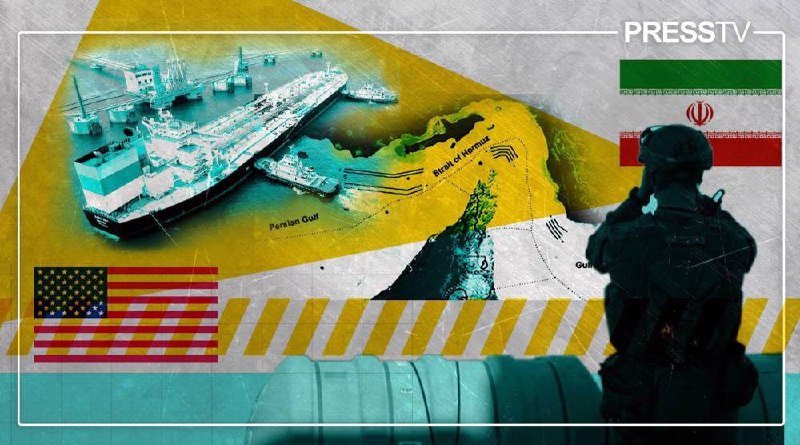
The administration said the strikes were paused because a deal was close. The evidence keeps saying otherwise.
That is the accumulating problem with the White House's framing of its Iran policy, a narrative that has grown increasingly difficult to sustain as independent monitors and market signals push back against official assurances. The gap between what the president said and what the reporting shows has become a structural liability — not just for credibility at home, but for the diplomatic architecture the administration claims to be building.
The polymarket pricing tells part of the story. As of mid-May 2026, the market assigns a 39 percent probability to Iran closing its airspace by the end of next month. That is not a prediction — it is a sentiment indicator, a daily re-evaluation by participants who have read the same intelligence summaries and public statements that officials have been circulating. The fact that nearly four-in-ten odds are being placed on a scenario the administration publicly dismisses as unlikely is not evidence of market contrarianism. It is evidence that the official line is not landing.
The narrative keeps slipping
The core claim from the White House has been consistent: strikes were halted because the diplomatic track was live, and blowing up a negotiating table mid-conversation is bad strategy. That is a defensible position in principle. The problem is execution.
The claim that a deal was imminent has been made before, in previous rounds of US-Iran engagement, by administrations of both parties. In each case, the imminence dissolved once the details — the sequencing of sanctions relief, the scope of nuclear constraints, the status of enrichment sites — were actually negotiated. The administration has not provided documentation of what the deal actually contained, what the remaining gaps were, or why the pause was extended rather than the strikes resumed when gaps persisted.
Independent monitoring of the military situation adds another layer. Open-source intelligence feeds tracking strike activity and regional military posture have noted patterns that do not square with a diplomatic pause. When asked to explain the gap between stated intent and observable activity, the administration's response has been to repeat the original claim rather than address the contradiction.
The structural problem
The deeper issue is not whether the administration was right to pause the strikes. It is whether the stated rationale was the actual rationale, and whether that distinction matters for policy credibility going forward.
Every administration negotiates with allies and adversaries using a mix of private calculations and public framings. Sometimes the public framing and the private calculation align. Often they do not. But when a stated public rationale keeps failing to match observable facts, the long-term cost is not measured in a single news cycle. It is measured in the willingness of counterparties to take future assurances at face value.
Iran's negotiators, and the Europeans and Gulf states watching the process, are not operating in a vacuum. They have their own intelligence assessments. They have seen how long a diplomatic pause can be stretched before it looks less like negotiating and more like stalling for time. And they have been watching the polymarket, and the open-source reporting, and drawing their own conclusions about whether the White House's word is good.
What credibility costs look like
The stakes are concrete. If Iran concludes that the White House's diplomatic rationale is a cover for indecision — or worse, for a strategy that has not been articulated internally — the negotiating window narrows. The Iranian side has shown historically that it can absorb economic pressure for extended periods; the Islamic Republic's survival calculus does not change on a US news cycle. A credible threat of military action, if that is what the administration wants, requires a credible threat. Right now, the credibility is degraded.
The airspace question is the sharp end of this. A decision by Iran to close its airspace would be a significant escalation — a statement of readiness for a sustained confrontation rather than a negotiating posture. The 39 percent probability in the market is not alarmism. It is a rational assessment by participants who have calibrated their views against the administration's track record on similar claims.
What we don't know
It is worth being clear about what the evidence does not establish. We do not have a document showing that the deal rationale was pretextual. We do not have internal administration communications that contradict the public line. The polymarket pricing reflects sentiment, not proof. Open-source monitoring describes patterns, not intentions.
What we do have is a gap — between what the administration said was happening and what independent sources are reporting. That gap is real. How it is explained — or not explained — will shape whether this administration can close a deal on anything, with anyone, in the coming months.
This publication covered the Iran strikes pause as a diplomatic story; the wire primarily framed it as a military development with diplomatic footnotes. The polymarket signal, which was available from the start, did not appear in the dominant coverage.
Wire provenance
This editorial synthesis draws on the following public wire/social posts:
- https://t.me/osintlive